Mowando

Region

Istria

The heart-shaped peninsula combining the heritage of Rome (Pula's arena), the elegance of Venice (Rovinj the Adriatic twin), Byzantine spirituality (Euphrasian Basilica) and Tuscan gastronomy (white truffles, olive oils and Malvazija).

4.80

Istria is, among all Croatian regions, the one that looks least like the rest of the country — and that is precisely what makes it one of the most singular and endearing destinations in Europe. This heart-shaped peninsula, pointing south between the gulfs of Trieste and Kvarner, has belonged to Rome, Byzantium, Venice, Austria-Hungary and Italy before its integration into Yugoslavia in 1947 — a cultural palimpsest that today is read in its architecture, its cuisine, its official Croatian-Italian bilingualism and its Mediterranean way of life.

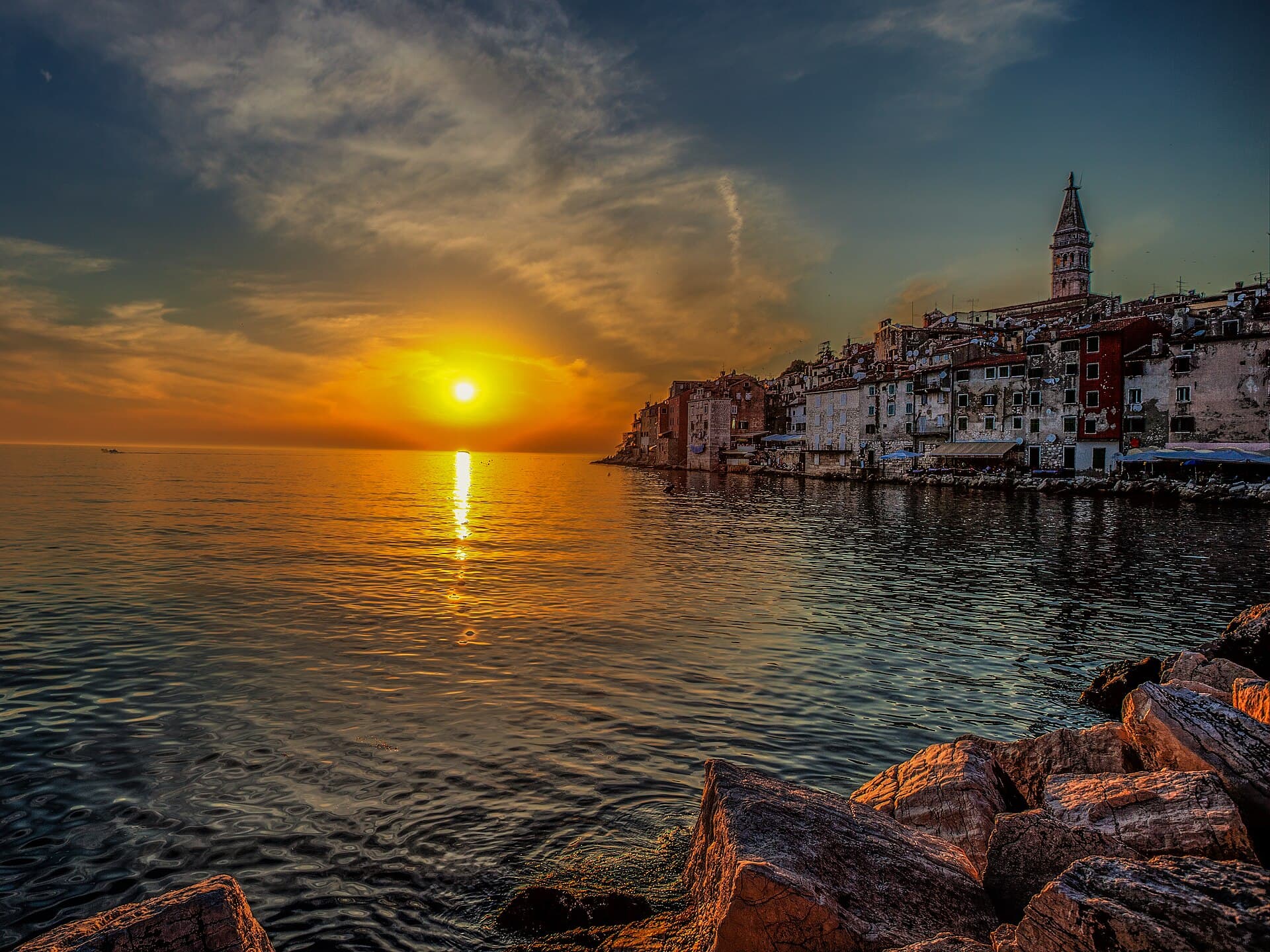
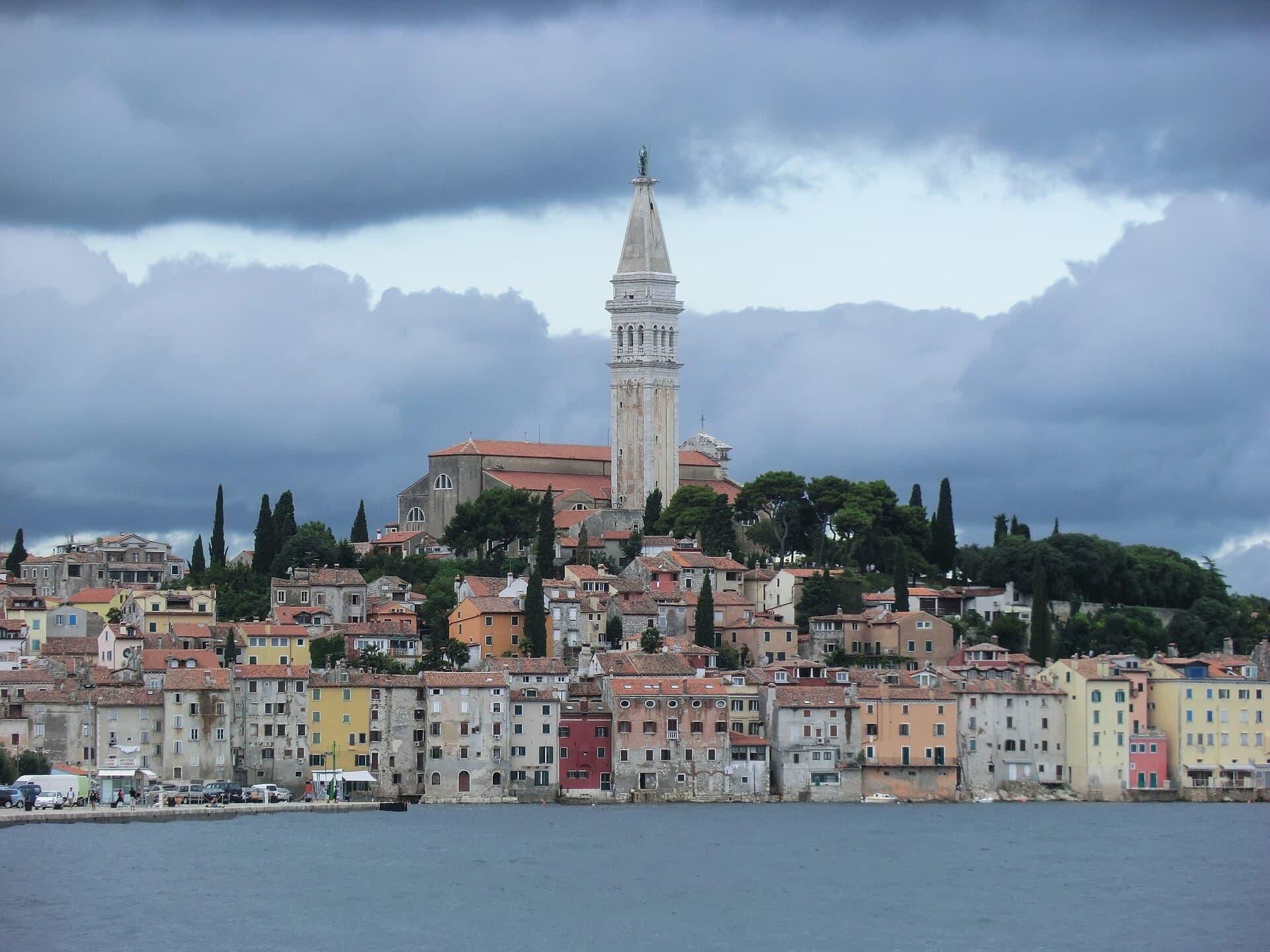
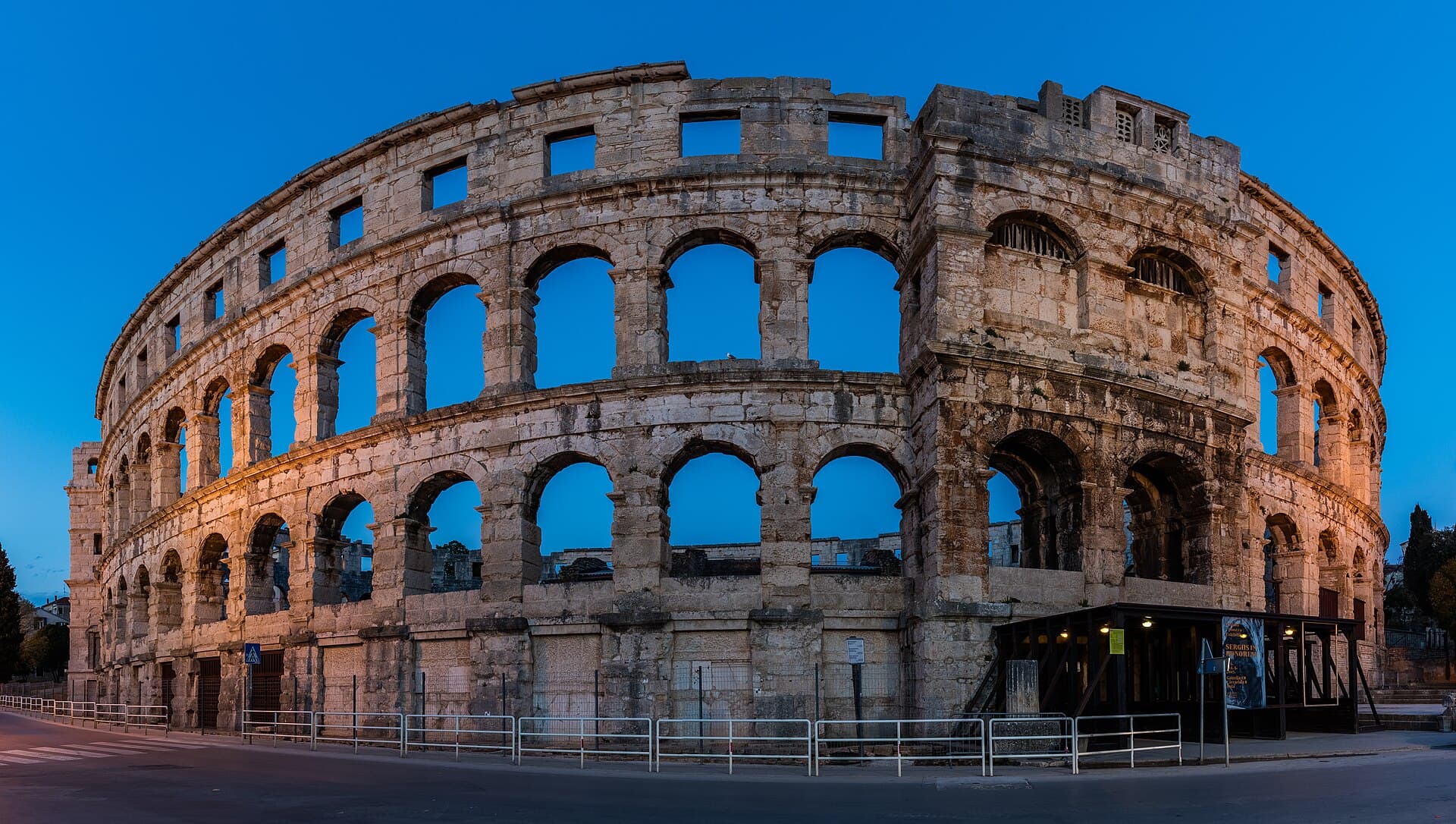
The west coast of Istria is a string of urban gems. Pula, historic capital of the southern peninsula, preserves exceptional Roman heritage including the famous amphitheatre (first century), the sixth largest in the world and the best preserved after the Colosseum, the Arch of the Sergii and the Temple of Augustus. Rovinj is the visual icon of the region: a fortified peninsula city whose silhouette dominated by the bell tower of Saint Euphemia (eighteenth century, a reduced copy of Saint Mark's in Venice) composes one of the most reproduced postcards of the Adriatic. Its cobbled alleys tumble toward the water, framed by pastel-coloured houses and artists' boutiques. Poreč finally, further north, houses the Euphrasian Basilica (sixth century, UNESCO), one of the best-preserved early Christian ensembles in the world, with its dazzling gold-background Byzantine mosaics.

But the soul of Istria plays out just as much in its agricultural and wine interior — 'green Istria'. The hilltop villages of Motovun, Grožnjan, Hum (officially the world's smallest town with 30 inhabitants), Roč and Pazin cling to their limestone hills like Tuscan miniatures. The Motovun forest, nicknamed 'the Adriatic truffle ground', produces some of the world's finest white truffles (Tuber magnatum), sought after by starred chefs worldwide. The vineyards of Malvazija (indigenous white) and Teran (red) dot the slopes and feed a booming wine-tourism scene, comparable to neighbouring Tuscany in both quality and prestige.

Explore Istria

Spots in the region
Situation

Où se situe Istria ?

Ouvrir la carte en grand sur OpenStreetMap →

Frequently asked questions

How many days do you need to visit Istria?+
Plan for at least 6 to 7 days for a balanced experience: 2 nights in Rovinj (old town, port, surrounding islands by boat), 1 night in Pula (amphitheatre, forum, Verudela beaches), 1 night in Poreč (UNESCO Euphrasian Basilica), and 2 nights in the interior between Motovun, Grožnjan and an agrotourism with truffle and wine tastings. With 10 days, add the Brijuni Islands National Park, an excursion to Opatija and Lovran on the Kvarner Gulf, and in-depth exploration of the southern coast (Premantura, Cape Kamenjak).
Where to find the best white truffle in Istria?+
The __Istrian white truffle__ (Tuber magnatum) is harvested mainly from __September to December__ in the Motovun forest, along the Mirna river. Three experiences to prioritise: 1) a __truffle hunt__ with a trifulau (traditional truffle hunter) and his dogs — offered by several producers like Karlić Tartufi, Zigante Tartufi or Prodan Tartufi (€60-80 with tasting included); 2) a __truffle lunch__ at the Zigante restaurant in Livade (Michelin star), a global institution; 3) __direct purchase__ from producers (Buzet, Livade, Motovun) — count €1,500-3,000/kg depending on season. Off-season, opt for summer white truffle (Tuber aestivum), less prestigious but accessible (€300-500/kg).
What is the difference between Rovinj and Poreč?+
__Rovinj__ is probably the most beautiful town on the Istrian coast — fortified peninsula of medieval origin, cobbled alleys, pastel houses, marked Venetian atmosphere and Saint Euphemia bell tower as a reduced copy of Saint Mark's. It is a romantic and gastronomic destination, ideal for 2-3 nights. __Poreč__ is more extensive, less visually compact, but houses the __Euphrasian Basilica__, a UNESCO early Christian ensemble from the sixth century with absolutely exceptional gold-background Byzantine mosaics — a major cultural visit. Poreč is also better equipped for families with the Lanterna and Plava Laguna beach complexes. The complementarity is perfect: 2 nights in Rovinj for the atmosphere, 1 night in Poreč for the basilica.
Is Pula's amphitheatre really worth the detour?+
Yes, absolutely. __Pula's amphitheatre__ (first century AD) is the sixth largest Roman amphitheatre in the world after the Colosseum and that of Capua, and it is __the best preserved__ after the Colosseum: it retains all four towers and its outer circumference, which is unique. Original capacity: 23,000 spectators. Interior visit (45 min to 1h, €10 in high season) with access to the basements where ancient olive presses and amphorae are displayed. In summer, the amphitheatre hosts the __Pula Film Festival__ (the oldest Croatian film festival, since 1954) and concerts (Sting, Norah Jones have played there). If you must see only one Roman monument in Croatia, it is this one.
What is Istrian Malvazija and where to taste it?+
__Malvazija Istarska__ (Istrian Malvasia) is the emblematic indigenous white grape of the region, distinct from other Mediterranean malvasias. It produces dry, structured white wines with notes of acacia, green almond, apple and a very expressive nose. Grown on the limestone and marl hillsides of the interior, it accounts for more than 60% of the Istrian vineyard. Several major wineries can be visited: __Kabola__ (organic since 1999, in Momjan), __Coronica__ (the best Malvazija cuvées in the region), __Kozlović__ (spectacular modern architecture), __Matošević__ and __Roxanich__ (orange and natural wines). Combine with a tasting of __Teran__ (indigenous red with vivid acidity) to understand the viticultural identity of the peninsula.
How to visit the hilltop villages of the Istrian interior?+
The __Istrian interior__ (sometimes called 'Croatian Tuscany') is a succession of medieval villages perched on limestone hills, to be explored exclusively by car. The unmissables: __Motovun__ (the most famous, in the truffle forest, film festival in July), __Grožnjan__ (artists' village, more than 30 galleries and studios, jazz festival in summer), __Hum__ (officially the smallest town in the world, 30 inhabitants, in a preserved karst valley), __Roč__ (on the Glagolitic route, several ancient inscriptions), __Pazin__ (historic administrative centre with its gorge and haunted castle that inspired Jules Verne). Plan a full day to do the Motovun-Grožnjan-Hum-Roč loop. Ideal in autumn for truffles or in spring for greenery.
Do you need a visa to visit Istria from Trieste or Venice?+
No, Croatia joined the __Schengen Area__ on 1 January 2023 and adopted the __euro__ the same day. There is therefore no longer any border control between Trieste/Slovenia and Croatian Istria, nor between Croatia and Italy. EU nationals travel with their identity card. From Venice, Istria is accessible in 3 hours by road (via Trieste and the Slovenian border), or by seasonal fast ferry (Venezia Lines: Venice-Rovinj-Poreč in 3h30, April to September). From Ljubljana, count 1h30 to Rovinj. This accessibility makes Istria an ideal destination for short extensions from Italy or Slovenia.

Our verdict

Istria is probably the most accessible region of Croatia for European travellers and the most rewarding for epicureans. The peninsula achieves the feat of combining first-rate Roman and Byzantine heritage, refined cuisine comparable to Tuscany and an Adriatic coast of singular beauty. Plan for at least 6 to 7 days for a balanced experience: 2 nights in Rovinj, 1 night in Pula, 1 night in the Poreč region, and 2 nights in the interior (Motovun, Grožnjan or an agrotourism). The best season is undoubtedly late September-October, for white truffle, harvest and a still-radiant climate.

Mowando Letter

Once a month: the right destinations for the right season + the best booking windows.

No spam. One-click unsubscribe. Your data is never shared.