Mowando

Region

Central Dalmatia

Croatia's most diverse region, where a 1,700-year-old living ancient city neighbours islands of contrasting personalities: glamorous Hvar, sporty Brač, confidential Vis, cathedral-crowned Trogir.

4.80

Central Dalmatia is the nerve centre of the Croatian coast, the balance point between the iconic south (Dubrovnik) and the wildness of Zadar and the Kornati. This is where coastal Croatia was born as a tourist destination — Split, its islands, its white pebble beaches and its exceptionally sunny climate — and this is where the region retains the essential balance between ancient heritage and Mediterranean lifestyle.

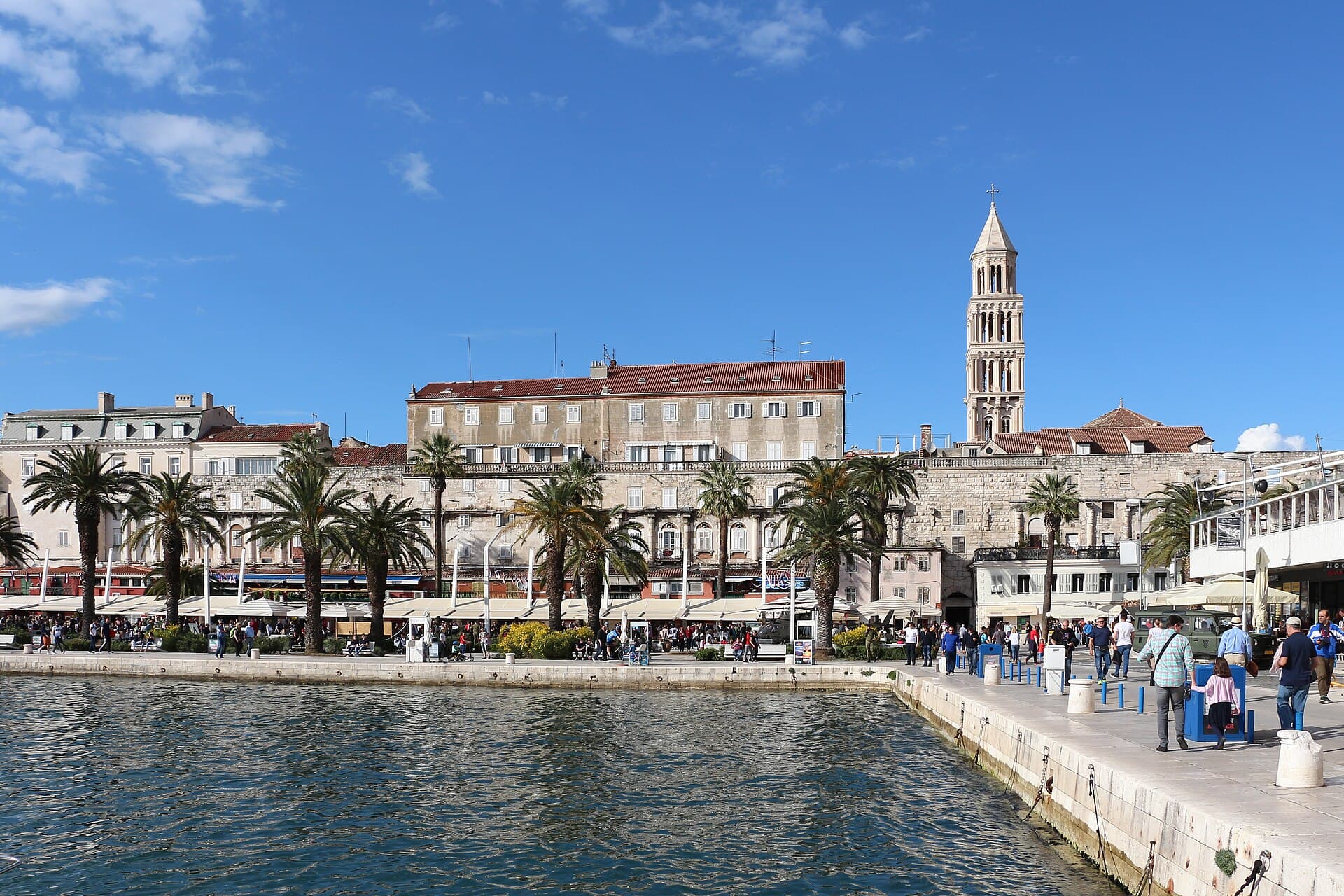
Split, Croatia's second-largest city, is unique in the world: its historic centre is built inside the Diocletian's Palace, the retirement residence the Roman emperor commissioned in the early fourth century. After the fall of the Empire, local populations settled in the ruins and gradually turned them into residential quarters. The result is striking: a living city of 180,000 inhabitants where alleys and squares are literally embedded in Roman walls, columns, the imperial mausoleum turned cathedral of Saint Domnius, the peristyle where you sip coffee at the foot of 3,500-year-old Egyptian sphinxes.

Thirty minutes west of Split, Trogir is a more intimate urban gem, UNESCO-listed for its medieval-Renaissance historic centre. Saint Lawrence Cathedral and its portal sculpted by master Radovan (thirteenth century), the Venetian walls, the Kamerlengo castle and the maze of compact alleys make it an essential cultural stop.

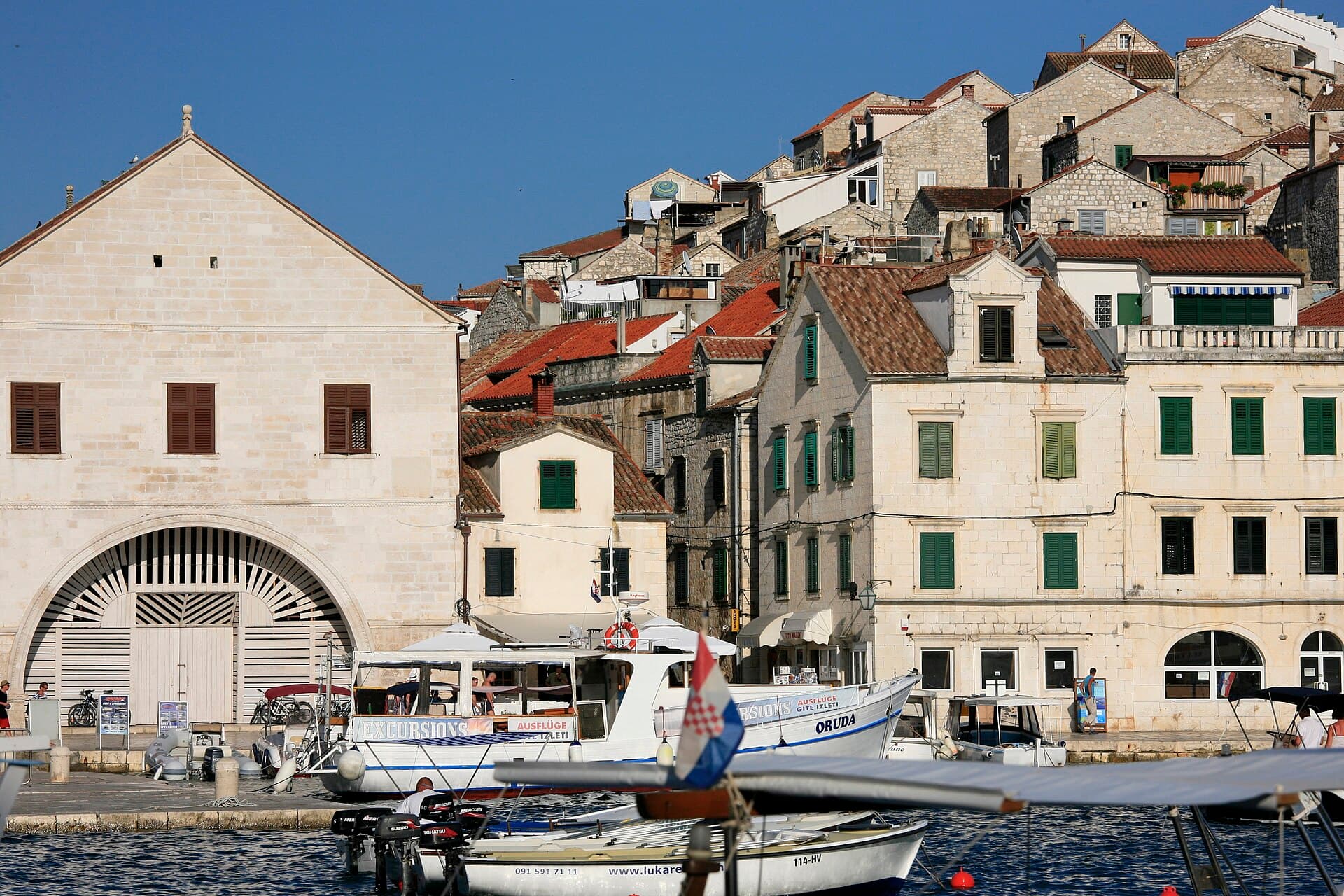
The islands of the region offer a range of experiences hard to match. Brač, the most accessible (1h from Split by ferry), shelters Croatia's most iconic beach: Zlatni Rat (the 'Golden Horn'), a white pebble spit that shifts shape with the winds. Hvar is the island of lavender, vineyards and nightlife — Hvar Town is one of the most glamorous coastal destinations in the Adriatic. Vis, the most distant and the most authentic (off-limits to foreigners until 1989 as a Yugoslav military base), retains a preserved charm and shelters the Blue Cave of Biševo, a marine cavity where light takes on a cobalt blue hue at midday. Šolta, the lesser-known neighbour of Split, completes the picture with its olive groves and peaceful fishing ports.

Explore Central Dalmatia

Spots in the region
Situation

Où se situe Central Dalmatia ?

Ouvrir la carte en grand sur OpenStreetMap →

Frequently asked questions

How many days do you need to visit Central Dalmatia?+
Plan for at least seven days for a balanced experience: two nights in Split (Diocletian's Palace, markets, Marjan hill outing), one night in Trogir, two nights on Hvar (Hvar Town, Velo Grablje lavender, Pakleni island beaches), and two nights on Brač (Bol and Zlatni Rat, Vidova Gora climb). With 10-12 days, add two nights on Vis for quietness, the Blue Cave and the hilltop villages of Komiža and Vis Town.
How can you visit Diocletian's Palace in Split without the crowds?+
__Diocletian's Palace__ is permanently open (it is a living neighbourhood, not a museum), so the trick is to aim for off-peak hours. Target early morning (7-9am) before the day-trippers arrive and the fish market opens, or evening after 8pm when the peristyle terraces come alive in beautiful light. Avoid cruise ship days (check the Port of Split website). __Saint Domnius Cathedral__ (former mausoleum of Diocletian) opens at 8am and stays relatively quiet in the first hour. The __substructure__ (basement) of the palace is visited with a ticket — fascinating to understand the original Roman plan.
Which island to choose between Hvar, Brač and Vis?+
It depends entirely on your profile. __Hvar__ (1h from Split) is the most glamorous and festive — ideal for young couples and groups of friends, with Hvar Town, its seafront clubs and the Pakleni Islands archipelago for excursions. __Brač__ (1h from Split also) is more family-friendly and sporty, with the iconic __Zlatni Rat__ beach in Bol and the Vidova Gora climb (778 m, the highest summit on Croatia's islands). __Vis__ (2h30 from Split) is the most distant and the most authentic — preserved by 45 years of military isolation, it appeals to those seeking authenticity, family konobas and deserted coves. Perfect combination: Brač for the beach, Hvar for wine culture, Vis for the silence.
What is the Blue Cave of Biševo and how do you visit it?+
The __Modra špilja (Blue Cave)__ is a marine cavity on the small island of Biševo, 5 km southwest of Vis. The phenomenon is striking: between 11am and noon in summer, sunlight enters through an underwater opening and floods the cave with a surreal cobalt-blue hue. The visit is by small boat (8-10 people maximum, departure controlled by park authorities). Three options to reach it: day trip from Split or Trogir (the simplest and most expensive formula, €80-120), excursion from Hvar Town (€60-90), or boat-taxi from the port of Komiža on Vis (~€30 return). Book early in high season — entry numbers are strictly limited.
When does lavender bloom on Hvar?+
__Hvar lavender__ — a twentieth-century legacy when the island was one of Europe's largest producers — blooms mainly from __mid-June to mid-July__, peaking around late June. The best fields are in the island's interior, around the abandoned villages of __Velo Grablje__ and __Malo Grablje__, and on the heights between Stari Grad and Jelsa. Traditional harvest begins in early July: family distilleries and shops (Vukovar, Lavanda Hvar) open their doors to explain essential oil production. Several signposted hiking trails start from Velo Grablje, ideal in the early morning for light and scents.
How do you reach the islands from Split?+
The __Port of Split__ (Trajektna luka) is one of the busiest ferry hubs in the Mediterranean. __Jadrolinija__ and __Krilo__ run daily connections to Brač (1h by car ferry, 30 min by catamaran), Hvar (1h by direct catamaran to Hvar Town, 2h by car ferry to Stari Grad), Vis (2h30 by ferry, 1h30 by catamaran) and Šolta (1h by ferry). Buy your tickets online in high season for car ferries (often sold out several days ahead). The port is a 5-minute walk from Diocletian's Palace. For short stays on Hvar, the passenger catamaran is more convenient and faster than the car ferry.
What to see on a day trip from Split?+
Several excellent day trips from Split. __Trogir__: 30 minutes by bus, compact UNESCO old town perfect for a half-day. __Krka National Park__: 1h15 drive, waterfalls and swimming allowed outside July-August. __Salona__: Roman ruins of the former capital of Dalmatia 7 km from Split, little frequented. __Klis Fortress__: spectacular medieval fortress dominating Split, Game of Thrones filming location (Meereen). __Šibenik__: 1h30 drive, Saint James Cathedral UNESCO and Venetian fortresses. __Omiš__: 30-minute drive, the Cetina river mouth, rafting and zipline. For a longer day, __Mostar__ (Bosnia) is feasible at 3 hours' drive — passport recommended.

Our verdict

Central Dalmatia is probably the best introduction to Croatia for those wanting to live everything in one trip: a vibrant cultural capital, a UNESCO medieval site, islands of contrasting personalities and a sea among the finest in Europe. Plan for at least seven days: two nights in Split, one night in Trogir, two nights on Hvar and two nights on Brač or Vis. Avoid July-August if you can; May, June and September offer superior experience for often half the price.

Mowando Letter

Once a month: the right destinations for the right season + the best booking windows.

No spam. One-click unsubscribe. Your data is never shared.