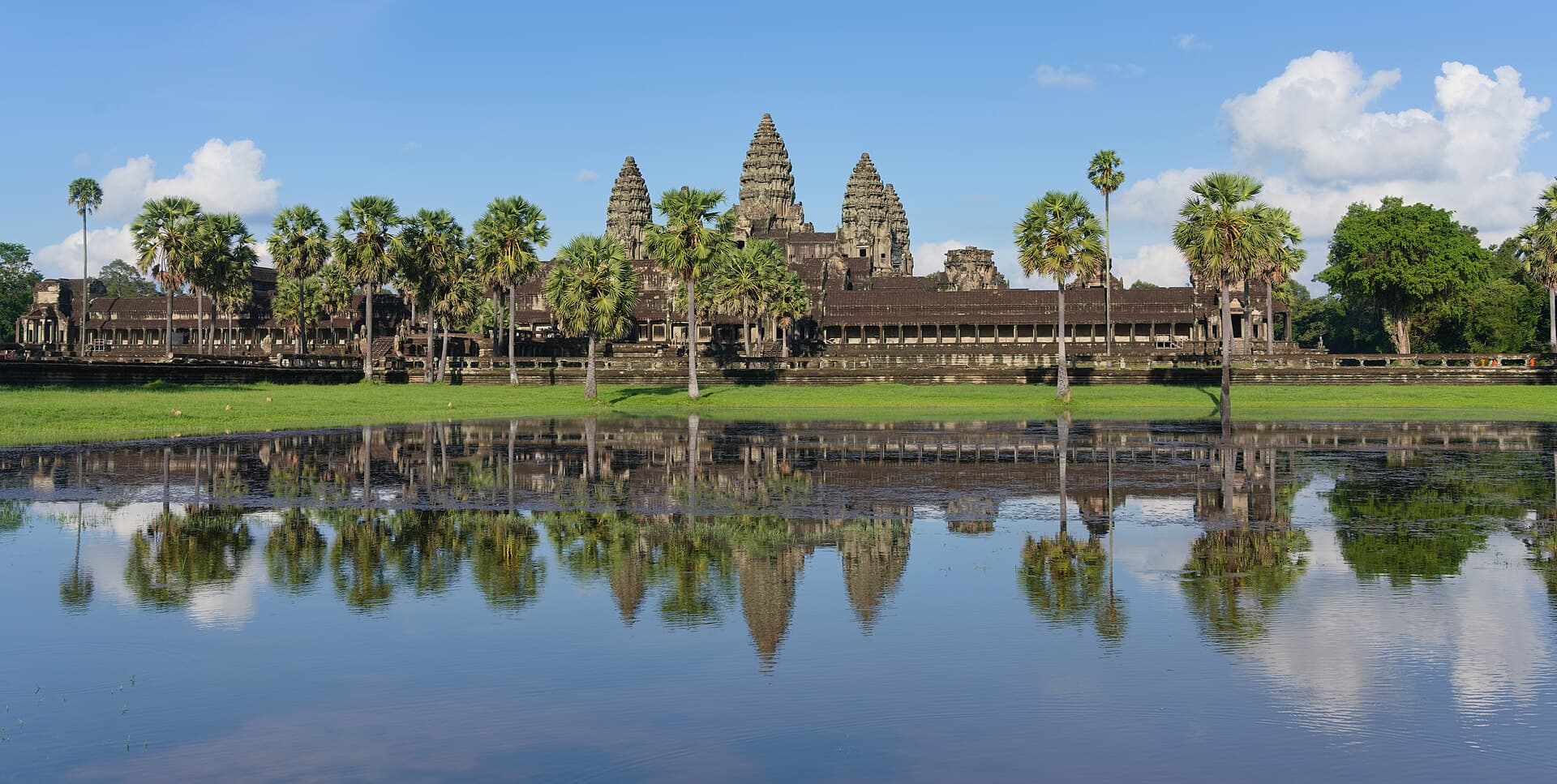
The region is best visited from November to February during the Cambodian cool dry season. Perfect temperatures for long Angkor visiting days: 22-30°C, low humidity (50-65%), clear skies ideal for photography and Angkor Wat sunrises. It's absolute high season — Siem Reap hotels to book 3-4 months ahead for December-February, rates up 30-40%, and 1,500-2,000 simultaneous visitors at Angkor Wat sunrise.
December-February are the busiest and most expensive months. November and March offer an excellent compromise: still very good climate, falling crowds, slightly more accessible rates. The hot season (March to May) demands schedule reorganisation: 4:30am departure for sunrise, mandatory midday hotel break (35-38°C, feels 40+°C), resume around 3:30pm. The wet season (June to October) is underrated — late-afternoon rain (1-2h storm), very few crowds at Angkor, vivid landscapes (full moats, lush Ta Prohm jungle), rock-bottom rates (-40 to -50%). Drawbacks: Angkor Wat sunrise often spoiled (90% overcast), crushing humidity (85-95%), secondary roads impassable to Beng Mealea or Koh Ker.
Read also
- Angkor Wat — The world's largest religious monument, UNESCO 1992, jewel of the Khmer Empire.
- Siem Reap — The base-city of Angkor: Pub Street, Old Market, Khmer gastronomy and tuk-tuks.
- Cambodia — Complete country guide: visa, currency, regions, best time to visit.
- Phnom Penh and the South — The capital, Royal Palace, S-21 and the Killing Fields — to combine with Angkor.