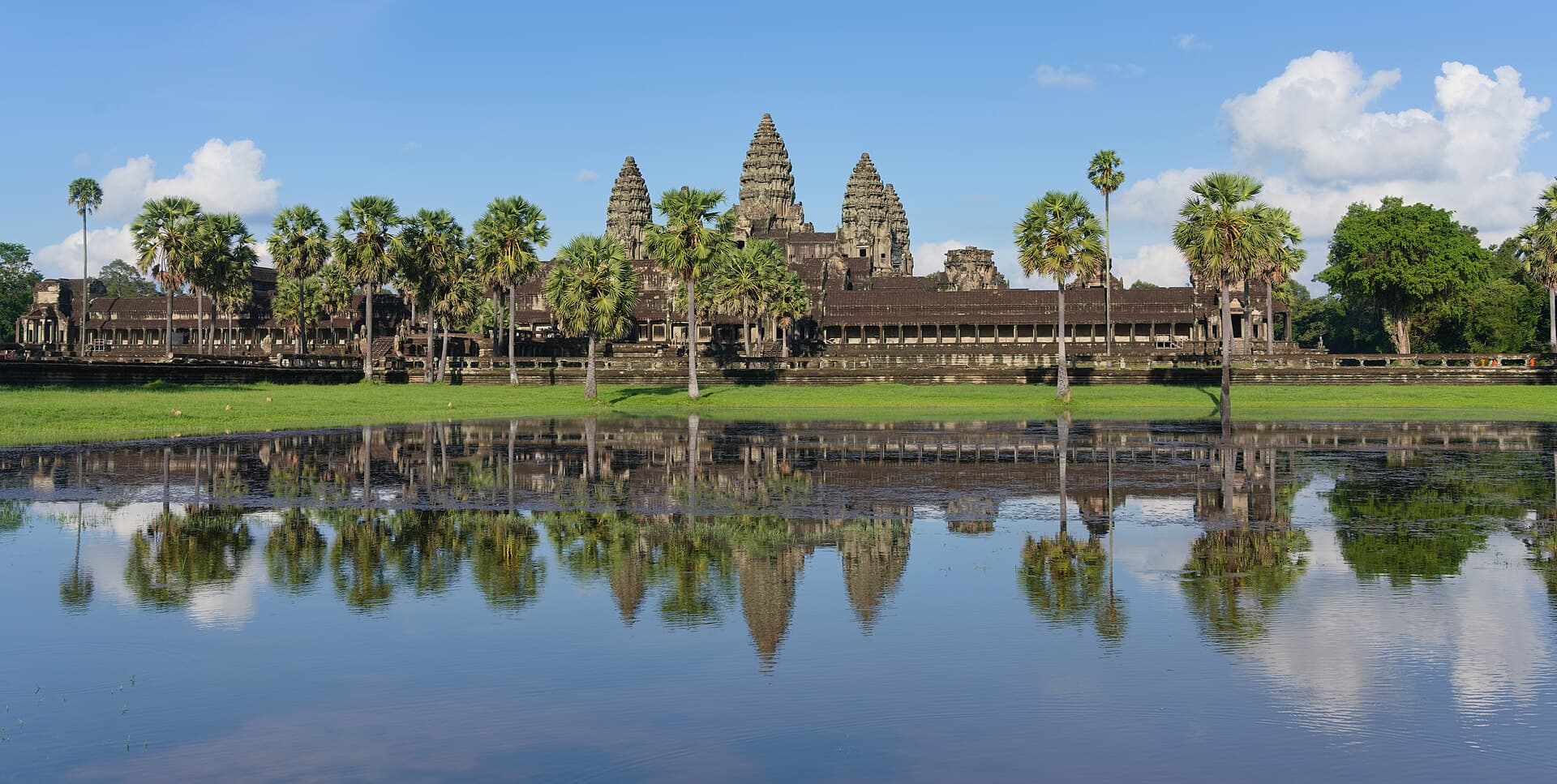
The region organises primarily around the Angkor temple visits over 3-4 days. The Small Circuit (1 day, 17 km) covers Angkor Wat (5:30am sunrise from the north pond, interior visit of the central sanctuary for its 800 m bas-reliefs narrating the Ramayana and Mahabharata), Angkor Thom and its Bayon (216 enigmatic stone faces attributed to Avalokiteshvara or to Jayavarman VII himself), Ta Prohm (overgrown by roots, immortalised by Tomb Raider 2001), Banteay Kdei, Sras Srang. The Grand Circuit (1 day, 26 km) adds Preah Khan (vast 12th-century monastic complex, the "second Angkor Wat" by size), Neak Pean, Ta Som, East Mebon, Pre Rup (excellent for sunset). A third day for Banteay Srei (32 km north, the most finely carved) and Beng Mealea (67 km, ruined temple overrun by jungle, unique exploration experience).
Sunrises and sunsets are highlights. Angkor Wat sunrise from the north pond (4:45am arrival, 5:30am rising average): the most iconic experience. Pre Rup sunset (alternative to crowded Phnom Bakheng), Phnom Bakheng (hill with 300-visitor cap), Bakong at Roluos for off-the-beaten-track lovers, hotel terraces like Phum Baitang or the FCC Angkor rooftop.
Khmer cooking classes are an unmissable activity in Siem Reap. Recommended addresses: Le Tigre de Papier (USD 15 half-day, market + cooking), Beyond Unique Escapes (USD 25-35, more upmarket), Champey Academy of Arts (USD 40, supports a music school). Learn to make amok, lok lak, papaya salad, samlor soup.
Apsara dance shows with traditional dinner: Apsara Theatre (Angkor Village Hotel, USD 35-50), Smile of Angkor (USD 60-90, more spectacular, 1,500-seat venue), Cambodian Cultural Village (museum-park, USD 15 entry + USD 20 show). Classical Apsara dance is Khmer art par excellence — slow codified movements, gold-embroidered costumes, tower-shaped headdresses.
The Tonle Sap and floating villages: half-day excursions USD 25-30 to Kompong Phluk (most authentic), Chong Kneas (most touristy) or Mechrey (quietest, bird reserve). Optimal in September-October.
Activities beyond temples: Phare Cambodian Circus (social acrobatic circus supporting disadvantaged children, show USD 18-38 in the evening, different programme each day, highly recommended), Cambodia Landmine Museum (anti-personnel mines museum 25 km away, founded by a former Khmer Rouge child soldier, USD 5, poignant testimony), APOPO Visitor Center (HeroRAT mine-detection rats, USD 10, fascinating), Artisans Angkor (traditional silk and sculpture workshop, free visit). For nightlife, Pub Street and adjacent alleys (Alley West, Sok San Road), with restaurants, bars, Khmer massages USD 5-10/hour, night markets (Angkor Night Market, Made in Cambodia Market).
Read also
- Angkor Wat — The world's largest religious monument, UNESCO 1992, jewel of the Khmer Empire.
- Siem Reap — The base-city of Angkor: Pub Street, Old Market, Khmer gastronomy and tuk-tuks.
- Cambodia — Complete country guide: visa, currency, regions, best time to visit.
- Phnom Penh and the South — The capital, Royal Palace, S-21 and the Killing Fields — to combine with Angkor.