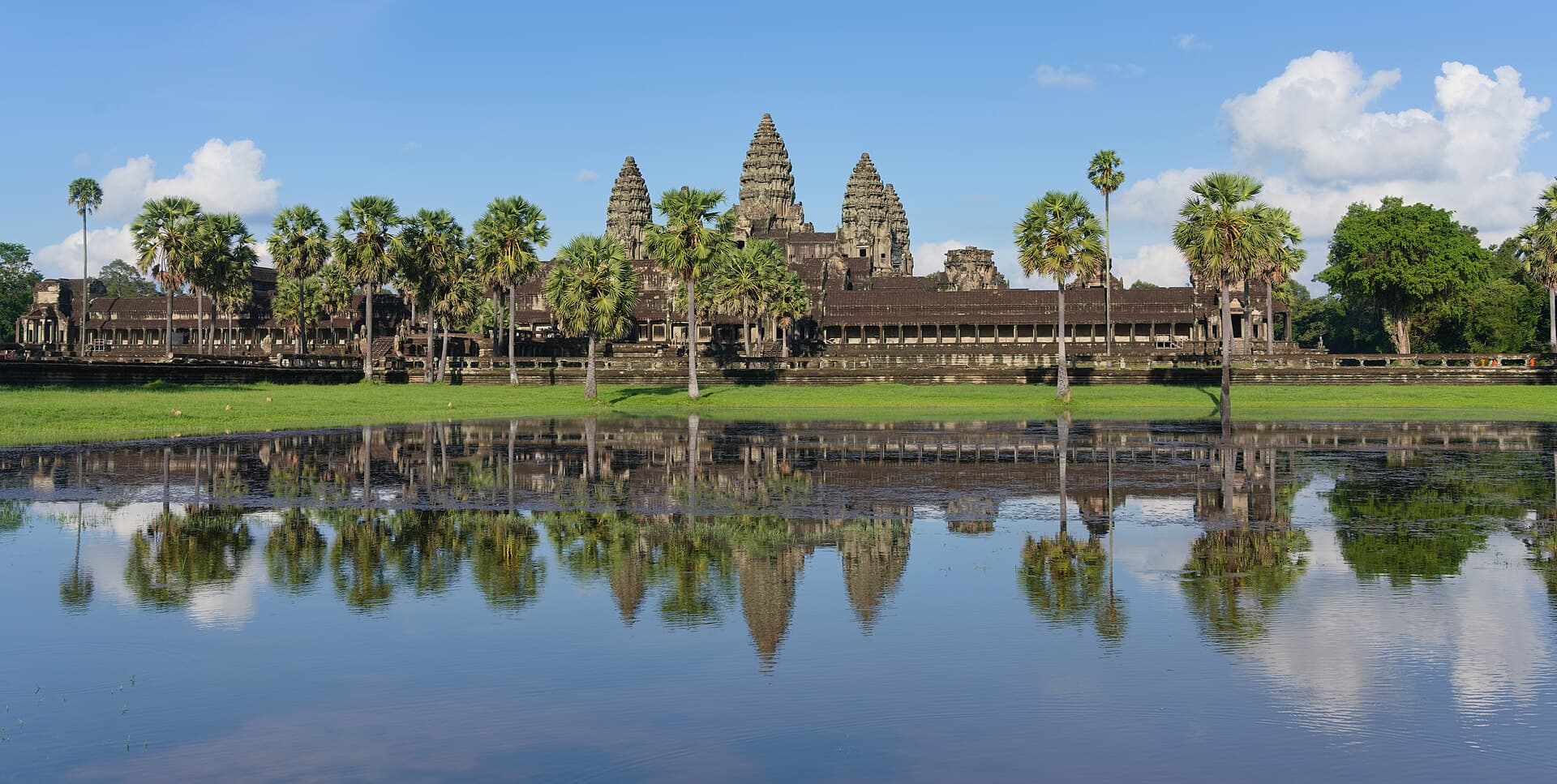
The Siem Reap and Angkor region is the touristic, cultural and spiritual epicentre of Cambodia — one of the three or four major historical sites of Southeast Asia alongside Borobudur (Indonesia), Pagan (Burma) and Ayutthaya (Thailand). The Angkor archaeological site covers 400 km² north-west of Siem Reap city and preserves more than a thousand Khmer temples, remains of a civilisation that dominated continental Southeast Asia from the 9th to the 15th centuries.
The city of Siem Reap (250,000 inhabitants) is entirely structured around tourism since Angkor's UNESCO listing in 1992. Its name literally means "defeat of Siam" — reference to Khmer victories over Thai armies in the 16th century. Today, it's the ideal touristic base: complete hotel infrastructure, quality dining (high Khmer gastronomy, authentic street food, international cuisines), omnipresent tuk-tuks, French-speaking travel agencies and guides. The centre is organised around the Old Market (Phsar Chas) and Pub Street — flashy but unmissable for its nightlife.
The Angkor site is discovered via three iconic circuits. The Small Circuit (17 km, 1 day) covers Angkor Wat, Angkor Thom (Bayon, Baphuon, Phimeanakas, Elephant Terrace, Leper King Terrace), Ta Prohm, Banteay Kdei and Sras Srang. The Grand Circuit (26 km, 1 day) adds Preah Khan, Neak Pean, Ta Som, East Mebon, Pre Rup. A third day is essential for Banteay Srei (32 km north-east, the "jewel of Khmer art", finely carved pink sandstone from the 10th century) and Beng Mealea (67 km, ruined temple overrun by jungle, explorer experience).
Read also
- Angkor Wat — The world's largest religious monument, UNESCO 1992, jewel of the Khmer Empire.
- Siem Reap — The base-city of Angkor: Pub Street, Old Market, Khmer gastronomy and tuk-tuks.
- Cambodia — Complete country guide: visa, currency, regions, best time to visit.
- Phnom Penh and the South — The capital, Royal Palace, S-21 and the Killing Fields — to combine with Angkor.