ville
Hobart
Hobart is Tasmania's capital, one of Australia's most charming small cities — MONA (globally audacious contemporary art museum), Salamanca Market every Saturday since 1972, panoramic Mount Wellington, Dark MOFO and MONA FOMA festivals.
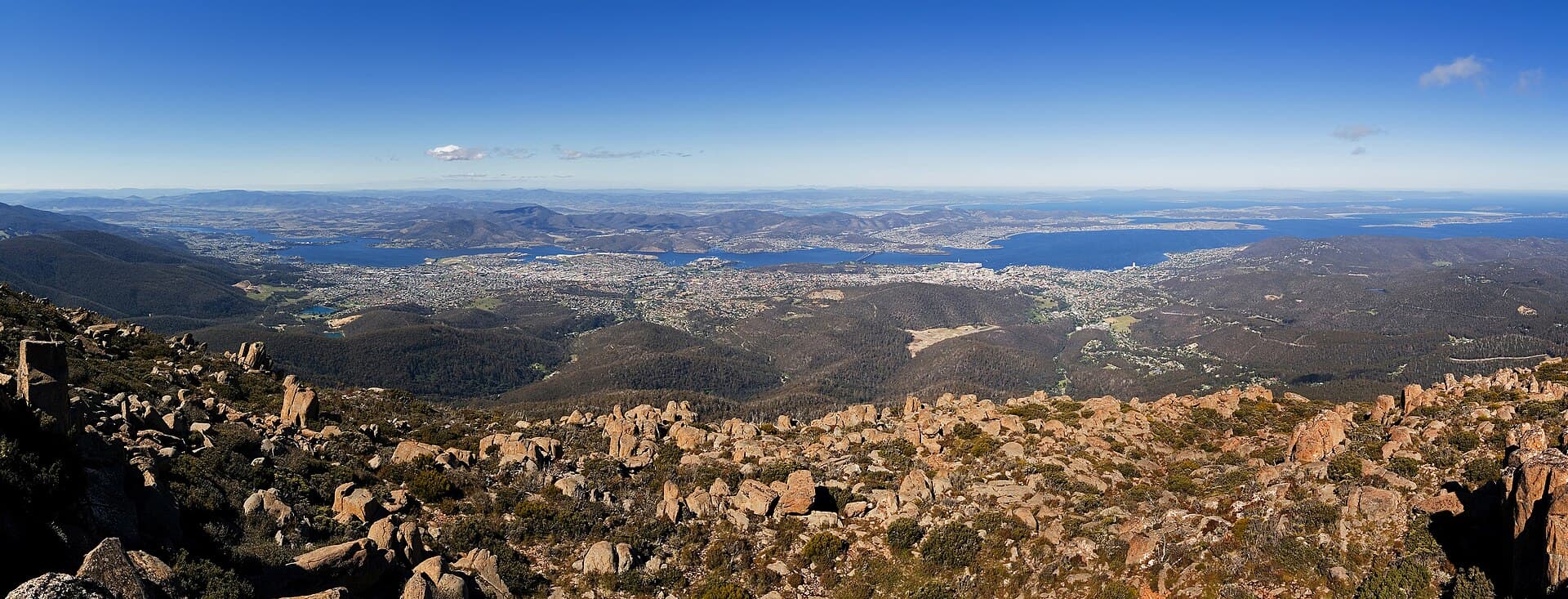
Hobart (250,000 inhabitants) is the capital of Tasmania and Australia's second oldest city — founded in 1804 (just 16 years after Sydney), initially a British penal colony. Located at the foot of Mount Wellington (1,271 m, overlooking the city, accessible by car in 30 min — breathtaking panorama), on the banks of the Derwent River, it is a charming city of preserved British colonial architecture — small Georgian stone houses, cobblestone streets, historic Battery Point quarter. Temperate climate similar to western Scotland or Brittany, with strong seasonality (summer 12-23 °C, winter 3-12 °C).
The historic centre organises around Battery Point (1830-1850 Georgian cottage quarter, one of Australia's best preserved, National Trust listed) and Salamanca Place (former arc-shaped stone warehouses facing the port, converted to art galleries, restaurants, bars and boutiques). The Salamanca Market (every Saturday 8:30am-3pm since 1972) is one of Australia's most beautiful markets — 300+ Tasmanian craft stalls (ceramics, carved wood, photography, jewellery), local products (cheeses, honey, whisky, cider, fruits), street food and dining, vibrant atmosphere. Not to be missed.
But Hobart has radically transformed since 2011 with the opening of MONA — Museum of Old and New Art, a unique contemporary art museum built by Australian millionaire David Walsh (blackjack player turned collector). Built largely underground in a cliff by the Derwent River (12 km north of Hobart centre, accessible by ferry from Brooke Street Pier — AUD 35 return, 30 min crossing on the Derwent, experience in itself), MONA combines a permanent collection of ancient art (Egyptian antiquities, Roman statues, Renaissance paintings) and provocative contemporary art (Wim Delvoye, Erwin Wurm, Patricia Piccinini, Anselm Kiefer), often dealing with death, sex and the body. The Cloaca Professional (machine producing real-time excrement), the Sidney Nolan's Snake chapel, the Bit Fall water tunnel, the contemporary Aboriginal artwork collection — works that became legendary. Entry AUD 30 (free for Tasmanian residents — David Walsh museum social policy). No classic labels: visit with an O tablet that comments works personally and provocatively. One of the world's most audacious and marking museums — must-see during a Hobart visit.
MONA also organises two headline international festivals: Dark MOFO (June, 2 weeks, austral winter) — contemporary art festival, performances, exhibitions, concerts, immersive meals, gothic and provocative atmosphere (nudity, fire, occult are recurring themes) — Australia's most radical contemporary art event. MONA FOMA (January-February, 1 week, austral summer) — more festive summer version (Festival of Music and Art), outdoor concerts, accessible art. Both festivals attract international audiences and place Hobart on the world contemporary art map.
Hobart's other attractions: Mount Wellington (1,271 m, accessible by car in 30 min from centre via Pinnacle Road, or by shuttle bus AUD 30-40 return — breathtaking panoramic view over Hobart, Derwent River, southern Tasmania, on clear days even Bruny Island 25 km south visible — often in clouds, check weather before), Royal Tasmanian Botanical Gardens (founded 1818, one of Australia's oldest, free, Japanese garden, conservatory), Cascade Brewery (Australia's oldest, founded 1824, tour-tasting AUD 30), Tasmanian Museum and Art Gallery (TMAG, free, natural and colonial history, Tasmanian art — including rare evidence of palawa Aboriginal culture decimated by 19th century colonisation).
Nearby, the essential excursion to Port Arthur (1h30 south-east, UNESCO 2010) — former British penitentiary 1830-1877 where 12,500 convicts were deported. Exceptionally preserved and moving site. And Bruny Island (45 min south + 20 min ferry) — nature paradise with oysters shucked on rocks, artisan cheeses, fairy penguins.
What we love
- ✅MONA: globally audacious and provocative contemporary art museum
- ✅Salamanca Market every Saturday since 1972: crafts, local products
- ✅Mount Wellington (1,271 m): breathtaking panoramic view over Hobart and southern Tasmania
- ✅Battery Point: 1830-1850 Georgian quarter among Australia's best preserved
- ✅Signature festivals: Dark MOFO (June), MONA FOMA (January-February)
What to know
- ❌Cold winter climate (3-12 °C June-August), sometimes snow at Mount Wellington
- ❌Sydney/Melbourne flight needed (1h-1h45, AUD 150-400 return)
- ❌Moderate crowd but Hobart remains quite small (250,000 inhabitants)
- ❌Long Tasmania internal distances: Cradle Mountain 4h30 drive
- ❌MONA polarises: provocative works not to everyone's taste
Situation
Où se situe Hobart ?
Ouvrir la carte en grand sur OpenStreetMap →Frequently asked questions
How many days for Hobart?+
What is MONA and should you visit?+
When is Salamanca Market held?+
How to ascend Mount Wellington?+
What are Hobart's best restaurants?+
Our verdict
Hobart is one of Australia's most charming state capitals — small, welcoming, culturally rich, dominated by imposing Mount Wellington and cradled by the Derwent River. Plan 2-3 nights minimum: 1 day MONA (ferry transport from Brooke Street Pier AUD 35, plan 4-5h on site), 1 day Salamanca Market (mandatory Saturday) + Battery Point + Mount Wellington + Royal Tasmanian Botanical Gardens, ideally 1 day Port Arthur (UNESCO 2010, 1h30 south-east, one of Australia's most moving historic sites) or Bruny Island (45 min + ferry, oysters and cheeses). Prioritise austral summer (December-February, 13-23 °C) or autumn (March-April, spectacular Fagus foliage). Direct Sydney-Hobart 1h45 flight (AUD 200-400 return), Melbourne-Hobart 1h (AUD 150-300 return). Hobart is the perfect introduction to Tasmania — add 4-5 days for Cradle Mountain and Freycinet (Wineglass Bay).
Nearby

"Été, Taste of Tasmania, MONA FOMA."
Expert on Hobart · 1 contributions
 South-East Asia Desk — Mowando·Editor