ville
Istanbul
The only major metropolis straddling Europe and Asia: 16 million inhabitants, imperial mosques, covered bazaars and a legendary strait separating two continents.
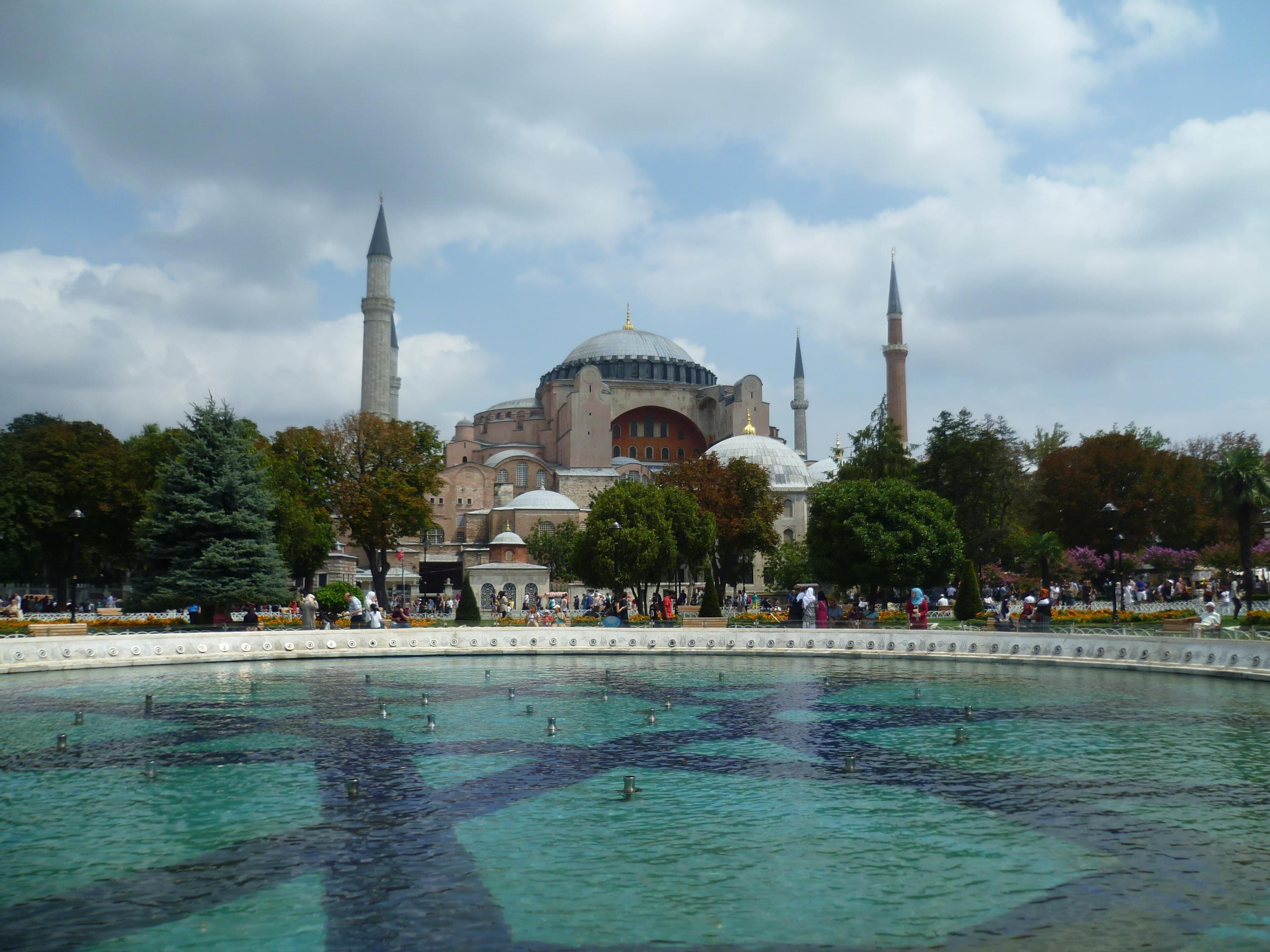
Istanbul is one of the planet's most extraordinary cities — the only major metropolis to literally stretch across two continents, separated by the Bosphorus strait connecting the Black Sea to the Sea of Marmara. Successive capital of the Eastern Roman Empire (Constantinople, 330-1453) then the Ottoman Empire (1453-1922), the city has accumulated fifteen centuries of heritage layered within a 5 km² walkable footprint — a density unique in the world.
The historic peninsula (Sultanahmet, UNESCO listed) concentrates the essentials: Hagia Sophia (Byzantine basilica of Justinian completed in 537, mosque since 2020), the Blue Mosque (Sultanahmet Camii, 1616, six minarets and 20,000 Iznik tiles), the Topkapi Palace (Ottoman sultans' residence for 400 years), the Basilica Cistern Yerebatan (Byzantine underground reservoir), the Hippodrome and its obelisks. 15 min on foot, the Grand Bazaar (4,000 shops under Ottoman vaults) and the Spice Bazaar (spices, Turkish delight, baklava).
But Istanbul is not limited to its ancient heritage. The Bosphorus cruise — 32 km of strait dotted with palaces (Dolmabahçe, Çırağan, Beylerbeyi), fortresses (Rumeli Hisarı) and polychrome wooden yalı — is the signature experience, best lived at sunset. The modern neighbourhoods of Galata, Beyoğlu, Karaköy and Cihangir (north bank) concentrate the contemporary food and nightlife scene, with their Genoese Galata Tower, the pedestrian İstiklal avenue and its rooftop bars. The Asian side (Üsküdar, Kadıköy) offers a more authentic Istanbul 15 min by ferry. And the Ottoman hammam — Çemberlitaş (1584), Cağaloğlu (1741) — is the wellness ritual that perfectly closes a day of sightseeing.
What we love
- ✅Heritage density without equal: 15 centuries of empires (Byzantium, Ottoman) in 5 km² of walkable footprint
- ✅Hagia Sophia, Blue Mosque, Topkapi, Grand Bazaar — concentration unique in the world
- ✅Bosphorus cruise: one of the most beautiful urban experiences on the planet
- ✅World-class gastronomy: mezze, kebabs, balık ekmek, simit, baklava
- ✅Authentic Ottoman hammams (Çemberlitaş, Cağaloğlu): unique wellness ritual
- ✅Total accessibility: 3-4 hour flights from Europe, numerous daily flights
What to know
- ❌Extreme crowds at Hagia Sophia, Blue Mosque, Topkapi in high season — 1-2h queues
- ❌Infernal traffic: Istanbul among the world's most congested cities
- ❌Active pickpockets on T1 tram and around tourist sites
- ❌Noise, pollution, density — the city is anything but restful
Situation
Où se situe Istanbul ?
Ouvrir la carte en grand sur OpenStreetMap →Frequently asked questions
How many days do you need to visit Istanbul?+
Is Hagia Sophia free since its reconversion to a mosque?+
How to avoid queues at Topkapi and the Blue Mosque?+
Which Istanbul neighbourhood to stay in?+
How to make the most of a Bosphorus cruise?+
Which authentic hammam to choose in Istanbul?+
How to get around Istanbul?+
Our verdict
Istanbul is one of the planet's great world-cities — an urban experience without equal where 15 centuries of empires are layered within an accessible walkable footprint. Three days are the bare minimum, five to seven days are ideal. Come in April-June or September-October to combine ideal weather and manageable crowds. Stay in Sultanahmet for immediate site proximity, or in Karaköy/Galata for a more modern experience. Book skip-the-line tickets for Topkapi and the Basilica Cistern. Treat yourself to at least one Bosphorus sunset cruise, an authentic Ottoman hammam and a mezze dinner in a Beyoğlu meyhane. Istanbul has to be earned — noisy, dense, sometimes exhausting — but it repays a hundredfold every effort of attention.
Nearby

"Frais Istanbul, neige Cappadoce."
Expert on Istanbul · 1 contributions
 Mediterranean Desk — Mowando·Editor