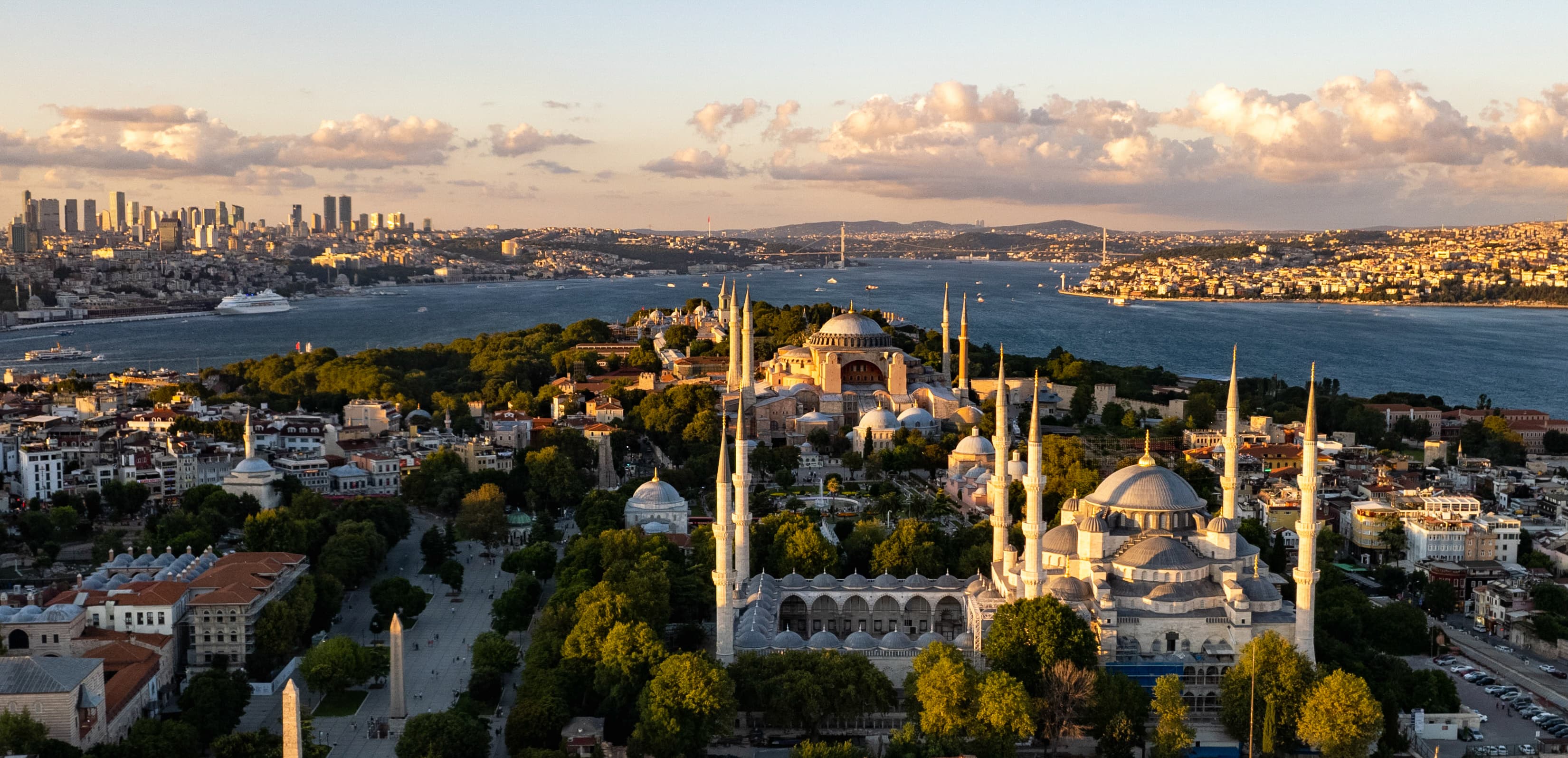
Istanbul and the Marmara region live on a humid temperate climate close to the Mediterranean, but more contrasted than the Aegean and southern coasts — hot humid summers, cool wet winters, long luminous springs and autumns.
April to June are the most recommended months. April marks the start of spring with the tulip bloom (the Istanbul Tulip Festival, in April, transforms the parks of Emirgan, Gülhane and Yıldız into multicoloured carpets — a legacy of the 18th century, the 'Tulip Era' under Ahmed III). May and June offer the most pleasant temperatures (18-25 °C), generous sunshine, growing but still manageable crowds. Bosphorus cruises are at their best in May-June: calm waters, golden light, welcoming yalı terraces (former Ottoman wooden mansions).
July and August are the hottest and busiest months. The heat (32-38 °C) is aggravated by the humidity of the Sea of Marmara — afternoons are gruelling for outdoor visits (Topkapi, Hippodrome, cisterns). Istanbulites partly desert the city for the Princes' Islands or the Aegean coast. Tourist crowds peak: Hagia Sophia may require 1h30 wait, the Grand Bazaar becomes unbearable midday. The upside: long evenings on Bosphorus terraces, music and film festivals, intense nightlife.
September and October are probably the best period to visit Istanbul. Heat retreats (24-28 °C in September, 18-22 °C in October), light takes on golden autumn tones, tourist crowds ebb after 15 September, and hotel rates fall noticeably. The Sea of Marmara remains mild for swimming at the Princes' Islands until mid-October. October brings the first rains but they remain brief and don't hinder visits.
November to March correspond to Istanbul's winter — humid, cool (4-12 °C), often grey and windy. The Bosphorus takes on melancholy film-noir tones, steaming hammams become essential refuges, museums and palaces empty out. A magnificent period for travellers who love urban authenticity, intimate atmosphere and floor-level rates (4-5 star hotels at -50% compared to summer). Snow is possible in January-February (on average 4-6 days per winter) — Istanbul under snow with the silhouettes of Hagia Sophia and the Blue Mosque is one of the most striking images of the trip. Avoid New Year's Eve when the city is heavily secured following the 2017 attacks.
Read also
- Istanbul, the City Across Two Continents — Hagia Sophia, Blue Mosque, Topkapi, Grand Bazaar, Bosphorus cruise and Ottoman hammam.
- Cappadocia: Fairy Chimneys and Hot-Air Balloons — The unique volcanic landscape of central Anatolia, one hour by flight from Istanbul.
- Turkey — Complete country guide: visa, budget, regions to explore and best time to visit.
- The Aegean Coast — Ephesus, Pamukkale, Bodrum: archaeological treasures and beaches of the western coast.