Central Anatolia offers strong thematic experiences — Sufi spirituality in Konya, modern Turkish history in Ankara, Anatolian archaeology, unique natural landscapes.
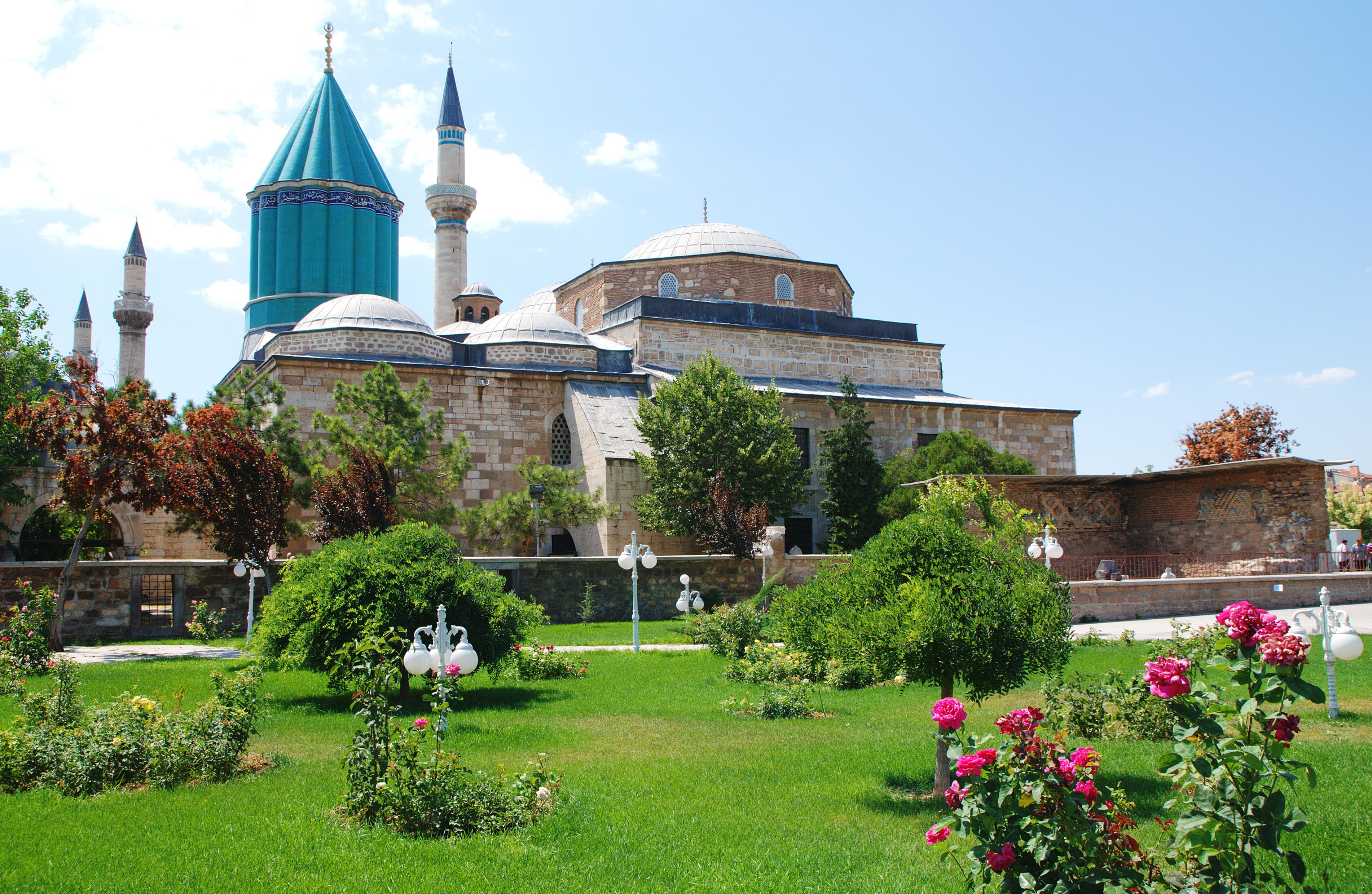
Konya — Mevlana Mausoleum and whirling dervishes. The Mevlana Mausoleum (Mevlana Türbesi, iconic turquoise dome) is one of the most visited sanctuaries in the Muslim world — 3 million pilgrims/year. Free visit (covered clothing, headscarf for women — provided at entrance). The adjacent museum recounts the life of Mevlana Rumi (1207-1273), his manuscripts, his Mevlevi musical instruments. The whirling dervishes ceremony (sema) takes place every Friday evening at the Cultural Center Mevlana (Mevlana Kültür Merkezi, free, advance booking recommended 24-48h). During the Mevlana Festival (10-17 December), daily ceremonies — book 6 months ahead. Other Konya sites: Alaeddin Mosque (12th c., Seljuk), Karatay Medrese (13th c., Iznik ceramics), Selimiye complex, archaeological museum.
Ankara — Atatürk Mausoleum and Museum of Civilisations. The Atatürk Mausoleum (Anıtkabir) is a vast monumental complex built between 1944 and 1953 — Lions' processional way, ceremony square, hall of honour where Mustafa Kemal Atatürk (1881-1938) rests. Essential visit to understand modern Turkey. Free, 2-3h. The Museum of Anatolian Civilisations (Anadolu Medeniyetleri Müzesi) is housed in a 15th c. Ottoman caravanserai near the citadel. Exceptional collections: Neolithic statuettes of Çatalhöyük (8,000 BC), Hittite reliefs of Hattuşa, sphinxes of Alaca Höyük, Phrygian jewellery, Urartian sculptures. One of the best archaeological museums in the world — 2-3h, 700 TRY (€21). Ankara Citadel (Hisar): walk in the Ottoman old town, panoramic view.
Hattuşa (Boğazkale) — UNESCO Hittite capital, 200 km east of Ankara. Extensive archaeological site (upper city, lower city, ramparts, royal palace, rock sanctuary of Yazılıkaya with its divine processions carved). Visit 3-4h, car essential. To combine with the Ankara museum (Hittite collection).
Çatalhöyük — first urban site of humanity, 50 km south of Konya. Inhabited from the 7th to 6th millennium BC, it testifies to the Neolithic revolution (sedentarisation, agriculture, urbanism). UNESCO 2012. Visit 1-2h with guide (recommended), site requiring much imagination. For prehistoric archaeology enthusiasts.
Lake Salda — between Pamukkale and Antalya (3h from Pamukkale). Swimming in turquoise waters (June-September), public beach arranged in the southeast, photography of the 'Maldives of Turkey'. 2-3h on site. Accommodation in Yeşilova or Burdur.
Lake Tuz (Tuz Gölü) — between Ankara and Cappadocia (45 min from Aksaray). Spectacle of the brilliantly white salt crust in summer (July-September, evaporated surface). Striking photos at sunrise and sunset. Visit 1-2h.
Lake Van (Van Gölü) — in the far east, Turkey's largest lake. Akdamar Island (Akdamar Adası) and its Armenian Holy Cross church (10th c., exceptional biblical bas-reliefs). Cruise from Gevaş (30 min, 50 TRY return). City of Van: perched castle, Kurdish gastronomy (kavurma, Van ayran). To combine with Mount Nemrut (colossal heads, UNESCO, 400 km) for an in-depth trip in eastern Anatolia.
Read also
- Cappadocia: Fairy Chimneys and Hot-Air Balloons — The unique volcanic landscape of central Anatolia, spectacular complement to an Anatolian trip.
- Istanbul and the Sea of Marmara — The megalopolis on the Bosphorus, classic starting point for a Turkey trip.
- Turkey — Complete country guide: visa, budget, regions to explore and best time to visit.
- Aegean Coast — Ephesus, Pamukkale, Bodrum — Turkey's western coast near Lake Salda.