ville
Konya
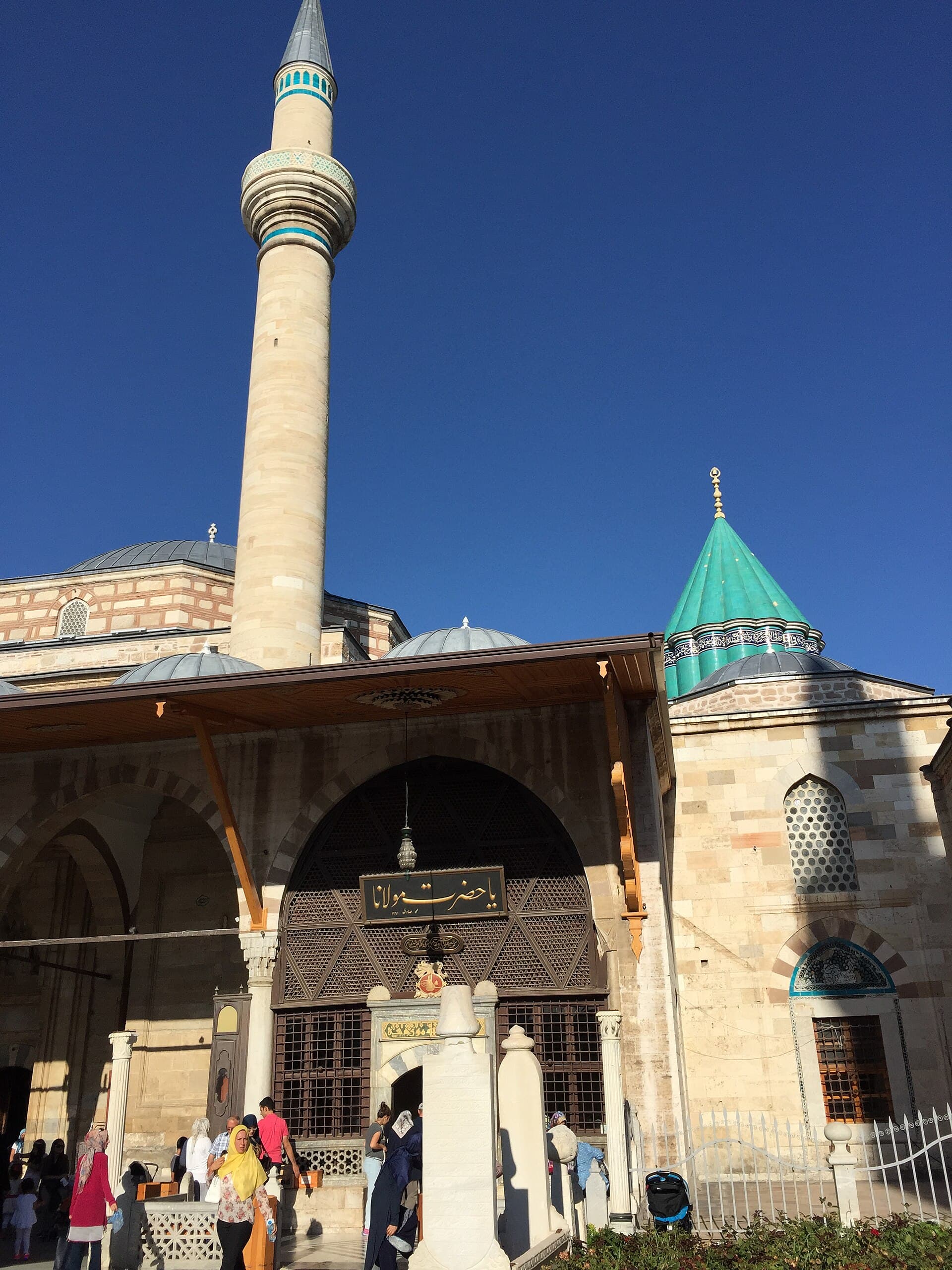
One of the great spiritual centres of the Muslim world — this is where Rumi, founder of the Sufi order of Mevlevis (whirling dervishes), lived and is buried. The sema ceremony, a mystical dance of hypnotic beauty, is on UNESCO's intangible heritage list.
Konya — Turkey's seventh city with 1.4 million inhabitants — is the country's spiritual capital and one of the great Sufi centres of the Muslim world. It is here, in the 13th century, that Mevlana Celaleddin Rumi (1207-1273) lived, the great Persian mystical poet whose works (the _Masnavi_, a collection of 25,000 distichs) are considered one of the summits of world literature and one of humanity's finest spiritual testimonies. Rumi founded in Konya the Sufi order of Mevlevis (or 'whirling dervishes') whose ritual ceremony, the sema, has been on UNESCO's intangible heritage list since 2008.
The Mausoleum of Mevlana (Mevlana Türbesi) — recognisable by its iconic turquoise dome — is Konya's central pilgrimage site, visited every year by 3 million faithful and tourists. On Rumi's tomb, one reads in Persian: 'When I am dead, do not seek my tomb in the earth. Seek it in the hearts of men.' The complex includes Rumi's tomb and that of several of his disciples, a sema ceremony hall (semahane) with dervish costumes, illuminated manuscripts of the _Masnavi_, Mevlevi musical instruments (ney, kanun, daf). Free visit. Dress code: shoulders and knees covered, headscarf for women (provided at entrance). Go early morning (opening 9am) or late afternoon to avoid crowds.
The sema ceremony (semâ) is Konya's absolute signature experience. This 1h30-2h ritual dance, open to the public in silent attendance, sees dancers (semazen) enter wearing black coats (symbolising the tomb) which they remove to reveal white robes (symbolising the shroud) and crowned with a tall brown hat (symbolising the gravestone). They spin on themselves in circles, arms outstretched — right palm to the sky (receiving divine grace), left palm to the ground (transmitting it to the Earth). The music of ney (reed flute) and kanun creates a meditative trance that transports both dancers and spectators. Ceremonies in Konya every Friday evening at the Cultural Center Mevlana (Mevlana Kültür Merkezi, free, advance booking recommended 24-48h ahead via the centre or your hotel). During the Mevlana Festival (10-17 December, anniversary of Rumi's death which he called his 'wedding day' with the divine — _Şeb-i Arus_), daily ceremonies — booking 6 months ahead mandatory, pilgrims from around the world.
Konya also preserves a remarkable Seljuk heritage. The Alaeddin Mosque (Alaeddin Camii, 12th century, on the eponymous hill) is one of the oldest mosques in Anatolia. The Karatay Medrese (Karatay Medresesi, 1251, now Iznik ceramics museum) and the İnce Minareli Medrese (1265, stone sculpture museum) are masterpieces of Seljuk architecture with exceptional sculpted portals. The Archaeological Museum and the Ethnographic Museum complete the cultural visit.
50 km south of Konya, the Neolithic site of Çatalhöyük (UNESCO since 2012) is one of the first urban sites of humanity — inhabited from the 7th to the 6th millennium BC, it testifies to the Neolithic revolution (sedentarisation, agriculture, proto-urban urbanism). Guided visit recommended (200 TRY / €6, 1-2h).
What we love
- ✅Unique spirituality: Mausoleum of Mevlana Rumi, one of the great Sufi centres of the Muslim world
- ✅Sema ceremony of the whirling dervishes (UNESCO) — mystical and cultural experience of hypnotic beauty
- ✅Remarkable Seljuk architecture: Alaeddin Mosque, Karatay Medrese, İnce Minareli
- ✅Çatalhöyük (50 km): one of the first urban sites of humanity (Neolithic, UNESCO)
- ✅Preserved authenticity: few foreign tourists, religious and conservative atmosphere, deep Turkish immersion
What to know
- ❌Conservative religious atmosphere — no alcohol in most restaurants, strict dress code
- ❌Little nightlife — Konya is an austere working city, not festive
- ❌Harsh continental climate: biting cold in winter (-10°C at night), dry heat in summer (38°C)
- ❌Cultural sites limited to 2-3 days of visit — not a long stay destination
Situation
Où se situe Konya ?
Ouvrir la carte en grand sur OpenStreetMap →Frequently asked questions
How to attend a whirling dervishes ceremony in Konya?+
How many days do you need in Konya?+
How to get to Konya from Istanbul or Cappadocia?+
Should you visit Çatalhöyük?+
Where to stay in Konya?+
Our verdict
Konya is Turkey's spiritual capital — the must-go destination for travellers passionate about Sufism, Rumi's thought and the whirling dervishes' ritual dance. Ideally integrate Konya into a classic trip between Cappadocia (240 km, 3h drive) and Mediterranean coast (510 km, 6h to Antalya) — one night on site with a Friday evening sema ceremony constitutes a striking spiritual stop. For enthusiasts, devote 2-3 days: Day 1 Mausoleum of Mevlana + Mevlana museum + Karatay Medrese. Day 2 Alaeddin Mosque + İnce Minareli Medrese + Archaeological Museum + Friday evening sema ceremony. Day 3 excursion to Çatalhöyük (50 km, Neolithic UNESCO site). For the Mevlana Festival (10-17 December), brave the winter cold — the spiritual experience is exceptional, but book your hotel 6 months ahead.
Nearby

"Frais Istanbul, neige Cappadoce."
Expert on Konya · 1 contributions
 Mediterranean Desk — Mowando·Editor