
Mowando

Climate & seasons

When to visit Mount Kilimanjaro?

By La rédaction · Updated 6/7/2026

The Editors
The Editorsauteur principal✓ Verified

"Janvier (Moshi base) : petite saison sèche, conditions excellentes pour l'ascension. Au sommet (-15 à -20 °C la nuit)."

Expert on Mount Kilimanjaro · 1 contributions

The best periods

The best time to visit Mount Kilimanjaro is July to October (long dry season) or January-February (short dry season).

Jui, Aoû, Sep, Oct

Grande saison sèche — fenêtre principale

  • Conditions météo optimales : ciel dégagé au sommet, taux de réussite des ascensions au plus haut (jusqu'à 85 % sur Lemosho 8 jours)
  • Sentiers secs et stables, peu de boue en forêt, faible risque de chute
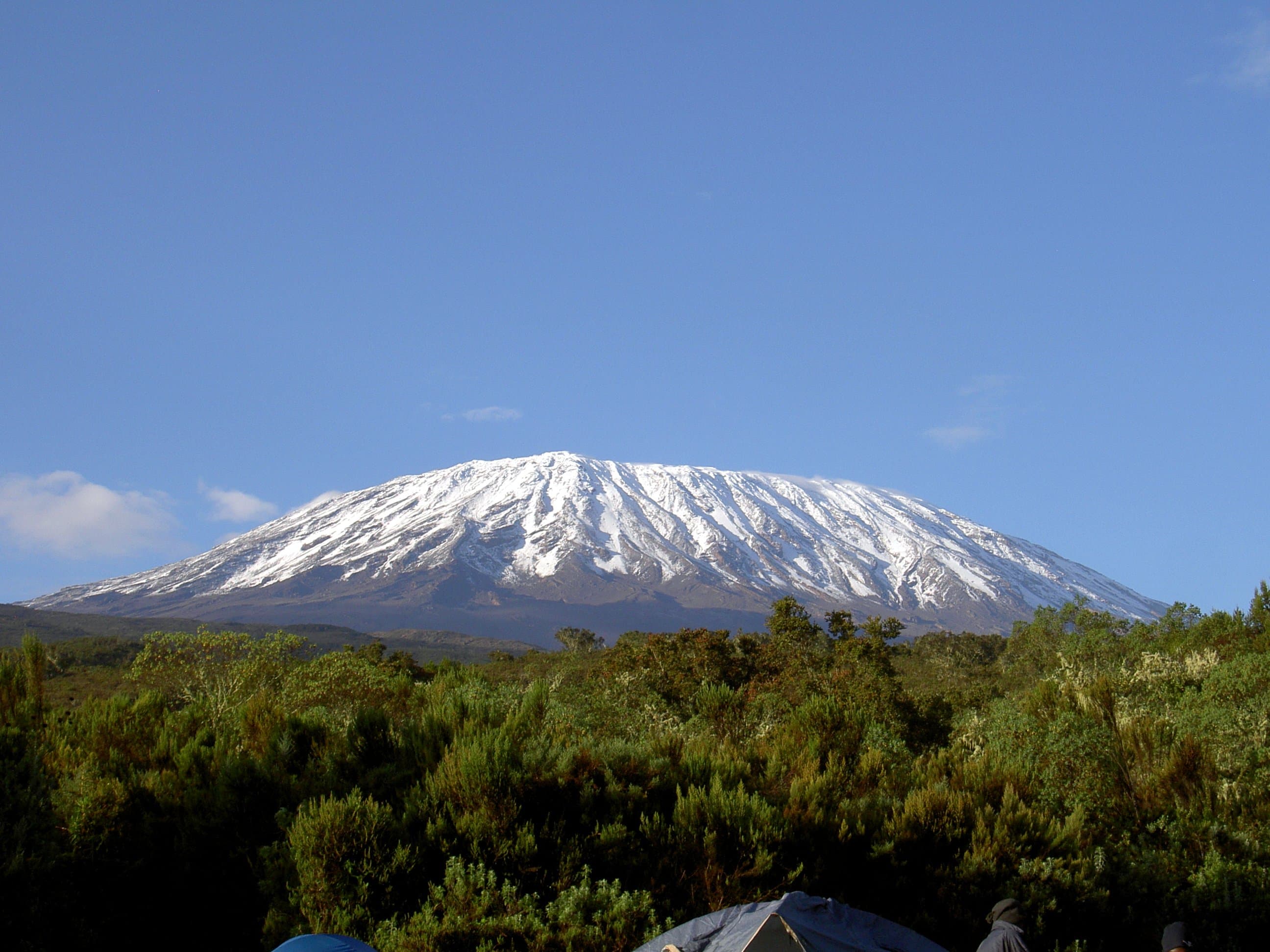
  • Vue spectaculaire sur les glaciers de l'Uhuru Peak au lever du soleil
  • Combinaison naturelle avec le Circuit Nord à la même période
  • Haute saison : routes Machame et Marangu bondées en août, tarifs maximaux (2 500-3 500 USD Lemosho 8j)
  • Camps d'altitude (notamment Barafu) saturés en août
  • Températures extrêmes au sommet (-15 à -20 °C la nuit)
Jan, Fév

Petite saison sèche — alternative excellente

  • Conditions sèches et stables, taux de réussite équivalent à juillet-août
  • Moins de monde sur les sentiers, ambiance plus paisible
  • Lumière exceptionnelle au lever du soleil sur le sommet, photos parmi les plus iconiques
  • Tarifs intermédiaires (10-15 % moins chers qu'en haute saison)
  • Quelques averses possibles à basse altitude (zone forestière 2 000-3 000 m)
  • Risque de neige fraîche au-dessus de 4 500 m
  • Températures encore plus froides au sommet (-20 à -25 °C la nuit)
Mar, Avr, Mai

Grandes pluies — déconseillé

  • Tarifs en forte baisse (-30 % sur les forfaits trek)
  • Aucune affluence sur les sentiers — expérience quasi solitaire
  • Forêt pluviale luxuriante, paysages photographiques verdoyants à basse altitude
  • Pluies intenses en zone forestière (jusqu'à 250 mm/mois en avril), sentiers très boueux
  • Visibilité réduite au sommet, photos brumeuses, neige collante au-dessus de 5 000 m
  • Taux de réussite divisé par deux, risque accru d'hypothermie
  • Plusieurs opérateurs sérieux n'organisent pas d'ascension durant cette période
Juin, Nov, Déc

Saisons intermédiaires

  • Juin : début de saison sèche, conditions souvent excellentes, tarifs encore raisonnables
  • Novembre-décembre : petites pluies courtes, ascensions possibles avec un opérateur expérimenté
  • Bon compromis fréquentation/conditions
  • Imprévisibilité météorologique, conditions changeantes au sommet
  • Décembre devient haute saison après le 20 (tarifs en hausse)
  • Juin peut être froid et venteux à haute altitude

Month-by-month climate

Temperatures, rainfall and sunshine in Mount Kilimanjaro across the 12 months.

JanFévMarAvrMaiJuinJuiAoûSepOctNovDéc
Min-10°-10°-9°-8°-9°-11°-11°-11°-10°-10°-9°-10°
Max-6°-5°-5°-5°-5°-6°-7°-6°-6°-6°-6°-6°
Mer
Pluie632mm407mm435mm672mm409mm162mm146mm198mm368mm448mm617mm644mm
Soleil/j8.3h9.8h9.8h7.4h7.1h8h7.3h7.6h7.7h9.4h8.7h8.6h

Tourist crowds

Monthly attendance levels (0 = empty, 100 = saturated).

Jan
70
Fév
72
Mar
30
Avr
15
Mai
20
Jui
70
Jui
92
Aoû
98
Sep
90
Oct
80
Nov
40
Déc
75

Average flight prices

Average round-trip Paris → Mount Kilimanjaro by month.

Jan
$1,026
Fév
$1,048
Mar
$778
Avr
$702
Mai
$756
Jui
$918
Jui
$1,188
Aoû
$1,350
Sep
$1,134
Oct
$994
Nov
$886
Déc
$1,058

Frequently asked questions

Which route to choose for the Kilimanjaro climb?+
The __Lemosho 7-8 day route__ is largely the best for first-time climbers: __maximum success rate (85%)__, most varied landscapes (western start, crossing the Shira plateau), moderate traffic, ideal acclimatisation profile with progressive climb and 'climb high, sleep low'. The __Machame 7 day route__ ('Whiskey route') is the second option, popular and beautiful (65-70% success rate). The __Marangu 5-6 day route__ ('Coca-Cola route') is the only one with huts, but its fast profile gives a low success rate (55%) — avoid for a first summit, except for budget/time constraint. The __Northern Circuit 8-9 days__ is the long-duration option for purists (rate > 90%).
How much does a complete climb cost?+
Count on __2,000 to 4,000 USD/person__ for a 7-8 day all-inclusive climb (certified guide, porters, cook, food, tents, transfers from Moshi, park fees). __Park fees__ represent a huge share: 70 USD/day entry + 50 USD/day camping + 20 USD rescue fee + 18% VAT = around __700 USD for 7 days__. Low-cost operators at 1,500 USD exist but often sacrifice safety and porter conditions — avoid. For a serious KPAP-referenced operator: Tusker Trail (2,800-3,500 USD), Altezza Travel (2,200-2,800 USD), Climbing Kilimanjaro (2,400-3,000 USD), Kandoo Adventures (2,500-3,200 USD), Zara Tours (1,800-2,400 USD, serious budget option).
What is the risk of altitude sickness?+
__Acute Mountain Sickness__ (AMS) affects 50% of trekkers on Kilimanjaro to varying degrees, starting at 4,000 metres. Symptoms: persistent headaches, nausea, loss of appetite, sleep disturbances, breathlessness at rest. Serious forms (high-altitude pulmonary or cerebral edema) are rare but potentially fatal — immediate descent is then imperative. __Prevention__: choose a long route (Lemosho 7-8 days rather than Marangu 5 days), climb slowly ('pole pole' in Swahili), drink 3-4 litres of water per day, take Diamox (acetazolamide) on medical prescription 1-2 days before the summit, follow the 'climb high, sleep low' rule. The guide is trained to recognise symptoms — always listen if they recommend descent.
What equipment is needed?+
Clothing must cover temperatures from +25 °C at the base to -20 °C at the summit. __Essentials__: high waterproof hiking boots already broken in, warm down jacket (700+ down or synthetic), fleece, windproof and waterproof hardshell jacket, thermal underwear (merino), warm gloves + waterproof overgloves, hat, glacier glasses (category 4), -10 °C comfort sleeping bag, 25-35 L daypack for the day, 80 L duffel bag (carried by porters, 15 kg limit), telescopic trekking poles, headlamp + spare batteries, water bottles/bladder (3 L), first aid kit. Most operators rent missing gear in Moshi (sleeping bag, down jacket, poles) for 5-10 USD/day.
How much physical preparation time is needed?+
__Minimum 3 months__ for a regular hiker, __6 months__ for an unfit traveller. The ideal programme combines: __cardio__ (running 3-4 times/week, cycling, swimming for endurance) with a long weekend outing (2-4 hours of mountain walking or stairs elevation), __leg strengthening__ (squats, lunges, weighted stair climbs), and __high-altitude hikes__ if possible (ideally 1-2 outings above 3,000 m before departure). Walking with a 8-10 kg loaded pack is essential to accustom joints and back. Altitude itself cannot be prepared — only on-site acclimatisation counts. Schedule your departure with a safety margin: don't book a return flight the day after descent.
Can the climb be done in rainy season?+
Technically yes, but it's __strongly discouraged__. From mid-March to May (long rains), the forest zone (1,800-3,000 m) receives up to 250 mm of precipitation per month, trails become muddy and slippery, summit visibility is often reduced by clouds, and the success rate drops drastically. Several serious operators don't organise ascents during this period. From November to mid-December (short rains), conditions are less disabling — brief afternoon showers, generally workable trails, success rate close to high season. It's an interesting window for tight budgets (rates down 20-30%) and travellers seeking tranquillity.
Can Kilimanjaro and safari be combined?+
Yes, it's even the most common combination. The usual logic: arrival at Kilimanjaro Airport (JRO), 1 night in Moshi, Kilimanjaro climb (7-8 days via Lemosho or Machame), 1-2 recovery nights in Moshi or Arusha, then Northern Circuit safari (6-8 days). Count on __17-20 days on the ground total__. Some operators offer complete packages integrating climb + safari. Don't reverse the order: a safari before the summit is comfortable, but after a 7-day ascent you'll be tired and wildlife observation quality will suffer. Ideally add 4-5 nights in Zanzibar at the end for complete beach recovery.

Our verdict

Mount Kilimanjaro is one of the most accessible major summits on the planet, and one of the most emblematic personal challenges one can take on during a trip to Africa. The climb demands physical commitment, serious preparation (3-6 months of cardio) and substantial budget (2,000-4,000 USD/person), but the summit at 5,895 metres at sunrise, with tropical glaciers glittering and the shadow of the massif cast over the Maasai plains, is one of those experiences no description does justice. Imperatively choose the Lemosho 7-8 day route to maximise your summit chances (85% vs 55% on Marangu), select a serious KPAP-referenced operator, and ideally combine with a Northern Circuit safari (before or after) and 4-5 nights in Zanzibar for recovery.

Similar destinations
Mowando Letter

Once a month: the right destinations for the right season + the best booking windows.

No spam. One-click unsubscribe. Your data is never shared.