ville
Kandy
The spiritual capital of Sri Lankan Buddhism, last bastion of independence against European colonisation, UNESCO-listed since 1988.
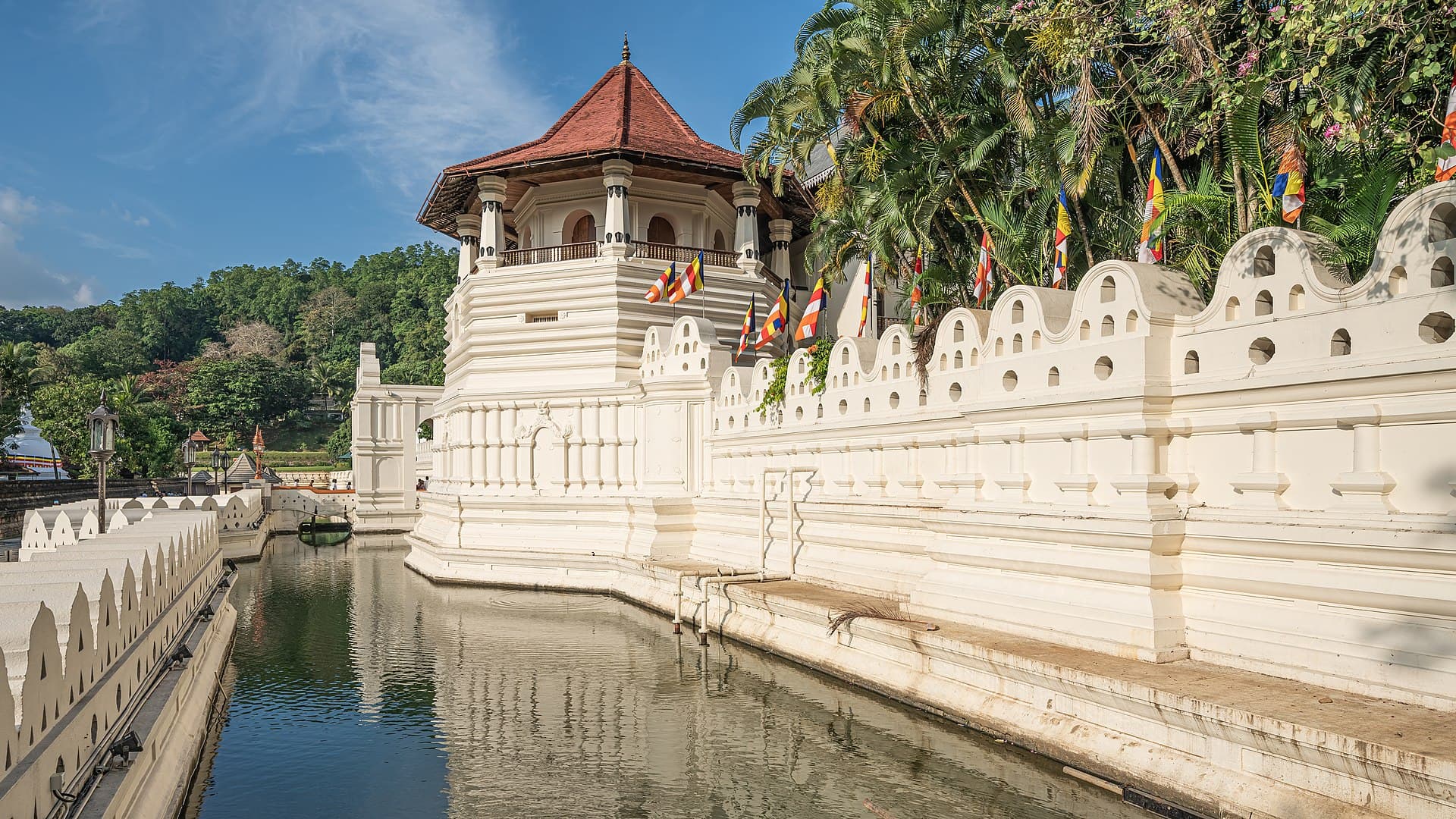
Kandy is the cultural and spiritual heart of Sri Lanka. Perched 500 metres up in the central hills, founded in the late fourteenth century, it was the last royal capital of the island — the final bastion of independence against successive invasions by the Portuguese (sixteenth century), the Dutch (seventeenth century) and the British. The British only managed to take Kandy in 1815, after two difficult wars, putting an end to 2,300 years of continuous Sri Lankan monarchy. The city has been UNESCO-listed since 1988 and remains today the identity-defining heart of Sinhalese Buddhism.
The sacred core of Kandy is the Temple of the Tooth (Sri Dalada Maligawa), home to the most precious relic in the Buddhist world: a tooth of the historical Buddha, brought from India in the fourth century and hidden in the royal sanctuary in the sixteenth century to protect it from invaders. The tooth itself is never shown — it rests in seven nested caskets in the inner sanctum — but the faithful file through in their thousands every day to venerate the outer casket. The pooja (ceremonies) are held three times a day (5:30 am, 9:30 am, 6:30 pm); the evening one, accompanied by traditional drums and trumpets, is the most striking.
Beyond the temple, Kandy offers several other points of interest: the sacred lake dug in 1807 by the last king, around which locals stroll in the evening; the Peradeniya Botanical Garden (6 km southwest), 60 hectares of gardens founded in 1821 and one of the most beautiful tropical gardens in Asia; the Audience Hall museum which traces the last two centuries of Kandyan monarchy; and of course the Kandyan dance show (Kandy Lake Club, 5:30 pm every evening) which features traditional dances, drums and fire walkers. Allow 2 full days to cover it, plus an extra day if you combine with the Esala Perahera in July-August.
What we love
- ✅Spiritual heart of Sri Lankan Buddhism with the UNESCO-listed Temple of the Tooth
- ✅Altitude (500 m) provides a milder climate than the coast (20-28 °C)
- ✅Esala Perahera: one of the largest Buddhist festivals in the world in July-August
- ✅Central position: gateway to tea country (Ella, Nuwara Eliya) and end of cultural triangle
- ✅Peradeniya Botanical Garden: one of the finest in Asia, 60 hectares
What to know
- ❌Heavily congested city centre, difficult traffic at peak hours
- ❌Temple of the Tooth often crowded, particularly for the evening pooja
- ❌Strict dress code at the temple: shoulders and knees covered, shoes removed
- ❌Humid climate nearly all year (central hills get plenty of rain)
Situation
Où se situe Kandy ?
Ouvrir la carte en grand sur OpenStreetMap →Frequently asked questions
How many days should I plan in Kandy?+
What is the Esala Perahera festival?+
How do I visit the Temple of the Tooth?+
How do I get to Kandy from Colombo?+
Where should I stay in Kandy?+
When is the best time to visit Kandy?+
What else can I do from Kandy?+
Our verdict
Kandy is a non-negotiable stop on any Sri Lanka itinerary. The city embodies Sri Lankan identity in all its depth — religious, historical, cultural — and forms the natural bridge between the cultural triangle (Sigiriya, Dambulla) and the tea country (Ella, Nuwara Eliya). Plan for two full nights: the first evening for the Temple of the Tooth pooja, the next day for Peradeniya Botanical Garden in the morning and Kandyan dance show late afternoon. If you can, time your visit with the Esala Perahera (10 nights of processions in July-August, exact dates set by the lunar calendar): it's one of the most striking cultural experiences Asia has to offer.
Nearby

"Pic touristique haute saison, mer calme sud."
Expert on Kandy · 1 contributions
 South-East Asia Desk — Mowando·Editor