ville
Chiang Mai
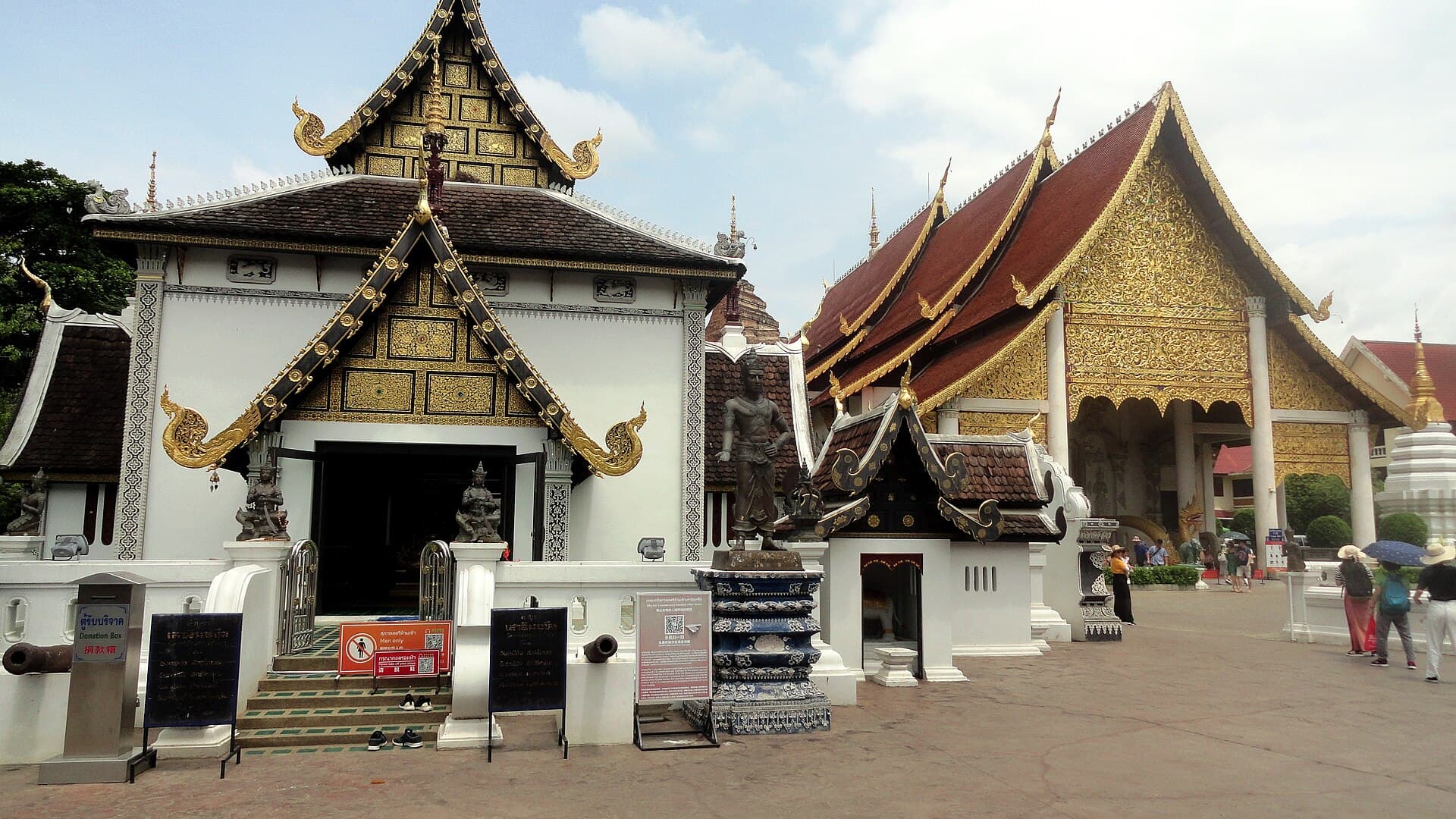
Surrounded by forested mountains and 300 ancient temples, Chiang Mai is the cultural and spiritual heart of Northern Thailand.
Chiang Mai is Thailand's second tourism city, but it has neither the scale nor the frenzy of Bangkok. Founded in 1296 as the capital of the Lanna Kingdom, it has kept its soul: an old city ringed by moats, some 300 temples with gold-tiled roofs — more per square kilometre than anywhere else in the country — night markets where artisans and cooks mingle with saffron-robed monks, and teak and bamboo forests that begin only a few kilometres from the centre.
The mountains are ever-present in Chiang Mai: Doi Suthep (1,676 m) looms over the city in its wooded silhouette and crowns the most venerated temple in the north. Further out, Doi Inthanon (2,565 m), the roof of Thailand, offers landscapes of misty montane forest, waterfalls and hill-tribe villages that few travellers associate with the usual Thai postcard. Chiang Mai is also the world capital of Thai cooking classes and Buddhist meditation retreats — a city that slows the pulse and invites you to linger.
For many travellers, it is the antidote to Bangkok: walkable, manageable, conversational. A digital-nomad scene has taken root in Nimman, a generous yoga and wellness community in Santitham, and a quietly excellent coffee scene throughout the moated centre. Stay a week and Chiang Mai usually convinces you to stay two.
What we love
- ✅300 temples in a human-scale old city, infinitely more navigable than Bangkok
- ✅Mountain trekking in the hill-tribe minority villages (Karen, Hmong, Akha)
- ✅Thai cooking classes among the best in the world, market visit included
- ✅Relaxed atmosphere and a large international community of travellers, digital nomads and expats
- ✅One of the cheapest destinations in Thailand: accommodation and food are remarkably affordable
What to know
- ❌Severe air pollution from January to April (agricultural burning), air quality sometimes hazardous
- ❌Rainy season (June-October) makes some treks slippery and less pleasant
- ❌Fewer beach or sea activities — this is a mountain and culture destination
- ❌Tourism is growing fast: parts of the Old City are losing some authenticity
Situation
Où se situe Chiang Mai ?
Ouvrir la carte en grand sur OpenStreetMap →Frequently asked questions
How many days do I need in Chiang Mai?+
When is the best time to visit Chiang Mai?+
How do I get to Chiang Mai from Bangkok?+
Are treks around Chiang Mai safe?+
Should I worry about air pollution in Chiang Mai?+
Which Chiang Mai markets are unmissable?+
How do I get around Chiang Mai?+
Are Chiang Mai cooking classes really worth it?+
Our verdict
Chiang Mai is one of those places you plan three days for and end up staying a week. The city is small, human, rich in temples, in flavours, in surprises — and the mountains are right there, a short drive away. For a balanced trip to Thailand, pair Bangkok (urban culture, grand royal sites) with Chiang Mai (spirituality, gastronomy, trekking): the two cities complement each other perfectly and connect in 1h15 by air or by overnight train.
Our take: time your visit around either the Yi Peng festival in November (book accommodation a full season ahead) or the cool, clear January-February window. Avoid March-April unless air quality is a non-issue for you. And do at least one cooking class on your first days — local chefs are at their warmest in the morning markets, and you'll cook better Thai food at home for years afterwards.
Réserver votre séjour
Liens partenaires — une commission peut nous être reversée, sans surcoût pour vous.
 HébergementAnnulation gratuite
Hôtels & resorts en Thaïlande
Guesthouses de Bangkok, resorts des îles du Sud et lodges du Nord : comparez tout le royaume au meilleur prix.
ActivitéCoup de cœurTemples, îles & excursions en Thaïlande
Grand Palais de Bangkok, île-hopping vers Phi Phi, sanctuaires d'éléphants éthiques : la Thaïlande à la carte.
VolComparateurVols vers la Thaïlande
Bangkok en vol direct ou avec escale (environ 11 à 12 h) : comparez les tarifs, au plus bas hors vacances scolaires.
Nearby



"Janvier est le mois le plus frais de Chiang Mai — les nuits descendent à 12-15 °C, prévoir un vêtement chaud. Idéal pour les treks en montagne : l'air est clair et les sentiers secs."
Expert on Chiang Mai · 1 contributions