Mowando

Region

Tuamotu

The Tuamotus are the world's diving Mecca: Rangiroa and Fakarava rank among the planet's top three dive spots, with passes crossed by hundreds of sharks, manta rays and groupers.

4.90

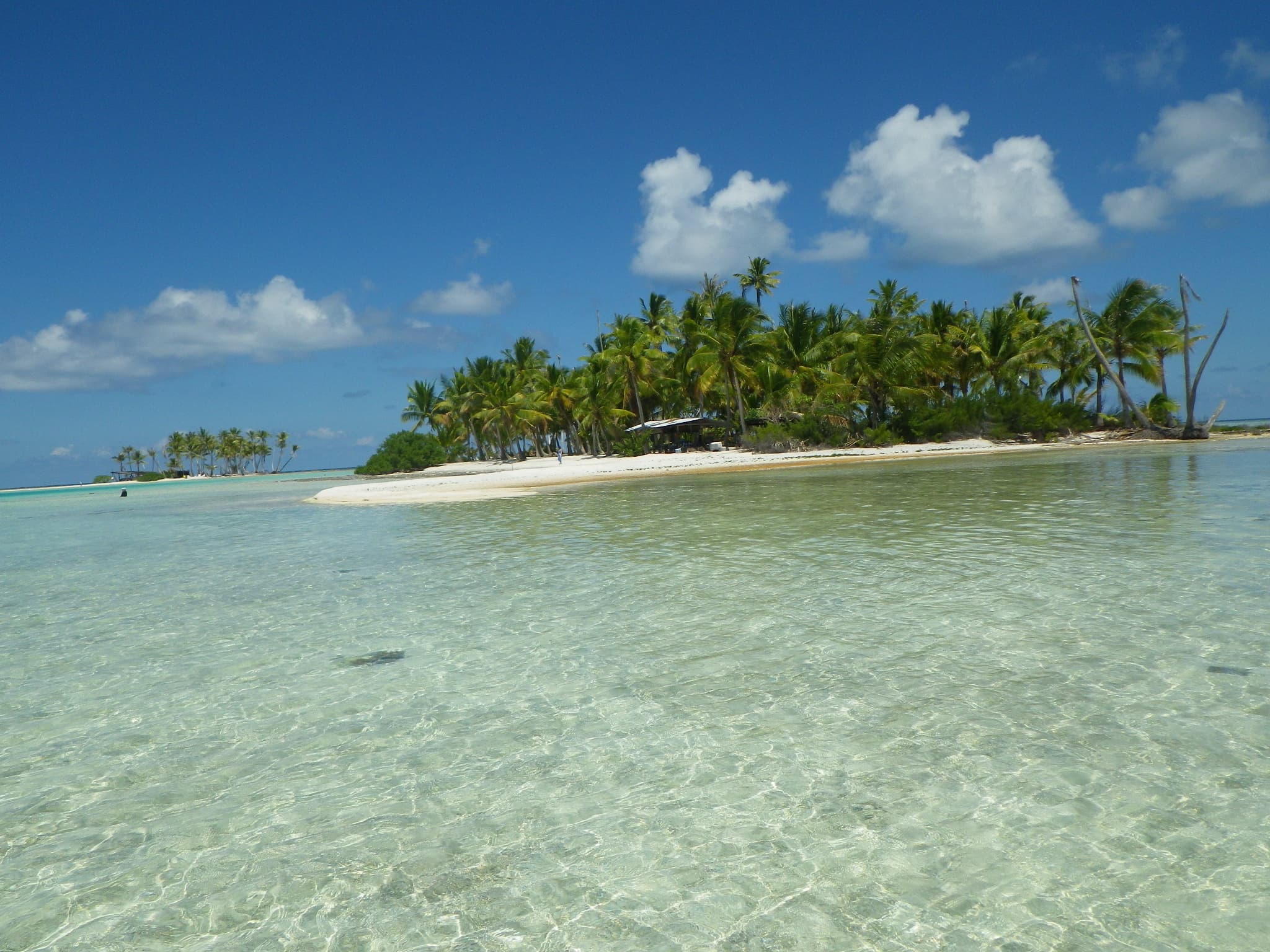
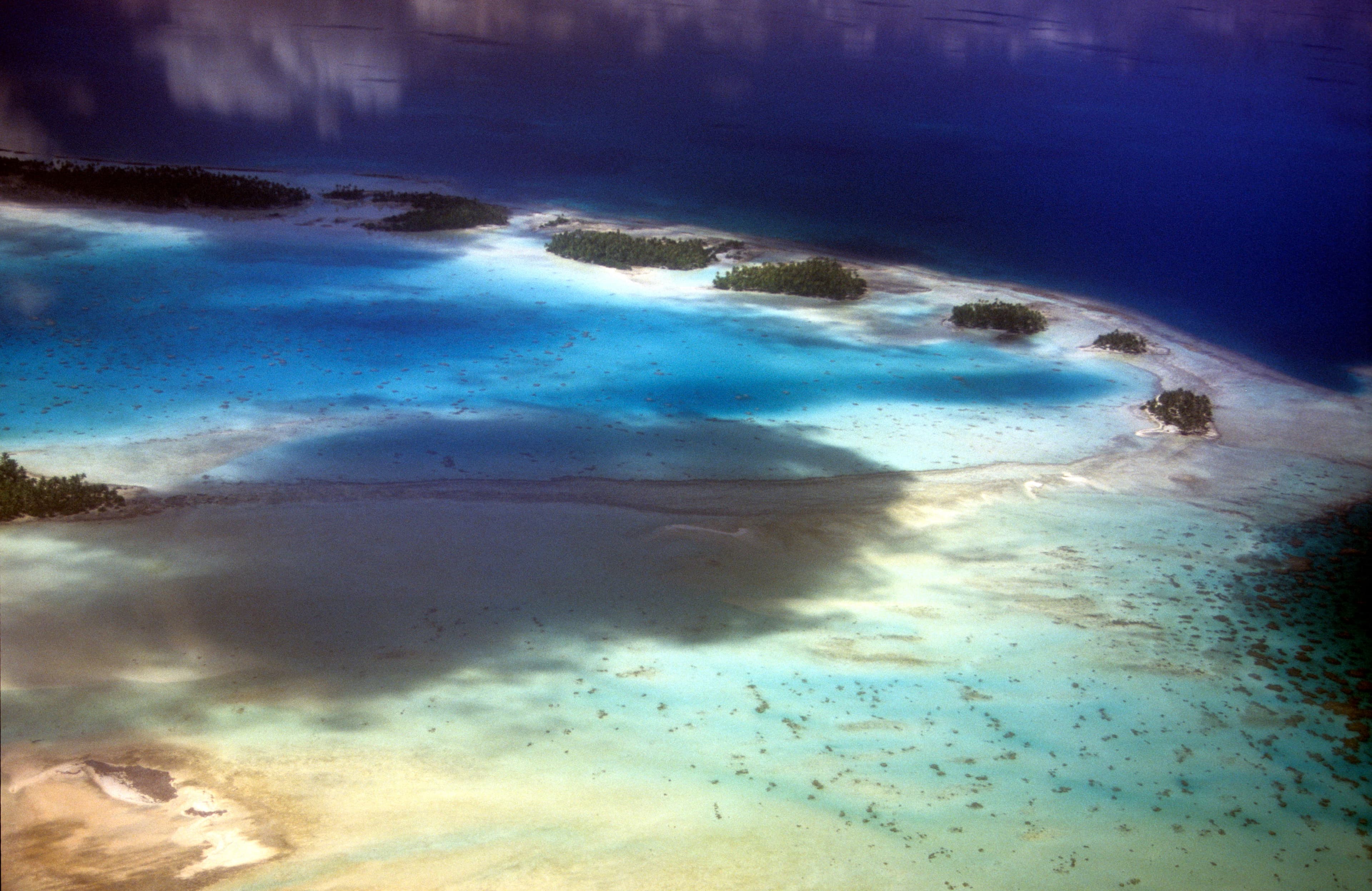
The Tuamotu archipelago is the world's largest collection of coral atolls: 77 atolls scattered across 1,500 km in the heart of the South Pacific, between the Society Islands and the Marquesas. Unlike the high volcanic islands of the Society group (Bora Bora, Moorea), the Tuamotus are flat atolls — coral rings floating at sea level around a central lagoon, rarely exceeding 5 metres in elevation. This unique geography makes them one of the world's purest destinations for divers and snorkellers.

The main tourist atolls are Rangiroa (the second-largest atoll in the world, 250 km around), Fakarava (a UNESCO Biosphere Reserve since 2006), Tikehau (the pink atoll famous for its fish-rich lagoon studied by Cousteau) and Manihi (pearl farming). Each follows the same template: a central lagoon of 200-1,600 km² connects with the ocean through passes (narrow channels) where the inflowing and outflowing current concentrates marine life. It is in these passes that the world-famous drift diving takes place: you let yourself be carried by the current and observe hundreds of grey reef sharks, parrotfish, groupers, manta rays and sometimes dolphins.

The Tuamotus offer what few destinations in the world can claim: an intact and concentrated marine biodiversity, with technical dive sites (currents can be strong) of exceptional intensity. The Tiputa pass at Rangiroa is world-famous for its playful dolphins that ride the standing waves at the entrance. The south pass of Fakarava hosts in June-July one of the world's largest grouper aggregations — up to 18,000 individuals coming to spawn — a phenomenon filmed by Laurent Ballesta's team in the famous documentary '700 Sharks in the Night'.

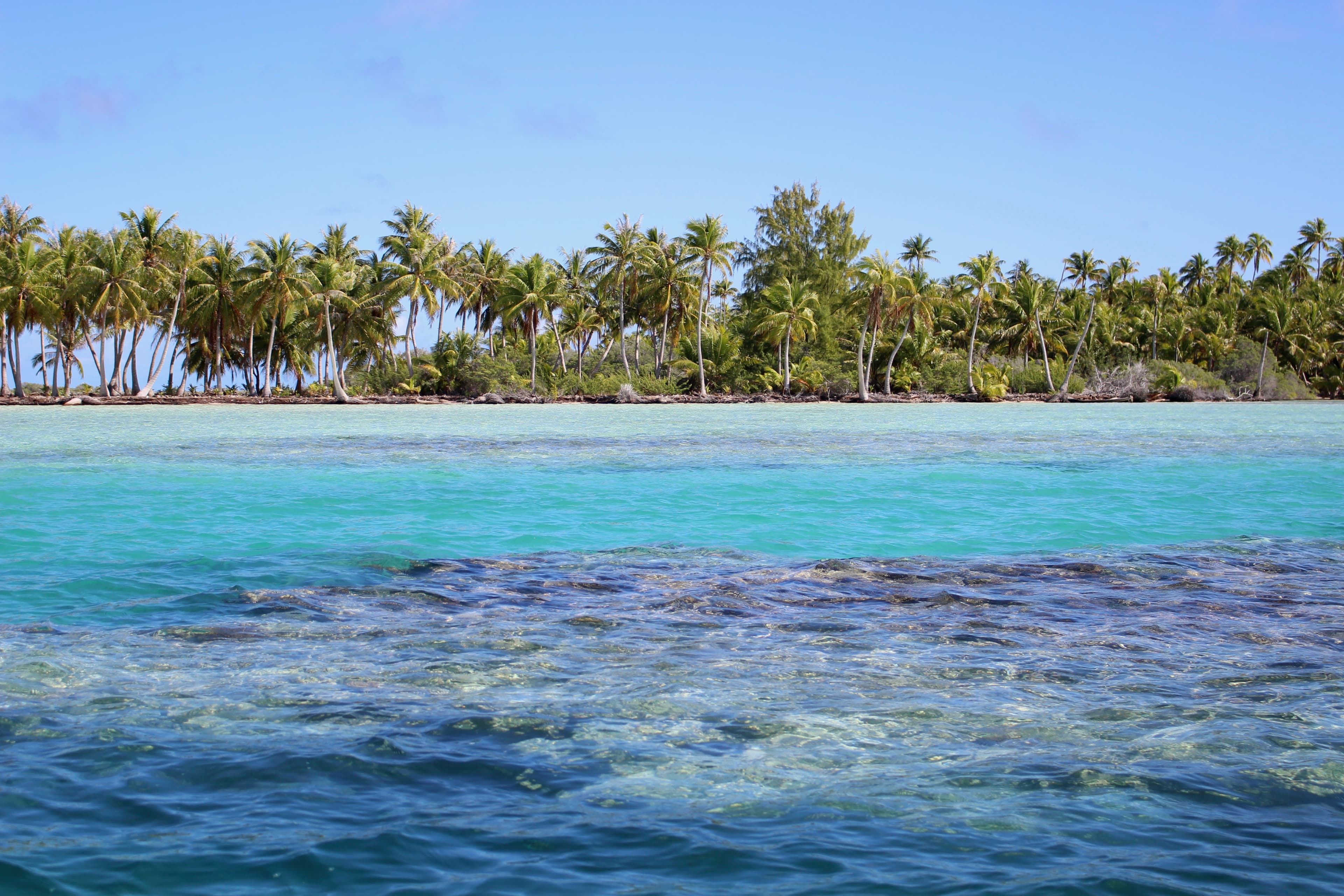
The trade-off is clear: the Tuamotus are minimalist islands. No mountains, no waterfalls, no nightlife, limited tourist infrastructure. Accommodation is mainly family pensions (€40-100/night), a few diving lodges (€150-300/night) and a single upmarket resort per main atoll (Kia Ora on Rangiroa, Pearl Beach on Manihi). This is a trip you take for the diving, the absolute calm and the raw beauty of turquoise lagoons — not for luxury or dramatic landscapes.

Explore Tuamotu

Spots in the region
Situation

Où se situe Tuamotu ?

Ouvrir la carte en grand sur OpenStreetMap →

Frequently asked questions

Which Tuamotu atolls are best for a first trip?+
For a first trip to the Tuamotus, the two benchmark atolls are Rangiroa (the most accessible, with established diving infrastructure, direct 1-hour flight from Tahiti) and Fakarava (UNESCO reserve, legendary south-pass diving, wilder atmosphere). For a quieter trip, Tikehau (pink atoll, small scale, ideal for disconnection) or Manihi (pearl farming) are excellent alternatives. Avoid visiting multiple atolls in a single trip if you have less than 10 days — focus on one to truly appreciate it.
Do you need to be a certified diver to visit the Tuamotus?+
No, it is not required but it is strongly recommended to make the most of the experience. Snorkelling from the boat or from the motus already offers fine sightings (rays, blacktip reef sharks, multicoloured fish). For the passes (Tiputa at Rangiroa, south Fakarava), a PADI Open Water or CMAS level 1 certification is required, and level 2 (Advanced Open Water) recommended for drift dives in strong current. Several clubs offer try dives or full Open Water courses on site (€450-600 for certification). Snorkelling is possible year-round.
When can you see the grouper aggregation at Fakarava?+
The camouflage grouper (Epinephelus polyphekadion) spawning aggregation at the south pass of Fakarava occurs each year around the full moon of June or July (exact timing varies — check with local dive clubs). Up to 18,000 groupers concentrate in the pass for 3-5 days, in turn attracting hundreds of grey reef sharks coming to feed. It is one of the world's greatest underwater spectacles, documented by Laurent Ballesta in the film '700 Sharks in the Night'. Book your dive months in advance — slots are very limited.
How do you get to the Tuamotus from Tahiti?+
Only by plane via Air Tahiti, from Papeete airport (PPT). Tahiti-Rangiroa: 1 h flight, €200-300 return depending on season. Tahiti-Fakarava: 1 h 30 (possible stop at Rangiroa), €250-350 return. Tahiti-Tikehau: 1 h, €200-300 return. Tahiti-Manihi: 1 h 30, €250-350 return. Flights are operated in ATR 42/72 (turboprops), with 4-7 rotations per week per atoll. The Air Tahiti multi-island passes (Lagons, Bora-Tikehau) save on combinations. Book 2-3 months ahead, especially in high season.
What is the budget for a stay in the Tuamotus?+
The Tuamotus are cheaper than the Society Islands but remain a relatively expensive destination (remote islands). Plan for: family pension €40-100/night/person half-board (standard formula), diving lodge €150-300/night/person all-inclusive, upmarket resort (Kia Ora Rangiroa, Pearl Beach Manihi) €400-800/night. Diving costs €60-90 per dive, or €500-800 for a 10-dive package. Meals are usually included at pensions (simple Polynesian cuisine, fish, rice). Overall budget: €150-300/day/person in a pension, €400-800/day in a resort.
Do you need cash in the Tuamotus?+
Yes, essential. ATMs are rare or non-existent on most atolls. Rangiroa has an ATM at Avatoru (the only one on the atoll, sometimes out of order). Fakarava has an ATM at Rotoava (main village). On other atolls (Tikehau, Manihi, Mataiva, etc.), no ATM. Bank cards are accepted in the main lodges and resorts, but not in small family pensions. Withdraw cash in XPF in Papeete before flying to the Tuamotus — count on €200-400 per person in cash to cover extras (drinks, dives, snorkelling, souvenirs). Bring fresh banknotes: damaged or old bills may be refused.
What can you do in the Tuamotus if you don't dive?+
The Tuamotus offer several activities beyond diving. Snorkelling from the motus is splendid (stingrays, blacktip reef sharks, groupers, multicoloured fish). Pirogue excursions to deserted motus (picnic on pink sand at Tikehau or the Pink Sands of Fakarava) are unforgettable. Pearl farm visits (Manihi, Rangiroa) explain Polynesian black pearl culture, one of the territory's emblematic productions. At Rangiroa, the Dominique Auroy vineyard — the only vineyard in the South Pacific, producing a unique white wine on coral soil — is worth a visit. And of course, the pure experience of doing nothing on some of the world's most beautiful beaches.

Our verdict

The Tuamotus are the ultimate diving and snorkelling experience in French Polynesia — and probably one of the three best diving destinations in the world. Rangiroa and Fakarava are global benchmarks for their passes filled with grey reef sharks, dolphins, manta rays and groupers. But this is a minimalist destination that has to be earned: no mountains, little luxury, raw and authentic atmosphere. Plan a minimum of 5-7 days on a single atoll to do several dives and explore the lagoon. The dry season (May to October) is strongly preferable for diving. Combine the Tuamotus with the Society Islands for a balanced trip: 4-5 days in Bora Bora or Moorea + 4-5 days in Fakarava or Rangiroa.

Mowando Letter

Once a month: the right destinations for the right season + the best booking windows.

No spam. One-click unsubscribe. Your data is never shared.