- Visa
- Required
- Passport validity
- 3 months
- Safety level
- Très élevée
- Recommended vaccines
- DTP à jour, Hépatite A, Hépatite B (séjours prolongés), ROR (rougeole-oreillons-rubéole) à jour
Les ressortissants français et la plupart des Européens doivent obtenir une NZeTA (New Zealand Electronic Travel Authority) avant le départ — c'est une autorisation électronique de voyage obligatoire pour tout séjour touristique de moins de 90 jours. La demande se fait en ligne sur le site officiel de l'Immigration New Zealand (immigration.govt.nz) ou via l'application mobile NZeTA, au plus tard 72 heures avant le départ (idéalement 1-2 semaines à l'avance). Coût : 17 NZD via l'application, 23 NZD via le site web. Validité : 2 ans avec entrées multiples (durée de chaque séjour limitée à 90 jours).
À la NZeTA s'ajoute obligatoirement l'IVL (International Visitor Conservation and Tourism Levy), une taxe touristique néo-zélandaise destinée au financement de la conservation environnementale et des infrastructures touristiques : 100 NZD (relevée en octobre 2024, contre 35 NZD auparavant). Elle se paie en même temps que la NZeTA, en une seule transaction. Total formalités : environ 117-123 NZD par personne (65-70 €).
Le passeport doit être valide au moins 3 mois après la date de retour prévue (règle néo-zélandaise standard). Un billet retour ou de continuation est exigé à l'embarquement et au contrôle frontalier. Les autorités peuvent également demander la preuve de moyens financiers suffisants (1 000 NZD par mois de séjour environ) — rarement contrôlé en pratique pour les courts séjours touristiques.
À l'arrivée, une Traveller Declaration électronique (NZTD) doit être complétée dans les 24 heures précédant le vol — déclaration douanière, sanitaire et biosécurité. La Nouvelle-Zélande applique l'une des biosécurités les plus strictes au monde : aucun produit alimentaire, fruit, viande, miel, plante, terre sur les chaussures, équipement de randonnée non nettoyé n'est autorisé. Les amendes sont lourdes (400 NZD minimum pour non-déclaration). Déclarez tout, jetez les fruits avant l'arrivée, nettoyez vos chaussures de randonnée.
New Zealand is among the safest destinations in the world. The country ranks 4th on the Global Peace Index 2024 (behind Iceland, Ireland and Austria), within the global top 10 for 15 years. Violent crime is very low and assaults on tourists almost non-existent. New Zealand Police are accessible, professional and widely respected.
The risks for tourists are mainly natural and linked to outdoor activities, far more than urban crime. New Zealand sits on the Pacific Ring of Fire — real seismic risk (last major earthquake Christchurch 2011, magnitude 6.3, 185 deaths) and volcanic activity on the North Island (Tongariro, Ruapehu, Taranaki, Whakaari/White Island closed after the 2019 eruption that killed 22 people). During an earthquake, follow the 'Drop, Cover, Hold' instructions. In case of coastal tsunami alert, head to high ground immediately. The New Zealand government's EMA (Emergency Mobile Alert) app sends real-time alerts.
Outdoor activities are the primary cause of tourist incidents. Weather conditions can change brutally in the mountains ('four seasons in one day' — wind, rain, cold within hours), particularly on the Great Walks (Tongariro Alpine Crossing, Routeburn, Milford), at Aoraki/Mt Cook and in Fiordland. Imperatively follow DOC (Department of Conservation) advice: register your itinerary on adventure.smart.govt.nz, check weather forecasts (metvuw.com), wear suitable equipment (layers, waterproof, hiking shoes, water, energy snacks), don't go alone. Several foreign hikers die each year in the Southern Alps from lack of preparation.
Road driving is the other major risk. New Zealand roads are narrow, winding, with many one-lane bridges and long distances between petrol stations on the South Island. Left-hand driving (British heritage) is a challenge for European and North American drivers — stay alert at roundabouts, intersections and starting after stops. Fatigue on long journeys (Christchurch-Queenstown 6h30, Auckland-Wellington 8h) is a major accident cause. Strict limits: 100 km/h on open road, 50 km/h in urban areas, alcohol 0 mg/L for under-20s, 50 mg/L for adults. Stop regularly, alternate drivers, respect breaks.
The health risks are very low. No malaria, no dengue, no yellow fever. No venomous snakes (New Zealand is one of the few countries in the world without any snakes). No dangerous wild animals (except the katipō, a rare and discreet venomous spider). Some very aggressive mosquitoes (sandflies) in West Coast and Fiordland — DEET repellent and long sleeves recommended. Tap water is potable everywhere (except some rural areas and remote campsites where it is recommended to boil or filter). Medical care is excellent — the ACC (Accident Compensation Corporation) covers accidental injuries to tourists during their stay (free), but not non-accidental illnesses. International travel insurance mandatory — count €50-100/person for 21 days.
Biosecurity is particularly strict on arrival. New Zealand applies one of the world's strictest biosecurity regimes to protect its unique ecosystems (kiwis, kauri, endemic ferns). Declare everything food, fruit, meat, honey, plant, hiking or camping equipment, shoes with soil. Fines are heavy (NZD 400 minimum for non-declaration, up to NZD 100,000 for deliberate fraud). Clean your hiking shoes BEFORE departure, dispose of remaining fruit before landing.
In emergencies: 111 (police, ambulance, fire — single number). 105 (police, non-life-threatening emergencies). Personal Locator Beacon (PLB) application recommended for multi-day hikes in remote areas — NZD 8-15/day rental at DOC centre.
Read also
- North Island — Auckland, Wellington, Rotorua, Hobbiton: the populated, geothermal and cultural half.
- South Island — Queenstown, Milford Sound, Aoraki/Mt Cook, Christchurch: the wild, alpine half.
- Wellington and the southern North Island — The capital, Te Papa Museum, Cuba Street, Martinborough wines and the southern coast.
- Queenstown — World capital of adrenaline: bungee jumping (invented in 1988), jet boat, skydive.
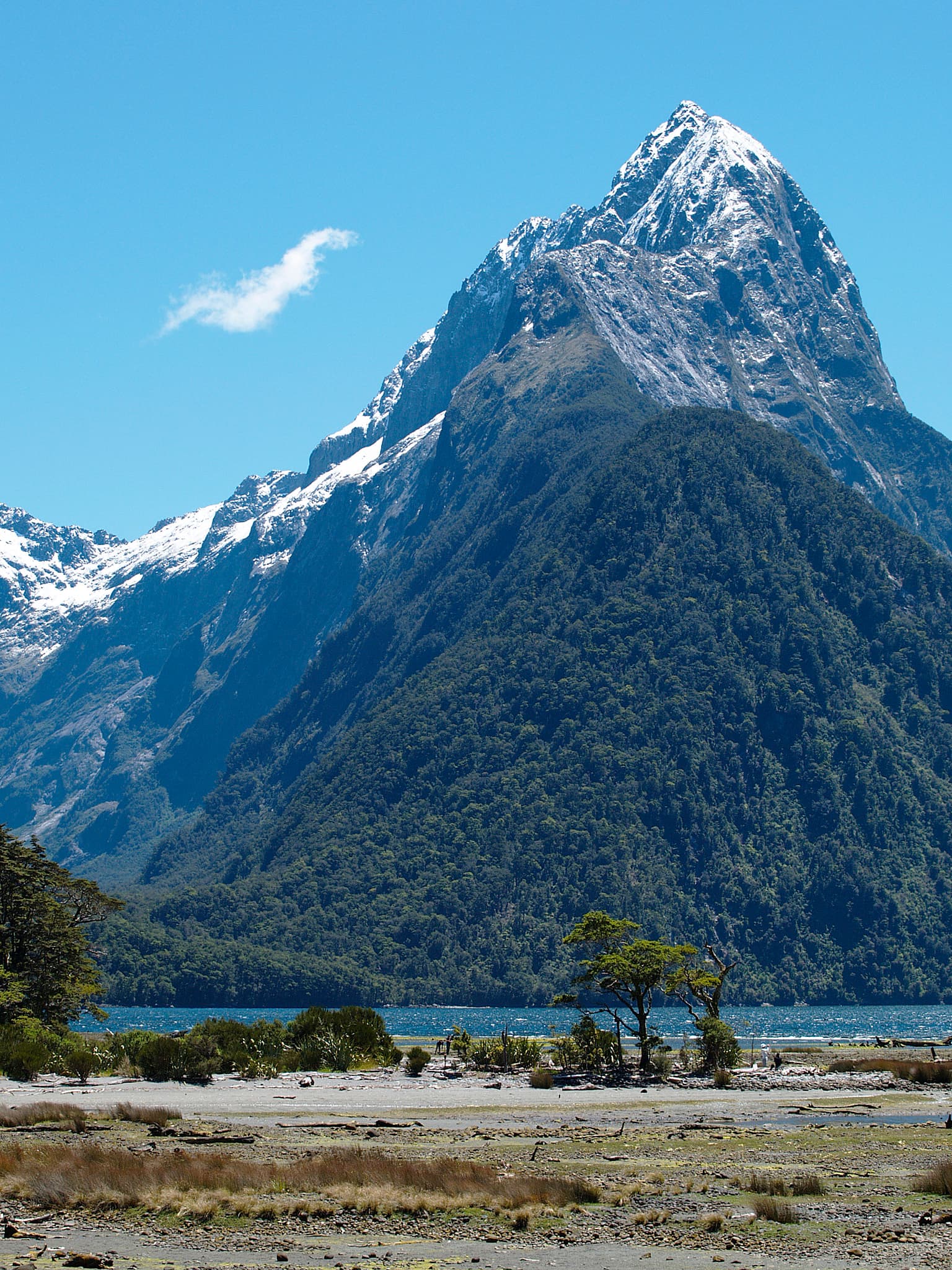
- Milford Sound — The iconic fjord of Fiordland National Park, UNESCO-listed, a must-do cruise.