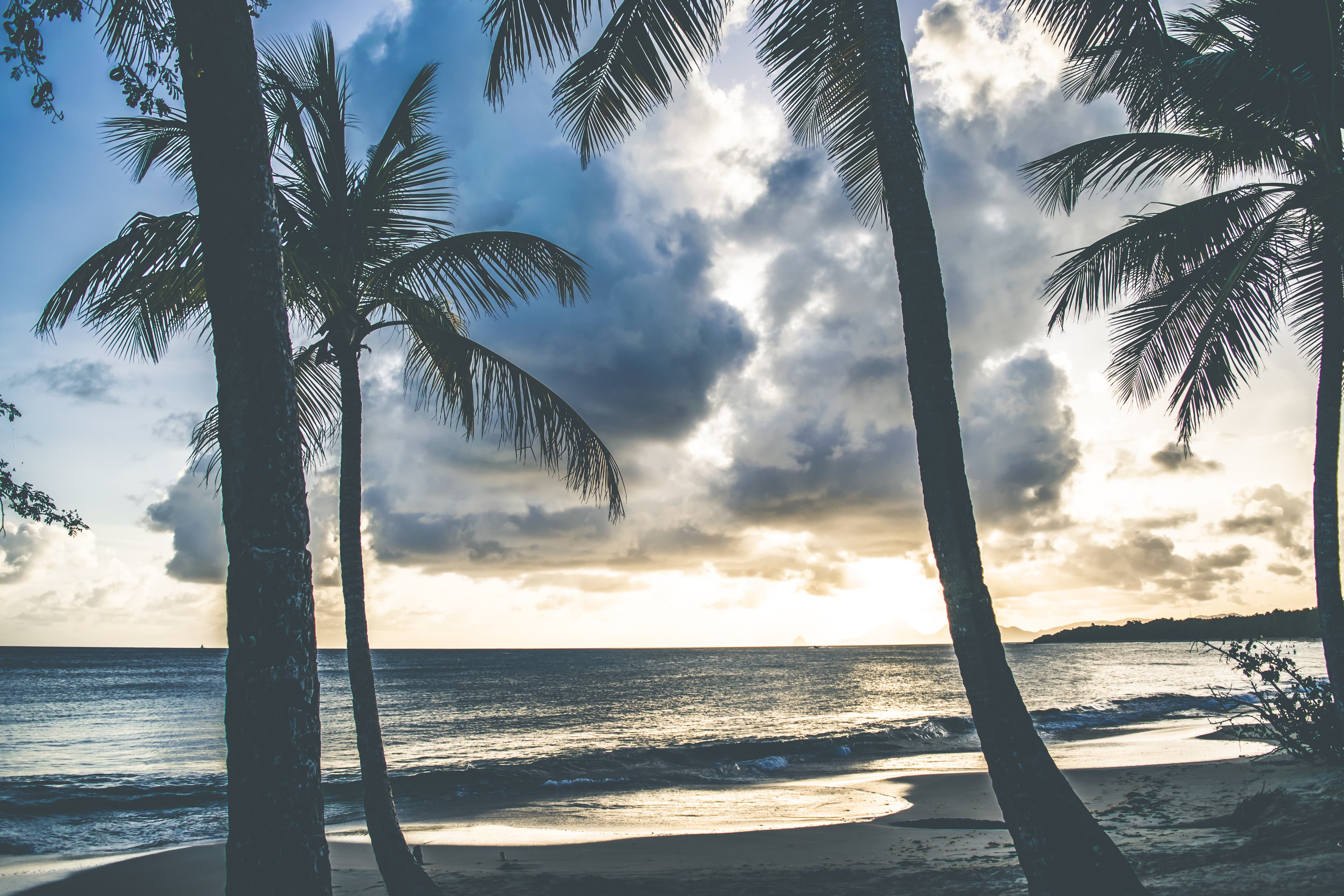
South Martinique enjoys the most stable and driest climate of the island, thanks to its exposure to constant trade winds from the northeast and its relative distance from the northern volcanic reliefs that capture most precipitation.
The carême (December to April) is unquestionably the best period to enjoy the seaside South. Temperatures of 26 to 30°C, sea at 26-27°C, regular trade winds that refresh the terraces of Le Diamant, Anses d'Arlet and Sainte-Anne. Rains are rare and brief, the sky generally clear from morning to evening. This is also the period when Les Salines, Anse Trabaud and Anses d'Arlet are at their best: brilliant white sand, translucent sea with turquoise gradients. The downside: hotel rates doubled or tripled (notably for Christmas, New Year and February school holidays), reservations essential 3 to 6 months in advance, emblematic beaches very crowded on weekends.
May and June constitute an excellent window for flexible travellers. The climate remains largely favourable (27-30°C, sea at 27°C), tropical rains remain localised and brief, but the tourist crowd has already ebbed after Easter holidays. Rates for independent rentals drop significantly, and emblematic beaches regain a certain tranquillity during the week.
The heart of the hivernage (July to October) is more delicate. Temperatures remain high (28-32°C), but humidity climbs (80-90%) and tropical showers multiply — generally intense but brief, followed by sunny intervals. The cyclone season reaches its peak mid-August to mid-October, with real risk of major weather hazard. Sargassum may affect some Atlantic beaches of Sainte-Anne and Le Vauclin. Advantage: air and hotel rates halved or thirded, beaches almost deserted, and possibility to attend the Tour des Yoles Rondes (July-August), emblematic sporting and popular event of the island.
November marks the end of the hivernage: rains decreasing, conditions stabilising progressively before the resumption of high season in December.
Read also
- Sainte-Anne: Salines and Anse Trabaud — The extreme southern tip of the island and its world-famous beaches.
- Le Diamant and its Rock — Long 4 km beach facing the emblematic volcanic rock.
- Les Trois-Îlets and Pointe du Bout — The historic seaside resort of the island and the Pagerie museum.
- Martinique — Complete guide of the Island of Flowers: visa, budget, regions, climate.
- North Martinique: Saint-Pierre and Pelée — The former capital destroyed in 1902 and the emblematic active volcano.