station balneaire
Le Diamant
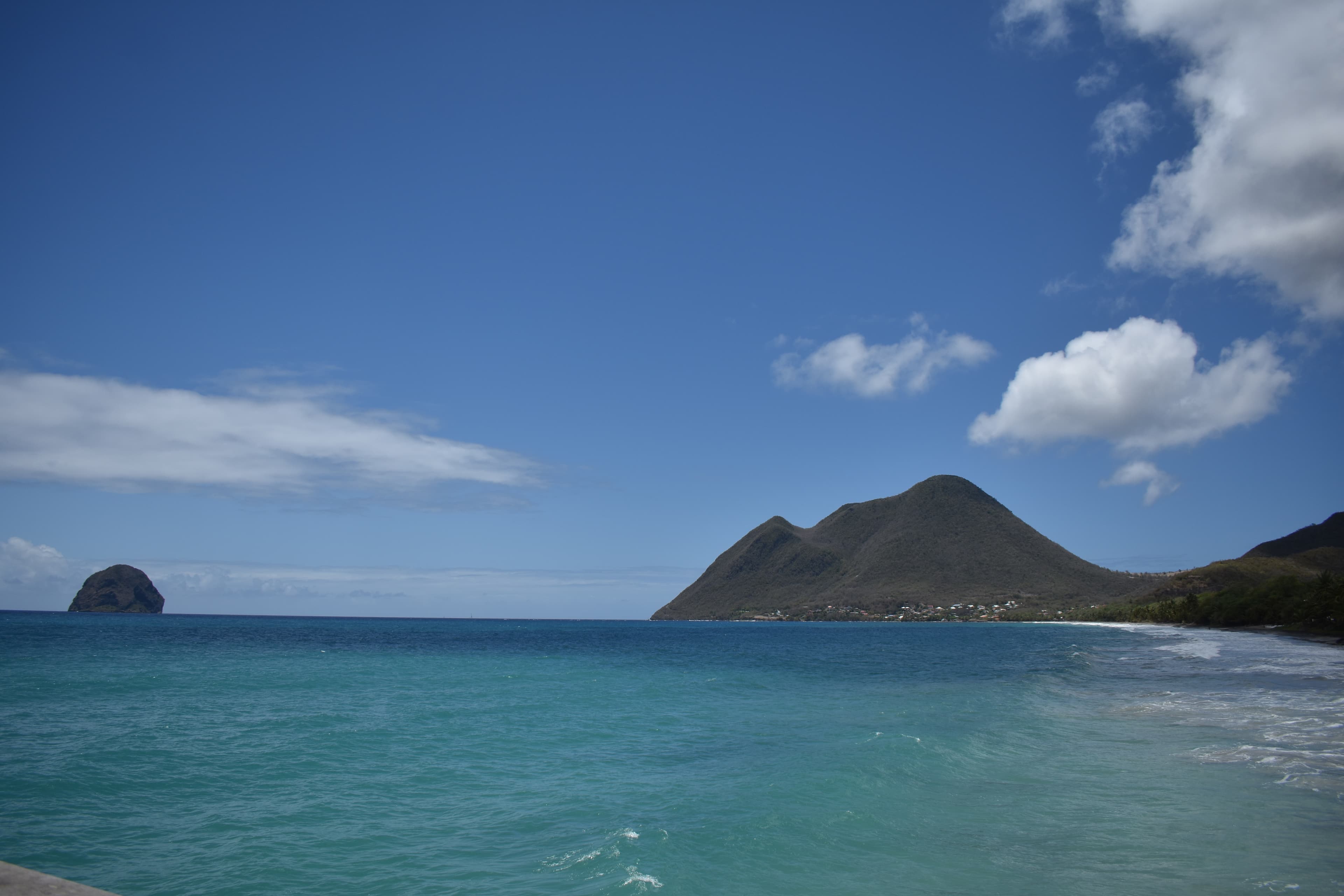
Martinique's longest beach (4 km of golden sand beaten by trade winds) facing the Diamond Rock — mythical 175-metre volcanic islet that inspired Napoleon.
Le Diamant is one of the most emblematic villages of southern Martinique — a seaside commune set on the Caribbean coast, facing the mythical volcanic islet that gives it its name: the Diamond Rock, vertical monolith 175 metres high emerging from the sea 3 km offshore. This uninhabited islet, classified as a Nature Reserve, was famously occupied in 1804 by the British who baptised it 'HMS Diamond Rock' and stationed a garrison there to harass French ships — unique episode in naval history where a cliff was officially classified as His Majesty's ship.
The commune unfolds around its 4 km beach — the longest in Martinique — stretching between Anse Caffard to the west and the village of Le Diamant to the east, facing the Rock in the background. It is a golden sand beach (and not white like Les Salines), beaten by constant trade winds that make it an ideal playground for beginner surfing and bodyboarding. Swimming is pleasant but the sea more agitated than at Les Salines: imperatively follow the signal flags (green, yellow, red) at the beach edge.
The Cap 110 Memorial (Anse Caffard, western end of the beach) is one of the most moving memorial sites of the island. Work of Martinican sculptor Laurent Valère inaugurated in 1998, the memorial consists of 15 monumental white statues (3 metres tall, facing the Gulf of Guinea) commemorating the wreck of a clandestine slave ship off Le Diamant in 1830. The statues form a triangle recalling the commercial triangle of the Atlantic trade. Free contemplation site, accessible 24/7, particularly striking at sunset.
The village of Le Diamant has retained an authentic Creole village atmosphere: church by the beach, small colourful houses, Saturday morning market, family Creole tables d'hôtes and beach bars where ti-punch is sipped at sunset facing the Rock. 5 km northeast, Anse Cafard and Pointe Burgos offer beautiful coastal hikes and exceptional panoramas.
What we love
- ✅4 km beach longest in Martinique, facing the emblematic Rock
- ✅Ideal conditions for beginner surfing and bodyboarding (regular and gentle waves)
- ✅Cap 110 Memorial: moving and powerful memorial site, free
- ✅Authentic village with relaxed Creole atmosphere and tables d'hôtes
- ✅Diving and snorkeling at Diamond Rock (3 major sites accessible from the village)
What to know
- ❌Significant swell possible in winter and hivernage: cautious swimming, follow flags
- ❌Golden sand beach (not white): less photogenic for the classic Caribbean postcard
- ❌Nightlife almost non-existent (quiet family atmosphere)
- ❌No protected lagoon: prefer Sainte-Anne or Anses d'Arlet for young children
- ❌Limited accommodation in the village itself: prefer surrounding villas
Situation
Où se situe Le Diamant ?
Ouvrir la carte en grand sur OpenStreetMap →Frequently asked questions
Can you visit Diamond Rock?+
Is Le Diamant suitable for surfing?+
What is the Cap 110 Memorial?+
Where to stay in Le Diamant?+
What to do in Le Diamant in case of agitated sea?+
Is Le Diamant accessible from the airport?+
Our verdict
Le Diamant is one of the most endearing villages of Martinique — the one combining the longest beach of the island, the mythical Rock, the moving Cap 110 Memorial and a preserved authentic Creole atmosphere. Plan 2 to 4 days on Le Diamant: beach and swimming day (follow the flags), half-day diving at the Rock, discovery day (memorial, Pointe Burgos hike, ti-punch facing sunset). Ideally stay in an independent rental in the village or in a heights villa with view over the Rock (€90-200/night off-season). Visit in March-April for the best compromise of weather, crowds and rates. The ritual: ti-punch on the Dizac beach facing the Rock, at the golden hour of sunset — one of the most beautiful moments of a Martinican stay.
Nearby

"Pic touristique haute saison sèche."
Expert on Le Diamant · 1 contributions
 Africa & Americas Desk — Mowando·Editor