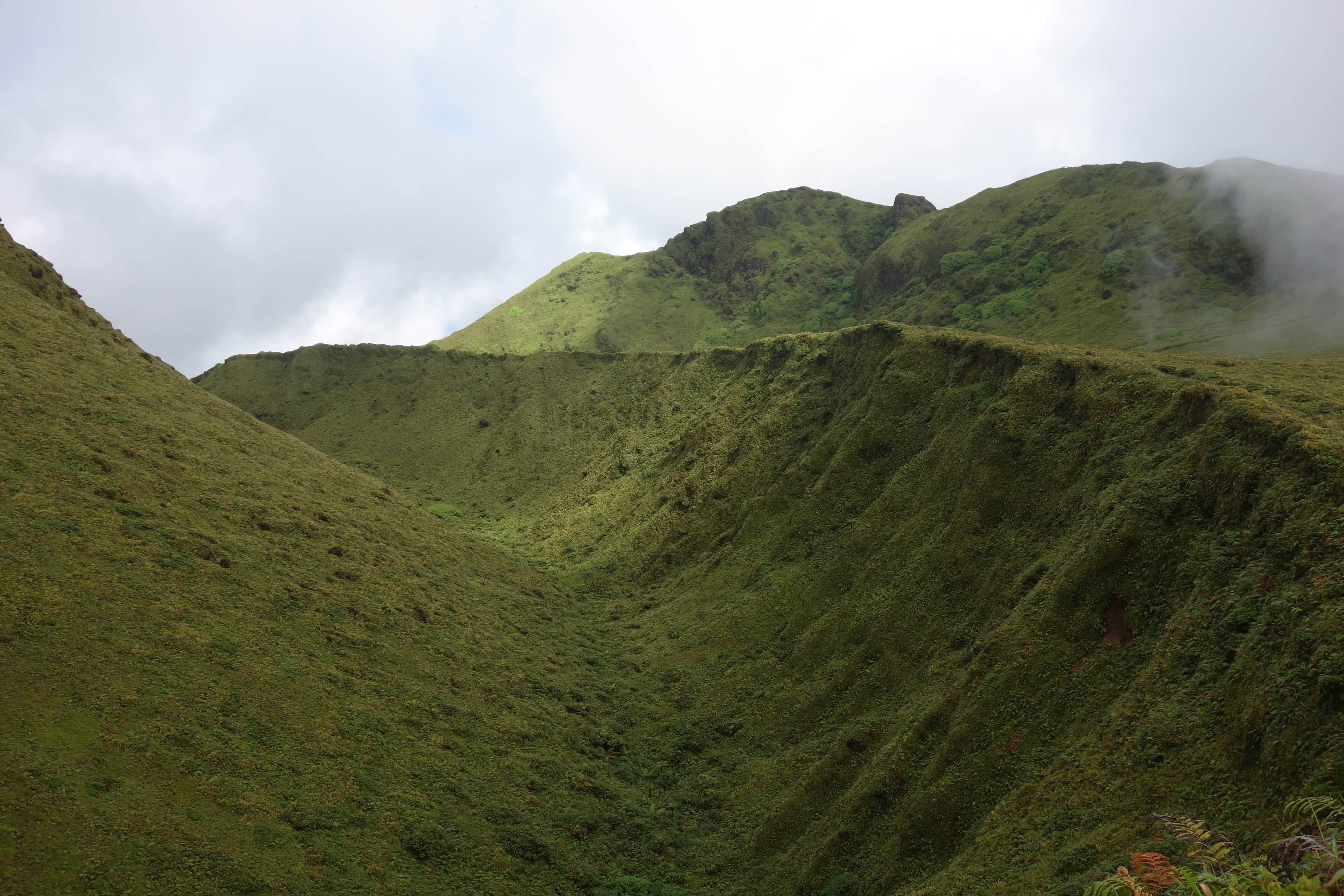
North Martinique lives under a more humid microclimate than the rest of the island, particularly marked around Mount Pelée and on the heights of the Regional Natural Park. Understanding these particularities is essential for planning a successful stay.
The carême (December to April) remains the best period for the North, with an important nuance: the Caribbean coast (Saint-Pierre, Le Carbet, Le Prêcheur) benefits from dry conditions similar to the South, while the heights and eastern-exposed slopes often remain humid even in carême. The month of March is probably the most favourable: precipitation at the lowest, sky often clear, pleasant temperatures (24-28°C in plain, 16-22°C on the heights), optimal conditions for the Pelée hike. February is also excellent but corresponds to carnival — check accommodations.
The month of May is an interesting transition window: tropical vegetation is in all its splendour after the first showers, waterfalls begin to regain power, tourist crowd ebbs. Favour the first half of the month before the hivernage rains.
The hivernage (June to November) radically transforms the North. The tropical forests of the regional park reach their peak of lushness — intense green, rivers in full power, spectacular waterfalls. Hiking becomes more delicate: slippery soils, frequent fog on Pelée, risk of tropical storms.
Read also
- Saint-Pierre, the former capital — 1902 ruins, Frank Perret Museum, Pelée ascent trail.
- Martinique — Complete guide of the Island of Flowers: visa, budget, regions, climate.
- South Martinique — Les Salines, Le Diamant, Trois-Îlets: the seaside postcard of the island.
- Central Martinique — Fort-de-France and the wild Caravelle peninsula.
- Mount Pelée hike — Aileron trail: 5h round trip to the summit of the active volcano.