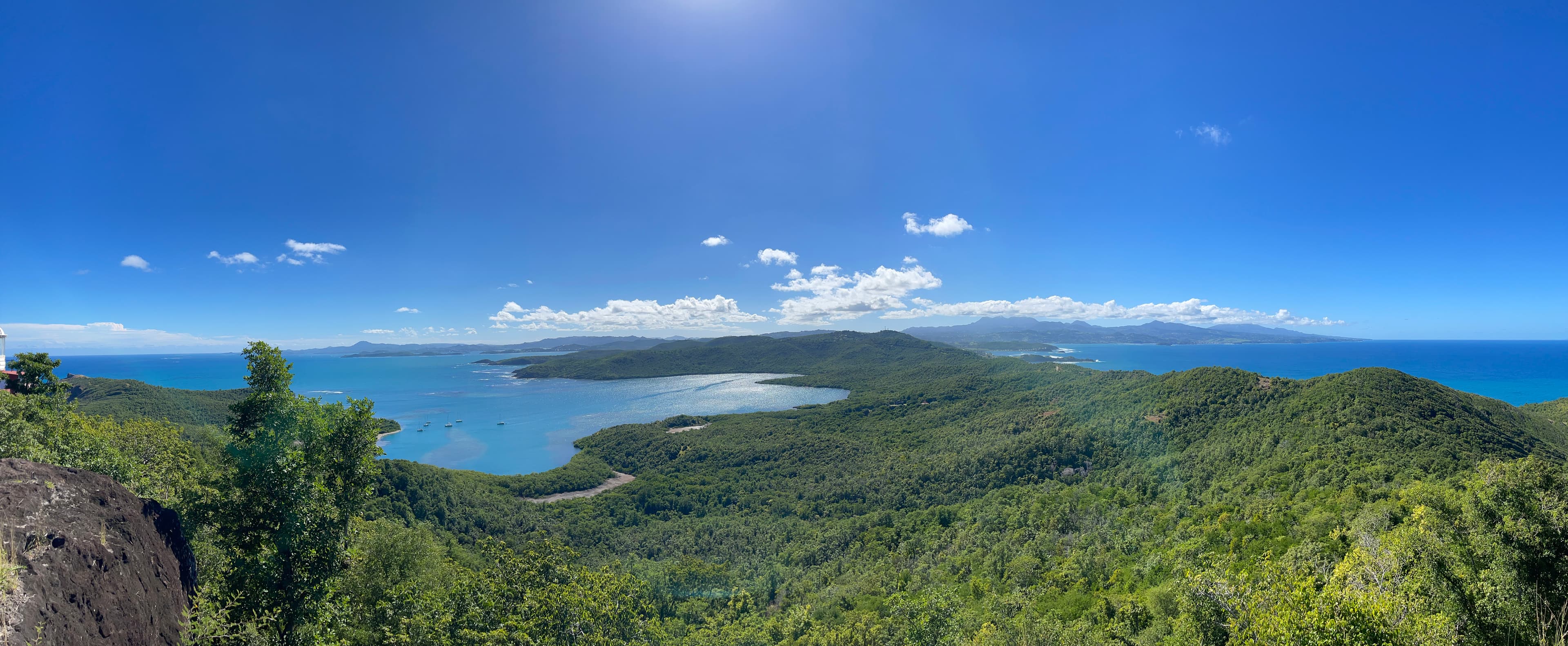
village
Tartane
The Caravelle peninsula classified as a Nature Reserve: 12 km advanced into the Atlantic, 8 km trail, Château Dubuc ruins and preserved fishing beaches — one of the most beautiful natural spaces of Martinique.
Tartane is a fishing village located at the entrance of the Caravelle peninsula, a strip of land 12 km long advancing into the Atlantic Ocean east of Trinité. It is one of the most preserved natural sites of Martinique — the eastern half of the peninsula has been classified as a Nature Reserve since 1976, and offers a mosaic of exceptional landscapes: dry tropical forest, mangrove of mangroves, Atlantic cliffs beaten by rollers, wild beaches with light sands, coastal ponds and historic ruins.
The Château Dubuc circuit is the emblematic experience of the peninsula — one of the most popular hiking trails of Martinique. This 8 km loop (3-4h walk, easy to moderate level, total elevation of about 200 metres distributed) crosses all the ecosystems of the peninsula: departure in dry forest, descent to the mangrove of Trésor bay, climb to Atlantic cliffs exposed to waves, traversing the dry savanna, then arrival at the Château Dubuc ruins — spectacular vestiges of an 18th-century sugar habitation (the Dubuc brothers, wealthy planters, exploited sugar cane and maintained controversial links with pirate and smuggling activities). The trail is well marked by the ONF and offers exceptional panoramas over Galion bay and the Atlantic.
The village of Tartane itself has retained its authenticity of small fishing port: Creole church, some family tables d'hôtes (Le Bord de Mer, La Voile Verte), morning market, beach bars where ti-punch is sipped facing the sea. It is also the starting point for several nautical activities: big game fishing outing, kayak rentals, surf schools.
The commune has two distinct beaches. Anse l'Étang, main beach at the entrance of the village, is a calm family beach with some infrastructure (lolos, free parking). The Surfers' beach (Anse Bonneville), 2 km east, welcomes glide enthusiasts — it's one of the best surf spots on the Atlantic coast of Martinique.
What we love
- ✅Château Dubuc trail: one of the most beautiful coastal hikes of the island (8 km, 3-4h, easy level)
- ✅Nature Reserve: exceptional ecosystems (dry forest, mangrove, cliffs, savanna)
- ✅Historic ruins of Château Dubuc: unique heritage site, contemplative atmosphere
- ✅Surf spot at Surfers' beach (Anse Bonneville): active local school
- ✅Authentic fishing village with Creole tables d'hôtes and preserved atmosphere
What to know
- ❌Very limited hotel offer: 1-2 hotels in village, predominance of B&Bs
- ❌Exposed Atlantic coast: sometimes agitated sea, swimming to monitor (flags)
- ❌Significant distance from the tourist South (45 min from Fort-de-France)
- ❌Nightlife almost non-existent (very quiet village in the evening)
- ❌Secondary roads to the peninsula narrow and winding: careful driving
Situation
Où se situe Tartane ?
Ouvrir la carte en grand sur OpenStreetMap →Frequently asked questions
How to get to Tartane from Fort-de-France?+
Is the Château Dubuc trail difficult?+
What are the Château Dubuc ruins?+
Can you surf at Tartane?+
Where to stay in Tartane?+
What to eat in Tartane?+
Our verdict
Tartane and the Caravelle peninsula are the unmissable nature and heritage stage of Central Martinique — the one that reveals a wild and preserved face of the island, far from the seaside resorts of the South. Plan a full day on the Caravelle (Château Dubuc trail in the morning + Creole lunch in the village + afternoon beach or surf) on excursion from your base in the South, Centre or North. If you want immersion, stay one to two nights in a B&B in Tartane (€60-130/night). Visit preferably in March-May for the best compromise of weather, hiking conditions and crowds. Leave early in the morning on the trail (before 9am) to avoid midday heat, and do not forget to respect ONF instructions (no picking, presence of manchineel — toxic tree signalled by red ring).
Nearby

"Pic touristique haute saison sèche."
Expert on Tartane · 1 contributions
 Africa & Americas Desk — Mowando·Editor