Mowando

ville

Aqaba

Jordan's only maritime window on the Red Sea, where you dive a few metres from shore on intact reefs and intentionally scuttled wrecks — with three countries visible from the beach as a bonus.

4.50Aqaba et Mer Rouge

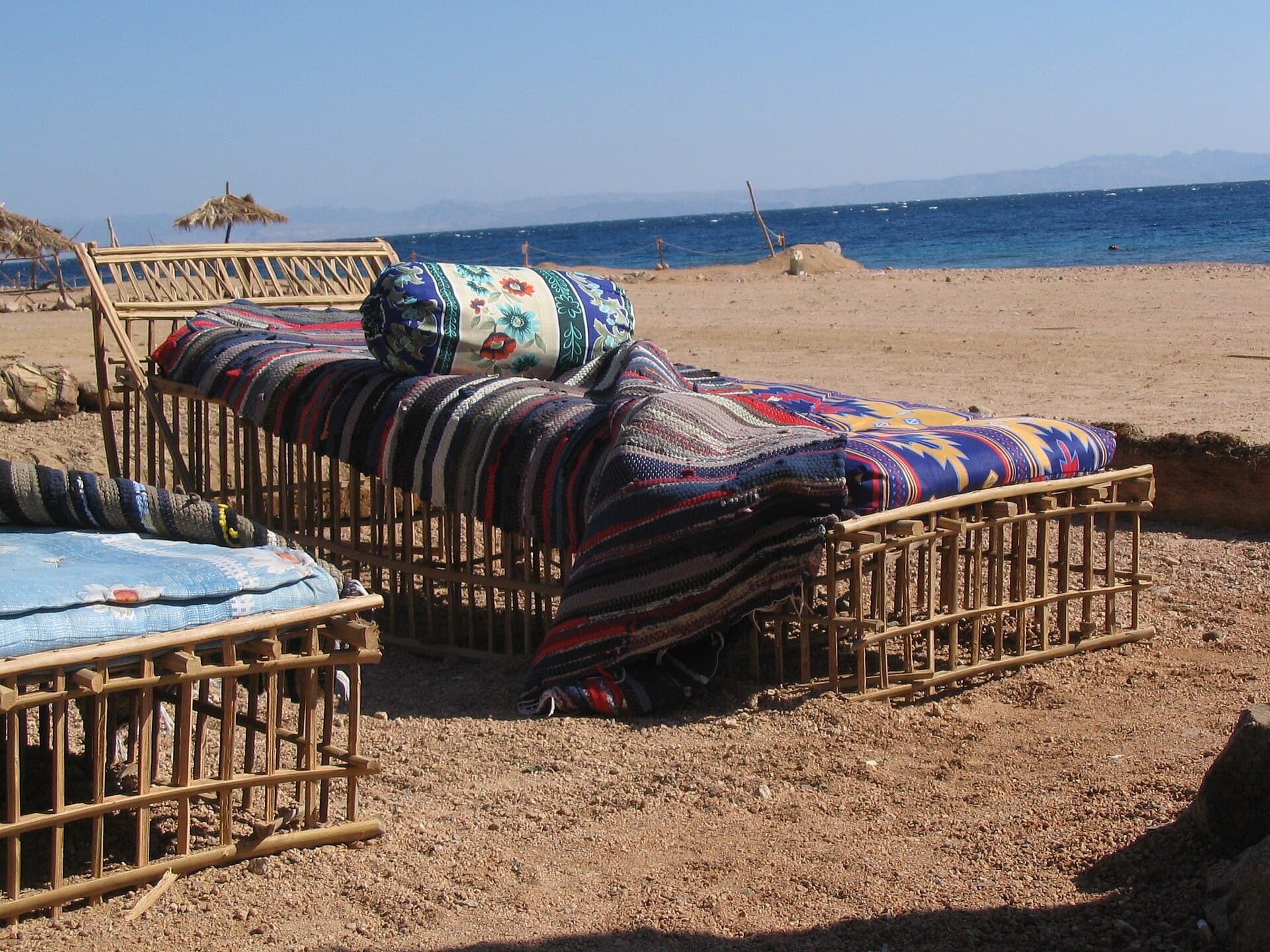
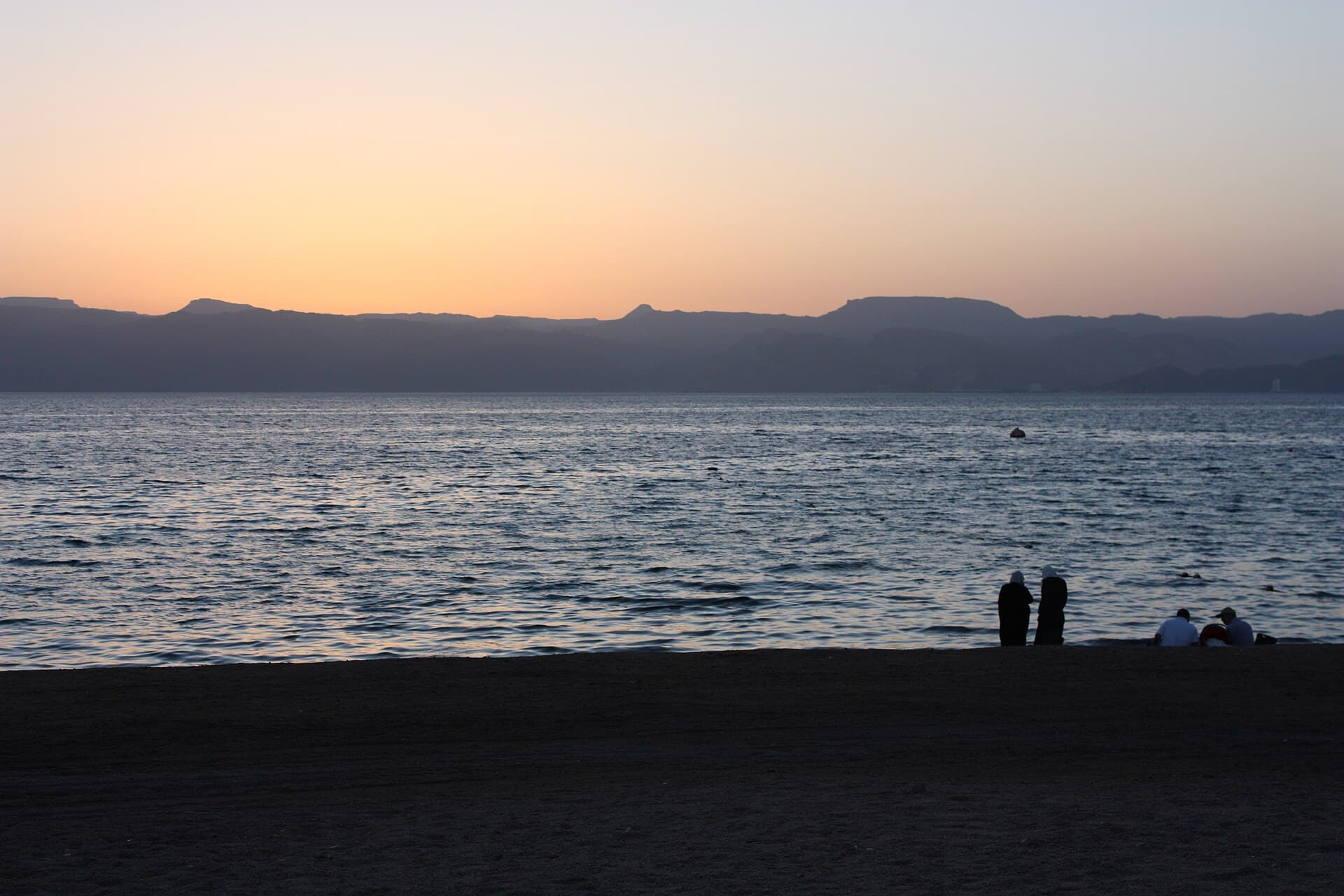
Aqaba is a city defined by its geography: Jordan's only maritime window (27 kilometres of coastline, one of the shortest in the world), it opens onto the Gulf of Aqaba, the north-eastern arm of the Red Sea, at the crossroads of four countries — Jordan to the east, Israel to the west (Eilat 10 km away as the crow flies), Egypt to the south-west (Taba 20 km) and Saudi Arabia to the south-east (Haql 30 km). From Aqaba's public beach, you literally see three other countries with the naked eye — a rare and fascinating geopolitical situation. But what makes Aqaba one of the major beach destinations in the Middle East is scuba diving: the Gulf of Aqaba coral reefs are among the best preserved in the Red Sea (Jordan created in 1997 the Aqaba Marine Park extending over 7 km of coast), and biological diversity is exceptional — 510 fish species recorded, 110 hard coral species, green and hawksbill turtles, eagle rays, reef sharks, dolphins frequently observed.

The jewel of Jordanian diving remains the intentionally scuttled wrecks to create artificial reefs. The Cedar Pride (Lebanese cargo scuttled in 1985 at 25 m, covered with soft corals and parrotfish), the Tank Wreck (American M42 Duster tank sunk in 1999 at 6-7 m, accessible to snorkelers), the Japanese Garden (underwater Japanese garden with sculptures and statues), the Cessna 152 (plane sunk in 2017 at 18 m) and more recently the King Abdullah Reef (military underwater museum opened in 2019 with a C-130 Hercules, an AH-1 Cobra helicopter, tanks and armoured vehicles) make Aqaba one of the most diversified diving sites in the world. The town itself is less spectacular — it is a modern beach resort without much historic charm, with the exception of the 16th-century Mamluk castle and the restored Arab Revolt fort. But its strategic position (1h from Wadi Rum, 2h30 from Petra) makes it the essential beach stop of a complete Jordanian circuit — and one of the rare winter beach resorts accessible from Europe.

What we love

  • World-class diving: legendary wrecks (Cedar Pride, Tank Wreck, Cessna, King Abdullah Reef)
  • Coral reefs among the best preserved in the Red Sea, marine park protected since 1997
  • Beach resort open year-round: water at 22 °C in winter, 28 °C in summer
  • Three borders visible from the beach (Israel, Egypt, Saudi Arabia) — unique geopolitical setting
  • Perfect stop to conclude a Petra + Wadi Rum + Aqaba circuit (3h drive)

What to know

  • Modern town without major historic charm, mainly of beach interest
  • Urbanised seafront with apartment blocks and chain hotels, little authenticity
  • Public beaches packed on weekends (Arabic weekend: Friday-Saturday)
  • Extreme summer heat (38-44 °C), no land hiking possible May-September

Situation

Où se situe Aqaba ?

Ouvrir la carte en grand sur OpenStreetMap →

Frequently asked questions

How many nights should I spend in Aqaba?+
Two nights minimum are recommended to enjoy the sea reasonably and do a diving or snorkeling outing. Three nights allow you to include several major dive sites (Cedar Pride, King Abdullah Reef, Japanese Garden) and a full beach day. A single night is enough if you combine with Wadi Rum in the same circuit, just to taste the Red Sea before the return. The majority of travellers on a classic Jordanian circuit spend 1-2 nights in Aqaba.
What are the best wrecks to dive in Aqaba?+
Five major wrecks make Aqaba's reputation. (1) __Cedar Pride__: 80 m Lebanese cargo scuttled in 1985 at 7-25 m depth, accessible to Open Water divers, covered with soft corals and parrotfish. (2) __Tank Wreck__: American M42 Duster tank sunk in 1999 at 6-7 m, accessible by snorkeling. (3) __Cessna 152__: plane sunk in 2017 at 18 m, entire structure still visible. (4) __King Abdullah Reef__: military underwater museum opened in 2019, the most complete in the world, with a C-130 Hercules, an AH-1 Cobra helicopter, tanks and armoured vehicles at 28 m. (5) __Japanese Garden__: artificial reef with Japanese sculptures and exceptional corals.
How do I dive in Aqaba?+
Several PADI/SSI-certified dive centres are reliable and professional. __Aqaba Adventure Divers__, __Sea Star Watersports__, __Red Sea Diving Center__ and __Royal Diving Center__ are the safe bets. An exploration dive (equipment included, boat transport, guide) costs 35-50 JOD (€45-65), an introductory dive 45-60 JOD (€60-80), a full Open Water course 250-350 JOD (€320-450). All major sites are accessible in a few minutes by boat or sometimes directly from the beach. Book 1-2 days ahead in high season.
Is Aqaba as beautiful as Eilat (Israel) or Sharm el-Sheikh (Egypt)?+
Differently. __Eilat__ (Israel) 10 km away as the crow flies is more touristic and urbanised, with a wide range of activities but less preserved reefs and more expensive. __Sharm el-Sheikh__ (Egypt) 200 km south-west offers spectacular reefs (Ras Mohammed, Strait of Tiran) but a massive beach resort with intense Russian and East European tourism. Aqaba is __calmer, more authentic__, with very well preserved reefs (marine park since 1997) and a more modest setting — ideal for travellers seeking authenticity and quality rather than mass tourism.
What to do in Aqaba besides diving?+
The non-diving offer is more limited but varied. The __Old Town__ can be visited on foot with the __Mamluk Castle__ (16th century, 3 JOD), the __Arab Revolt Fort__ (Aqaba Fort, where T.E. Lawrence took the town from the Ottomans in 1917), and the __Al-Naseem souks__. The __public beach__ and the __resort private beaches__ (Tala Bay, South Beach) for relaxation. The __glass-bottom boat tours__ (8-15 JOD per person, 1-2h) are a good alternative for non-divers. The __Aqaba Aquarium__ (5 JOD) showcases local biodiversity. The __fresh fish souk__ (next to the port) offers grilled fish at unbeatable prices.
How do I get to Aqaba?+
Several options. (1) __Domestic flight__ from Amman with Royal Jordanian (Queen Alia → King Hussein AQJ): 45-minute flight, €60-100 return depending on season, ideal to save time. (2) __JETT bus__ from Amman: 11 JOD (€14), 4-5h trip, daily departures. (3) __Rental car or private taxi__ from Amman: 4-5h by the Desert Highway (route 15) or 6-7h by the King's Highway (route 35, more beautiful). (4) __Classic combination__: 2 nights Petra → 1-2 nights Wadi Rum → 1-2 nights Aqaba → return to Amman by domestic flight. (5) From __Eilat (Israel)__: Yitzhak Rabin / Wadi Araba border crossing 10 km north of Aqaba, about 30-60 minutes of procedures.
Which hotel should I choose in Aqaba?+
Three main zones. The __north corniche__ (downtown) is urban and lively, but the beaches are less beautiful: __Aqaba Gulf Hotel__, __Cedar Hotel__ (budget-comfort, €50-100/night). The __south corniche__ (Tala Bay) is the resort zone with private beaches, quieter and better quality: __Mövenpick Tala Bay__, __Kempinski Aqaba__, __Hyatt Regency__, __InterContinental Aqaba__ (luxury, €150-350/night). __Saraya Aqaba__ and __Ayla Resort__ are the new high-end luxury projects. Book 2-3 months ahead in high season (March-May, September-November, school holidays).
Is Aqaba a viable winter destination?+
Yes, it is one of the __only warm winter beach resorts accessible from Europe__. In December-February, temperatures sit between 15-22 °C by day and 10-15 °C at night, with water at 21-22 °C — too cold for snorkeling without a wetsuit but ideal for diving in 5 mm. Hotels show 40% lower prices than in high season, attendance is low (except Christmas and New Year week), and the climate is very pleasant for European travellers escaping the cold. A relevant option for a long winter sunny weekend — much cheaper and more authentic than Dubai or the Emirates.

Our verdict

Aqaba is the indispensable beach stop of a complete Jordanian circuit. Not a spectacular destination in itself, it is mainly valued for its exceptional marine park and its legendary diving wrecks. Our advice: plan 2 nights minimum after Petra and Wadi Rum to have time to dive or snorkel at least once (the Cedar Pride and King Abdullah Reef are unmissable), choose your hotel on the south corniche (resort zone, quieter with direct access to private beaches: Mövenpick Tala Bay, Kempinski, Hyatt) rather than the more urban north corniche, and treat yourself to a beach day at Berenice Beach Club or Marina Plaza Tala Bay with pedalo, snorkel and lunch by the sea. For diving, several PADI/SSI-certified centres are reliable: Aqaba Adventure Divers, Sea Star Watersports, Red Sea Diving Center. And end your last evening with grilled fresh fish dinner in one of the many seafront tables.

Nearby
The Editors
The Editorsauteur principal✓ Verified

"Frais (10°C), tarifs bas, Wadi Rum glacial."

Expert on Aqaba · 1 contributions

Mowando Letter

Once a month: the right destinations for the right season + the best booking windows.

No spam. One-click unsubscribe. Your data is never shared.