Amman and the North offer an experience combining monumental archaeology, modern urban life, biblical heritage and Mediterranean nature.
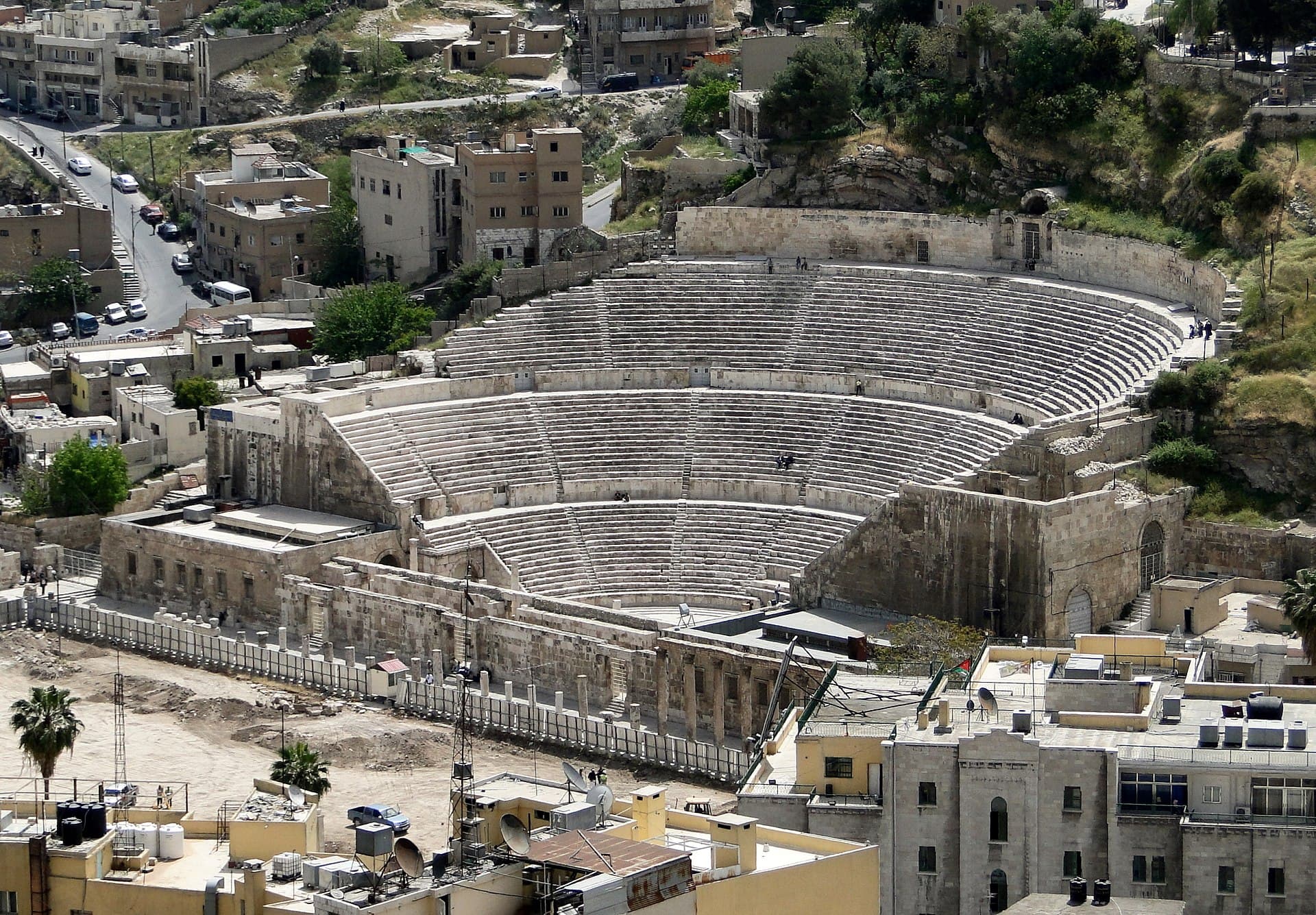
In Amman, start with the Citadel (Jebel Al-Qala'a) which dominates the city — a site layered with 7,000 years of continuous occupation, including the Roman Temple of Hercules (2nd century, of which only 3 monumental columns still stand), the Umayyad palace (8th century, rebuilt central dome) and a Byzantine basilica. The Jordan Archaeological Museum on the Citadel houses the Ain Ghazal statues (the oldest known anthropomorphic statues in the world, 9,000 years old). Then walk down to the Roman Theatre (2nd century, 6,000 seats, still used for summer concerts) passing the Nymphaeum and the Odeon. Explore downtown and its souks (King Faisal Street for spices, dates and Arabic coffee; Souk al-Bukhariyya for textiles), taste falafel at Hashem (institution since 1956) or knafeh at Habibah Sweets. Then take a taxi to Rainbow Street and Jabal Amman for the modern scene (trendy cafés, galleries, restaurants).
Jerash is visited in a full day. Enter through Hadrian's Arch (erected in 129 for the emperor's visit — book early morning to avoid crowds). Cross the hippodrome (250 m long, 15,000 seats — attend if possible the Roman chariot race reenactment twice a day, except Friday: impressive, €12 per person). Enter the site through the south gate and discover the oval forum (unique square, 90 m by 80 m, surrounded by 56 Ionic columns — one of the most beautiful Roman landscapes in the world). Walk up the cardo maximus (central avenue of 800 m lined with 500 columns still standing), visit the Temple of Artemis (protector goddess of Gerasa, monumental Corinthian columns 12 m high), the nymphaeums, the thermal baths and the two theatres (south theatre of 3,000 seats where Bedouin musicians sometimes still play; smaller north theatre). Count a minimum of 4-5 hours, ideally a full day. Water, walking shoes and hat essential.
Madaba is visited in 2-3 hours. The highlight is the Greek Orthodox Basilica of Saint George and its Holy Land mosaic map (6th century) — 2 million tesserae still visible, invaluable document for biblical cartography. Then explore the archaeological park (Apostles' Church, Virgin's Church) and the mosaics museum. 10 km away, Mount Nebo (817 m) offers the most history-laden biblical view in the world — on clear days, as far as Jerusalem and Bethlehem. The Franciscan sanctuary renovated in 2016 houses 6th-century Byzantine mosaics (summit archaeological park).
For travellers with a 4th day, two options. 1) Ajloun (75 km north of Amman): the Qal'at Ar-Rabad fortress (1184, built by a Saladin general) is a masterpiece of Arab military architecture; the Forest Reserve trails allow 2-4h hikes in the oak forests (Soap House Trail, Roe Deer Trail). Possible overnight at the Ajloun Forest Reserve ecolodge for a nature immersion. 2) Umayyad desert castles (50-100 km east of Amman): Qasr Amra (UNESCO, 8th-century Umayyad frescoes depicting nudes, musicians and hunting scenes — unique in the Islamic world), Qasr Kharana (fortified caravanserai), Qasr Azraq (black basalt, where Lawrence of Arabia stayed in 1917-1918). A full-day circuit (€140-200 by private driver).
Read also
- Petra and the South — UNESCO Petra, Wadi Rum desert, King's Road: Jordan's mythical dimension.
- Dead Sea — Lowest point on Earth, unique buoyancy, hotel complexes.
- Aqaba and Red Sea — World-class diving, alternative to Egypt.
- Jordan — Complete country guide: visa, budget, regions to explore and the best time to visit.