Region
Dead Sea
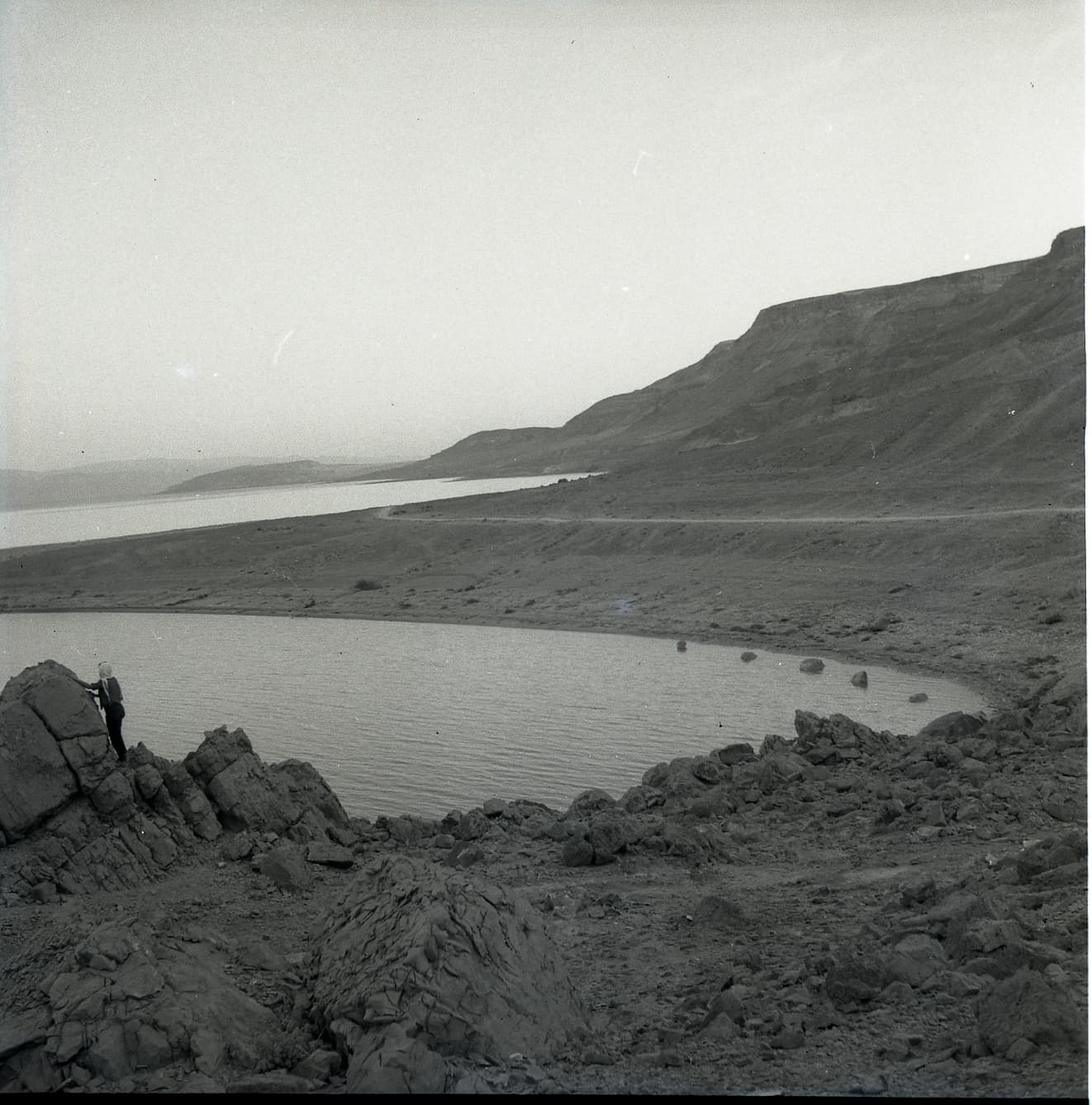
The lowest point of emerged Earth (-430 m) where you float effortlessly in water 10 times saltier than oceans, doubled with the biblical baptism site of Christ inscribed UNESCO in 2015 — a unique geological, spiritual and sensory experience in the world.
The Dead Sea — called Bahr al-Mayyit in Arabic ('dead sea'), Yam ha-Melaḥ in Hebrew ('sea of salt') — is one of the most fascinating geological wonders of the planet. Tectonic salt lake located on the border between Jordan (east bank) and Israel/Palestine (west bank), it marks the lowest point of emerged Earth at -430.5 m below sea level (2024 measurement, continuously falling about 1 m per year since 1975 due to accelerated evaporation and diversion of Jordan River waters). Its exceptional 33-34% salinity (vs 3.5% average for oceans, i.e. 10 times saltier) makes it one of the saltiest bodies of water in the world — surpassed only by a few Antarctic lakes and the lakes of Ethiopia.
This extreme salinity gives the Dead Sea its properties unique in the world. Buoyancy is such that no mammal can sink — one floats on the surface like a board, lying on the back, without any effort. The sensation is extraordinary and destabilising: water pushes the body up so much that it is impossible to swim normally (any attempt at crawl or breaststroke results in turning onto the back). One thus reads flat in the water, newspapers and magazines in hand — iconic image reproduced in all tourist brochures. The density of the water (1.24 g/cm³) is such that one can literally sit in the water as in an armchair. The mineral composition — rich in magnesium (33%), potassium (25%), bromine, sodium and iodides — makes the Dead Sea a world-renowned major thalassotherapy centre for treating eczema, psoriasis, rheumatism and dermatological disorders. The climate there is exceptional: dry warm air, almost non-existent pollen, UV intensity filtered by 25% by the extra layer of air above the basin, oxygen 8% denser — unique therapeutic conditions.
The Jordanian coast of the Dead Sea (50 km of coastline, 50 minutes' drive from Amman) is dotted with 5-star resorts that offer direct access to the sea, high-end spas, infinity pools overlooking the turquoise waters and, on clear days, the hills of Judea and the West Bank. Flagship complexes: Mövenpick Resort & Spa Dead Sea (one of the first opened in 2001, traditional Arab village architecture), Kempinski Hotel Ishtar Dead Sea (the most luxurious, inspired by the Hanging Gardens of Babylon, 8 pools), Hilton Dead Sea Resort & Spa (2014, contemporary design), Holiday Inn Resort Dead Sea (mid-range family-friendly) and Crowne Plaza Dead Sea. All offer private access to the Dead Sea beach (Jordanian public beaches are rare and of mediocre quality), infinity pools with views, spas with Dead Sea-derived products (mud, scrubs, masks), gourmet restaurants and terraces for sunset.
In the immediate vicinity of the resorts is Bethany Beyond the Jordan (Al-Maghtas in Arabic), a major biblical site inscribed on the UNESCO World Heritage List in 2015. It was here, on the east bank of the Jordan, that according to Christian tradition John the Baptist baptised Jesus of Nazareth (around the year 30 of our era, see John 1:28). Archaeological excavations (started in 1996 after the Jordan-Israel peace treaty) have unearthed about twenty Byzantine and Umayyad religious buildings (5th-8th centuries): Church of Saint John the Baptist, Christian monasteries, pilgrim baths, cisterns. The site has become one of the main Christian pilgrimage sites in the Middle East — visited by Popes John Paul II (2000), Benedict XVI (2009) and Francis (2014). Entry is paid (12 JOD = €16, not covered by the Jordan Pass), mandatorily guided visit (1h30-2h), shuttle access only (military zone on the border with Israel).
Explore Dead Sea
Situation
Où se situe Dead Sea ?
Ouvrir la carte en grand sur OpenStreetMap →Frequently asked questions
How much time to dedicate to the Dead Sea?+
Which resort to choose at the Dead Sea?+
How does Dead Sea buoyancy work?+
Are mud baths really therapeutic?+
What to see and do outside the resorts?+
Are there health risks bathing in the Dead Sea?+
Is the Dead Sea going to disappear?+
Our verdict
The Dead Sea is an experience to live at least once in a lifetime — the sensation of floating effortlessly in translucent turquoise water, doubled with black mud baths sun-dried, is one of the most singular sensory experiences in the world. Dedicate 1 to 2 nights to the region, ideally half-board in a 5-star resort (Mövenpick, Kempinski Ishtar or Hilton) — comfort, infinity pools and spa are integral to the experience. Combine with a visit to Bethany Beyond the Jordan (UNESCO biblical baptism site of Christ, 1-2h) in the morning before the heat. The geographical position is ideal between Amman (50 min, to combine with Madaba and Mount Nebo en route) and Petra (2h30) — the Dead Sea integrates naturally into any classic Jordanian itinerary. Visit from October to April for ideal conditions (perfect water and air, reasonable crowds outside Easter). Absolutely avoid June-September: the Dead Sea basin is the hottest in the world (35-42 °C in midsummer, oven-like sensation). A few vital rules: never swallow the water (violent poison, immediate hospitalisation), never put in eyes (intense burning), no swim longer than 15-20 minutes (accelerated dehydration), full shower after each bathe.