The Delhi & Rajasthan region is the historic heart of North India — a 350,000 km² territory concentrating 7 of India's 42 UNESCO sites, most of Mughal architecture, Rajasthan Maharaja palaces, the Thar desert, and the capital megacity of Delhi (32 million inhabitants, the world's most populous urban agglomeration). This is where the Taj Mahal stands — Mughal mausoleum at Agra commissioned by Emperor Shâh Jahân between 1632 and 1653 for his deceased wife Mumtaz Mahal — one of the world's most visited sites (8 million annual visitors) and the absolute incarnation of Mughal aesthetics.
The region is structured around two distinct but complementary tourist entities. The Golden Triangle (1,000 km triangle linking Delhi-Agra-Jaipur) is India's most practised itinerary — proposed by 80% of agencies, sized at 7-10 days, condensing the essential northern must-sees. It is the proven formula for a first trip to India, logistically accessible (Shatabdi Express train Delhi-Agra in 2h, Delhi-Jaipur in 4h30, Agra-Jaipur road in 4h via Fatehpur Sikri), covering the three great heritage cities and major UNESCO sites.
Beyond the Golden Triangle, Rajasthan ("Land of Kings", state of 68 million inhabitants, 342,000 km²) unfolds its network of colour-coded palace cities. Udaipur the white/lakes city, Jodhpur the blue city, Jaipur the pink city, Jaisalmer the golden city, Bikaner the desert city, Pushkar the sacred city. Each major city is organised around a palace and a fort, heritage of the Rajput dynasties (Mewar at Udaipur, Marwar at Jodhpur, Rathore at Bikaner, Bhatti at Jaisalmer, Kachwaha at Jaipur) that ruled these semi-desert lands from the 8th century until Indian independence in 1947.
Our angle: Delhi & Rajasthan is the quintessential classic Indian itinerary — chosen by 80% of first trips to India, rightly so. It condenses the essential heritage and culture of the North in 14 efficient days, offers some of the world's most exceptional palace hotels (Lake Palace Udaipur, Umaid Bhawan Jodhpur, Rambagh Palace Jaipur), enables the desert experience (Thar at Jaisalmer) and the spiritual one (Pushkar). For those making just one trip to India in their life, it's the safest choice.
Read also
- Taj Mahal — UNESCO Mughal mausoleum — Shâh Jahân's absolute masterpiece (1632-1653), UNESCO site 1983, one of the modern Seven Wonders.
- Delhi — millennial capital — Muslim Old Delhi, British New Delhi, UNESCO Red Fort, UNESCO Qutub Minar — entry into India.
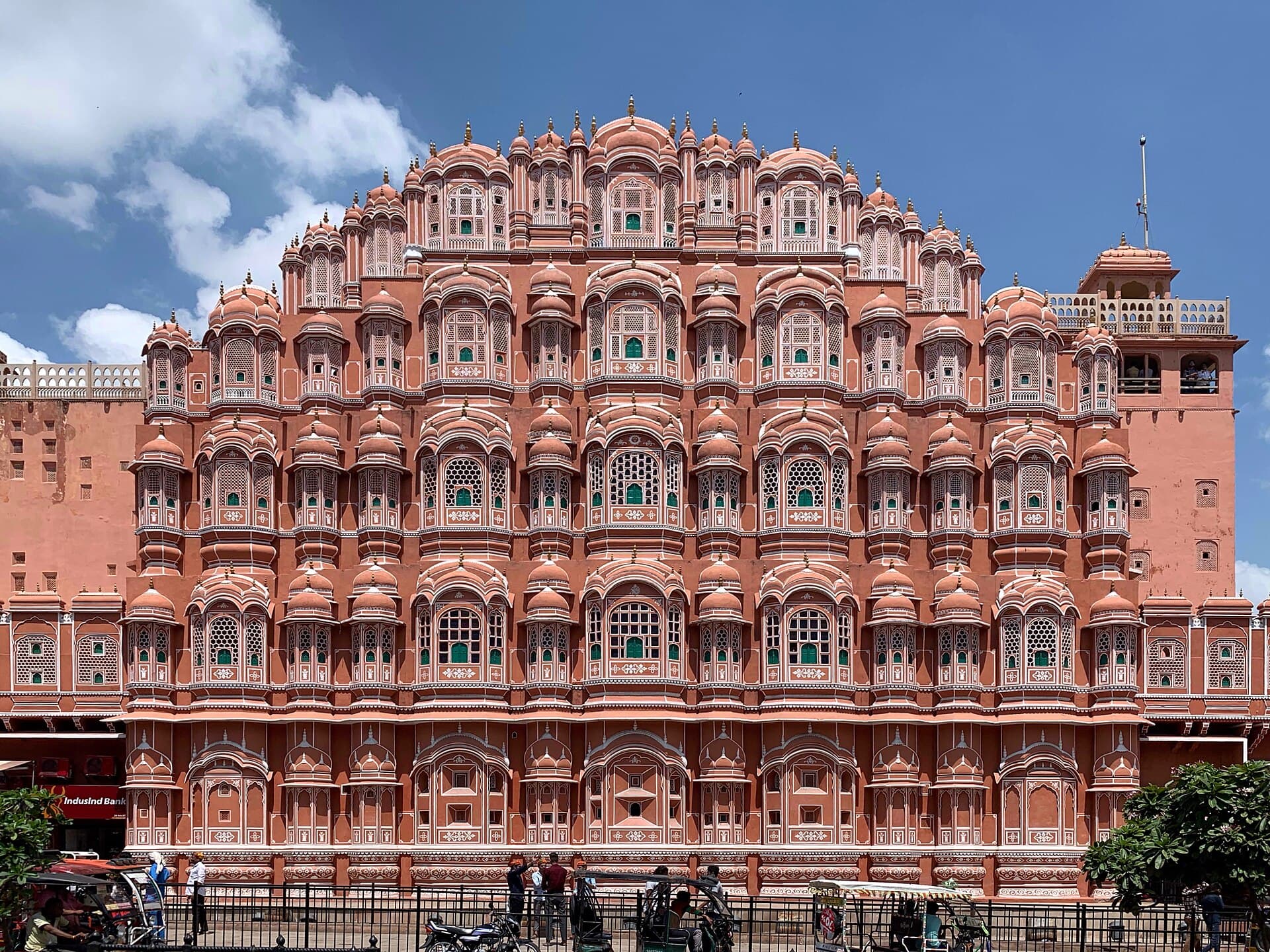
- Jaipur — the pink city — Rajasthan capital, Hawa Mahal, UNESCO Amber Fort, City Palace — Maharaja glamour.
- Udaipur — city of lakes — India's most romantic, floating Lake Palace, City Palace, Jag Mandir — Venice of the East.
- India — complete country guide — Everything to know: mandatory e-Visa, currency, regions, best time to visit.