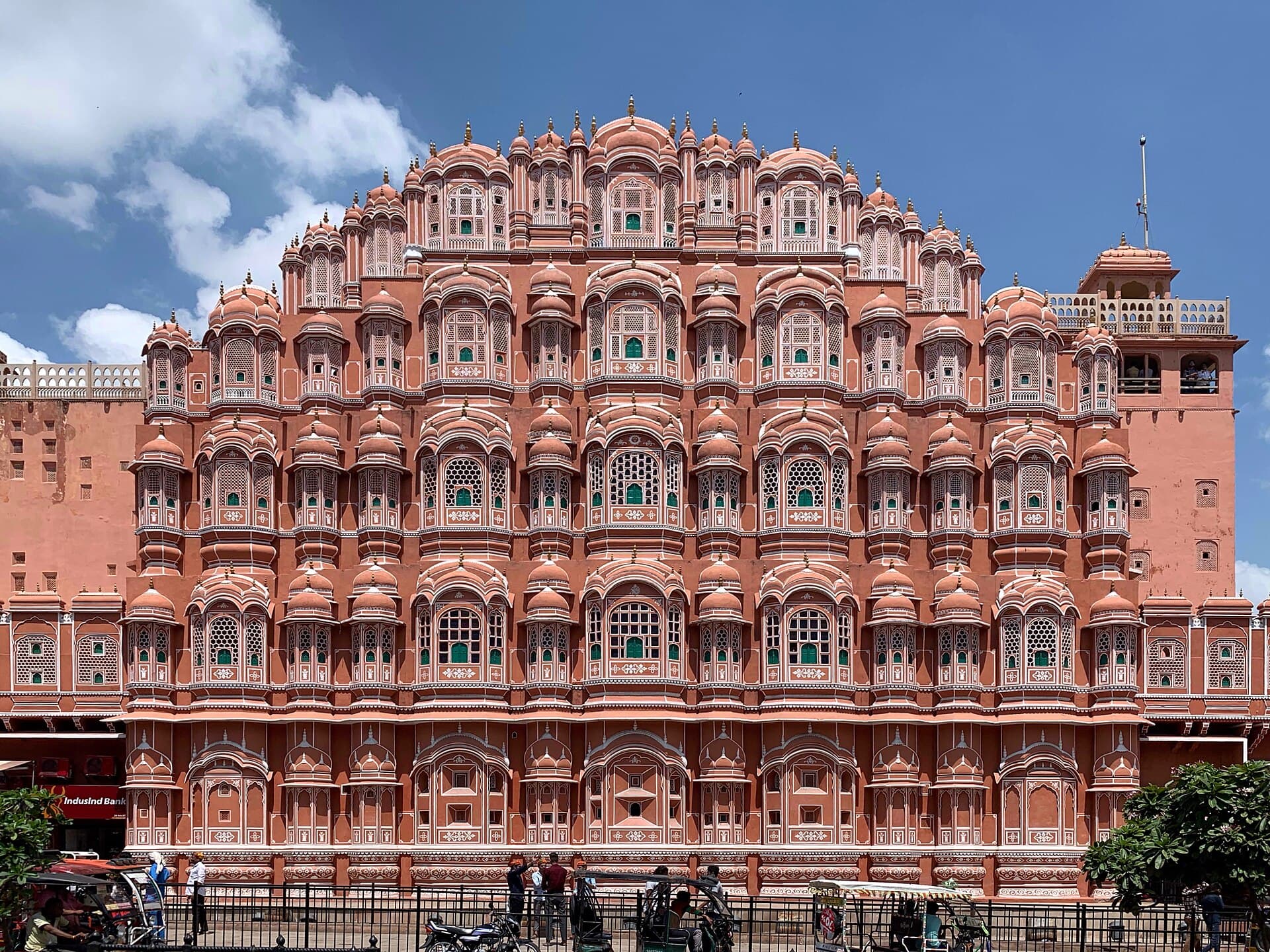
The region offers exceptional tourist density. In Delhi, must-sees: Red Fort (Lal Qila, UNESCO 1648, Mughal fortified palace), Jama Masjid (India's largest mosque, 1656, Shâh Jahân), Chandni Chowk (main street of Old Delhi), UNESCO Qutub Minar (73 m minaret, 1192, world's tallest brick minaret), UNESCO Humayun's Tomb (1572, architectural precursor of Taj Mahal), India Gate (1931 memorial), Lotus Temple (modern Baha'i temple, 1986).
In Agra, the Taj Mahal is the absolute must-see. Arrive at opening (6am, 1,100 INR for foreigners + 200 INR inner mausoleum), tour the 17 ha grounds (Charbagh Mughal garden, central mausoleum, mosque to the west, symmetrical jawab to the east), take your time (2-3h on site). UNESCO Agra Fort (1565) deserves 2h. UNESCO Fatehpur Sikri (1571, Mughal city abandoned 14 years after construction by Akbar) deserves half a day. Mehtab Bagh (garden facing the Taj on the other bank) offers the iconic sunset view.
In Jaipur: UNESCO Amber Fort (palace-fort on Amber hill, 1592, 11 km from city), City Palace (royal residence still occupied by royal family, museum), Hawa Mahal (Palace of Winds, 1799, 953 jali windows), UNESCO Jantar Mantar (18th-century astronomical observatory with giant stone instruments), Jal Mahal (water palace), Nahargarh Fort (panoramic Jaipur sunset view).
In Udaipur: Lake Pichola (sunset cruise 30-60 min, 400-700 INR, Lake Palace and Jag Mandir view), City Palace (Rajasthan's largest palace, 244 m long, royal Mewar objects museum), Jagdish Temple (Vishnu Hindu temple 1651), Saheliyon-ki-Bari (Garden of Maids of Honour), Monsoon Palace (Sajjangarh, Aravalli height, panoramic view).
In Jodhpur: Mehrangarh Fort (one of India's most impressive forts, 122 m on cliff, extraordinary museum), Jaswant Thada (white marble cenotaph, 1899), blue old city (wander Navchokiya neighbourhood, considered one of India's most photogenic), Umaid Bhawan Palace (Maharaja's official residence, one of the last great princely palaces built 1929-1943, partially converted to Taj Hotel).
In Pushkar: sacred lake (52 pilgrimage ghats), Brahma temple (one of very few in the world), bohemian atmosphere and colourful markets. In Jaisalmer: UNESCO Sonar Quila (golden fort, 1156, one of the last inhabited forts in the world), sculpted havelis, desert safari at Sam or Khuri dunes (afternoon departure, sunset camel ride, night in luxury tent camp).
Read also
- Taj Mahal — UNESCO Mughal mausoleum — Shâh Jahân's absolute masterpiece (1632-1653), UNESCO site 1983, one of the modern Seven Wonders.
- Delhi — millennial capital — Muslim Old Delhi, British New Delhi, UNESCO Red Fort, UNESCO Qutub Minar — entry into India.
- Jaipur — the pink city — Rajasthan capital, Hawa Mahal, UNESCO Amber Fort, City Palace — Maharaja glamour.
- Udaipur — city of lakes — India's most romantic, floating Lake Palace, City Palace, Jag Mandir — Venice of the East.
- India — complete country guide — Everything to know: mandatory e-Visa, currency, regions, best time to visit.