ville
Delhi
32-million-inhabitant megacity, millennial capital — 3 UNESCO sites (Red Fort, Qutub Minar, Humayun's Tomb), classic entry point for the Golden Triangle and North India journey.
Delhi is India's millennial capital and the world's most populous urban agglomeration — 32 million inhabitants (Delhi NCR National Capital Region), surpassing Tokyo since 2023. Politically, it's the seat of the Indian government. Historically, it's one of the world's oldest continuously inhabited cities — at least 7 successive "Delhis" identified by archaeologists.
Geographically, Delhi organises into two complementary entities. Old Delhi (Shahjahanabad): the Mughal old town founded by Shâh Jahân in 1639, densely populated, alley labyrinth, markets (Chandni Chowk), temples, mosques, chaotic and authentic atmosphere. New Delhi: the British capital planned by Edwin Lutyens and Herbert Baker in the 1910s-1920s, inaugurated 13 February 1931, wide geometric avenues (Rajpath/Kartavya Path between India Gate and Rashtrapati Bhavan), classical buildings of imperial dimensions.
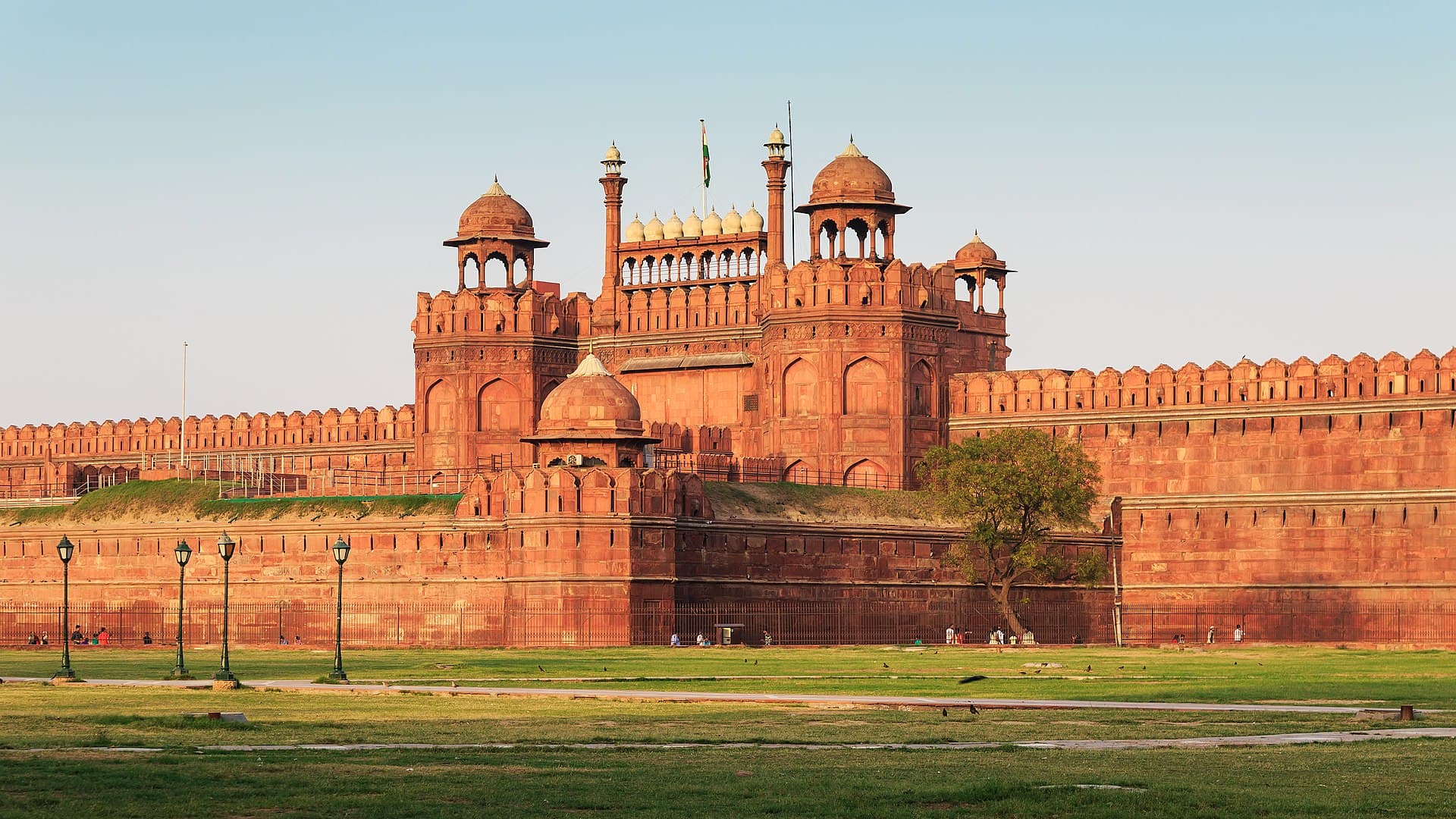
The must-see sites spread across both quarters. Old Delhi: Red Fort (Lal Qila, UNESCO 2007, Mughal fortified palace built by Shâh Jahân 1639-1648), Jama Masjid (India's largest mosque, 1656 by Shâh Jahân, 25,000 worshippers), Chandni Chowk (main street of Old Delhi laid out 1650, fragrant chaotic markets, legendary street food), Raj Ghat (Gandhi's memorial). New Delhi: India Gate (1931 memorial inspired by Paris Arc de Triomphe), Rashtrapati Bhavan (Indian Presidential residence), Connaught Place, Lotus Temple (Baha'i temple).
The UNESCO sites: Qutub Minar (UNESCO 1993) — 73 m minaret, world's tallest brick minaret, erected by Qutb-ud-din Aybak from 1192. The complex also hosts the Iron Pillar (4th century, 7 m, metallurgical mystery, virtually no rust for 1,600 years). Humayun's Tomb (UNESCO 1993) — Mughal mausoleum built 1565-1572, architectural and ideological precursor of the Taj Mahal. Red Fort (UNESCO 2007).
What we love
- ✅3 UNESCO sites: Red Fort (Mughal palace Shâh Jahân 1639), Qutub Minar (73 m minaret, 1192), Humayun's Tomb (1572, Taj Mahal precursor)
- ✅Golden Triangle entry: ultramodern IGI Terminal 3 international airport, Air France and Air India direct Paris 8h, metro to city centre
- ✅Exceptional gastronomic diversity: Mughal Lane Old Delhi, Connaught Place restaurants, cooking classes
- ✅Delhi Metro (10 lines, 286 stations) — one of the world's most modern, air-conditioned, clean, economical (10-60 INR)
- ✅Shopping: Janpath Market, Khan Market, Sarojini Nagar, Connaught Place — one of India's top shopping destinations
What to know
- ❌EXTREME air pollution in winter (AQI 300-500), eye and throat burning, FFP2 mask mandatory
- ❌World capital of tourist scams: fake tourist office, fake station drivers, fake guides, fake students
- ❌Maximum sensory chaos: noise, crowds, aggressive begging, constant commercial harassment
- ❌Variable safety outside tourist zones (pickpocketing frequent in markets)
- ❌Maximum cultural shock on arrival — Delhi can discourage first days
Situation
Où se situe Delhi ?
Ouvrir la carte en grand sur OpenStreetMap →Frequently asked questions
How many nights in Delhi?+
How to avoid air pollution in Delhi?+
What are the classic Delhi scams?+
Where to stay in Delhi safely and comfortably?+
What UNESCO sites in Delhi not to miss?+
Our verdict
Delhi is essential as entry point for the classic Indian journey — India's main international airport (Indira Gandhi T3), Golden Triangle starting point to Agra (Taj Mahal) and Jaipur, and one of the country's densest UNESCO heritage concentrations (3 UNESCO sites). But it's also the most exhausting stop — extreme winter air pollution, world capital of tourist scams, maximum sensory chaos. Our advice: 2-3 nights minimum, 4-5 star hotel for recovery (Imperial New Delhi €250-450/night, Taj Mahal Hotel New Delhi €300-500/night, ITC Maurya €280-500/night), certified guide for first 1-2 days, FFP2 mask mandatory in winter, Uber/Ola exclusively. Optimal itinerary: D1 Old Delhi (Red Fort, Jama Masjid, Chandni Chowk by cycle-rickshaw), D2 South Delhi (Qutub Minar, Humayun's Tomb, Lotus Temple), D3 New Delhi morning (India Gate, Rashtrapati Bhavan, Connaught Place, National Museum). Avoid November-February if possible (pollution), prefer October-March or April. The city isn't for everyone but it's the unavoidable first stop of any classic North India trip.
Nearby

"Janvier : haute saison, pollution maximale (AQI 350-500), brume matinale, fraîcheur."
Expert on Delhi · 1 contributions
 South-East Asia Desk — Mowando·Editor