Iceland is well connected to Europe and North America, thanks to its strategic position halfway between the two continents and Icelandair's historic role as a transatlantic transit carrier.
By air, Keflavík International Airport (KEF), 50 km south-west of Reykjavik, is the near-exclusive entry point to the country. Icelandair and Play (Icelandic low-cost) operate most flights from London, Paris, Amsterdam, Frankfurt and several North American cities. From London Heathrow or Gatwick, direct flights last 3 hours; from Paris CDG, 3 hours 20. In low season (March-May, September-November), return tickets can be found from £150-250 / €200-300; in high season (June-August), count £350-500 / €400-550. Lyon, Manchester, Edinburgh, Marseille and Geneva are also served directly by Icelandair from May to October.
The transfer from Keflavík to Reykjavik uses FlyBus (Reykjavik Excursions) or Airport Direct shuttles: 45-50 minutes, around €30-35 one way. Taxis are expensive (ISK 15,000-20,000, about €100-130) and there is no train. If you have booked a hire car, the agencies are located just outside the airport or served by free shuttle — by far the most practical option if your itinerary launches straight onto the Ring Road.
The ferry option exists for travellers wishing to bring their own vehicle: Smyril Line links Hirtshals (Denmark) to Seyðisfjörður (east coast of Iceland) in 47 hours, with a stop in the Faroe Islands. Weekly service, around €1,000-1,600 return for a cabin and a car, fuel excluded. Interesting for long stays with an equipped vehicle, but not competitive against flight + hire for a standard 10-14 day trip.
Once in Iceland, internal transport is almost exclusively by car. Reykjavik's domestic airport (RKV) offers flights to Akureyri (45 min), Egilsstaðir (1 h, east coast) and Ísafjörður (40 min, west fjords) — useful to save a long drive if time is short. Long-distance Strætó buses cover the Reykjavik-Akureyri axis (6 h, €50) and a few key destinations, but with low frequency and few internal connections. A hire car remains the dominant option: the Ring Road (route 1, 1,332 km) is fully paved, well maintained and well signed, but the highlands F-roads require a 4x4 and only open from mid-June to late September.
Read also
- Reykjavik and the Southwest — The capital, the Reykjanes peninsula and the Blue Lagoon: Iceland's urban and geothermal heart.
- The Golden Circle — Þingvellir (Viking parliament), Geysir and Gullfoss: the must-do day loop from Reykjavik.
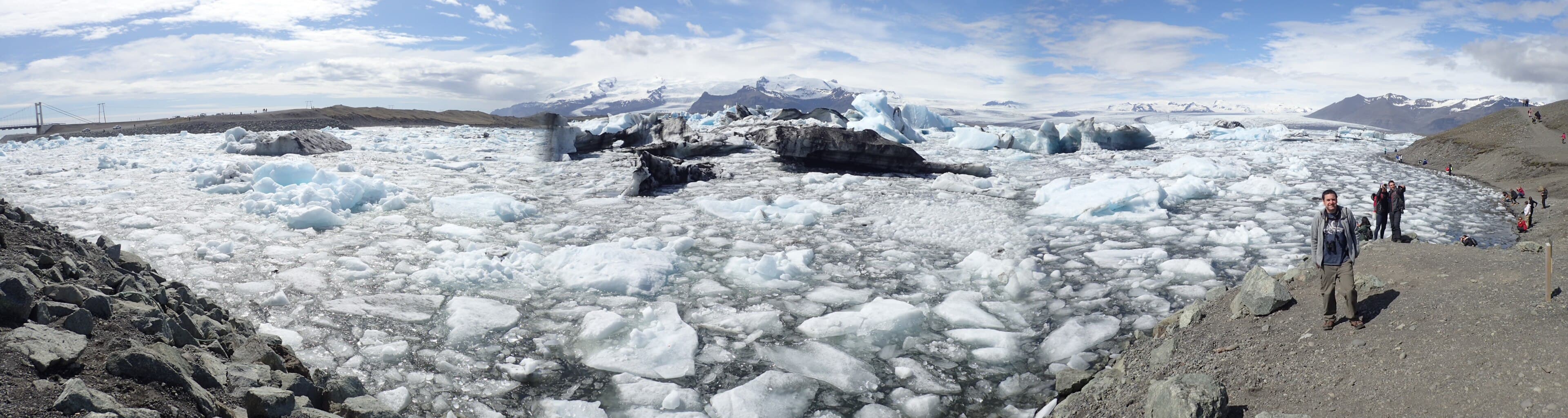
- The South Coast — Seljalandsfoss and Skógafoss waterfalls, Reynisfjara black-sand beach, Jökulsárlón glacial lagoon.
- The East Fjords — Egilsstaðir, Seyðisfjörður and the wildest stretch of the Ring Road, between reindeer and whales.
- The North and Akureyri — Akureyri, Mývatn, Goðafoss waterfall and the whales of Húsavík: the volcanic, lake-strewn north.