Icelandic culture is one of Europe's most singular — a product of a millennia-long geographical isolation and of a remarkable fidelity to a medieval Scandinavian heritage that few other nations have preserved with as much consistency.
Viking history is at the heart of the national identity. Iceland was settled from 874 by Norwegian Viking chieftains fleeing the centralisation of the Norwegian kingdom under Harald Fairhair. In 930, these colonists founded at Þingvellir the Alþingi, considered the oldest parliament still in operation in the world — an annual assembly of free men that legislated on disputes, laws and religious conversion (Christianity was peacefully adopted in 1000 through a famously pragmatic compromise). This assembly tradition has shaped a remarkably egalitarian political culture still felt today: Iceland is consistently ranked first in the world on the gender equality index, and its president walks around town without bodyguards.
The Icelandic sagas — prose epics written in the 13th century about the lives of the 9th-11th century settlers — are one of the most precious literary treasures of medieval Europe. Snorri Sturluson, their most famous compiler, is also the author of the Prose Edda that transmits Nordic mythology (Odin, Thor, Loki, Ragnarök). Without these Icelandic texts, a large part of Viking mythology would have been lost. Even today, Icelanders carry traditional Viking first names (Björk, Sigurður, Guðrún), use a patronymic (-son or -dóttir) rather than a family name, and read 800-year-old works in their original form, the Icelandic language having barely evolved from Old Norse.
The contemporary cultural scene is astonishingly rich for a country of 393,000 inhabitants. Icelandic music (Björk, Sigur Rós, Of Monsters and Men, Kaleo, Ásgeir, Daði Freyr) is exported worldwide; the Iceland Airwaves festival in Reykjavik (early November) is its annual showcase. Icelandic cinema (Baltasar Kormákur, Hlynur Pálmason, Grímur Hákonarson) regularly draws attention at international festivals, and Icelandic landscapes have served as filming locations for many international productions (Game of Thrones, Star Wars, Prometheus, James Bond). Reykjavik has a dynamic design, fashion and contemporary art scene clustered around Laugavegur street and the Grandi district.
Icelandic folklore remains vibrant: 54% of Icelanders say in polls that they do not deny the existence of the Huldufólk (hidden people) — the elves of the hills and rocks, sometimes consulted before authorising infrastructure works that could disturb their habitat. This persistence of an animist mythology in an otherwise hyper-modern society (one of the highest GDPs per capita in Europe, total literacy, 100% renewable energy) is one of Iceland's charming contradictions.
Read also
- Reykjavik and the Southwest — The capital, the Reykjanes peninsula and the Blue Lagoon: Iceland's urban and geothermal heart.
- The Golden Circle — Þingvellir (Viking parliament), Geysir and Gullfoss: the must-do day loop from Reykjavik.
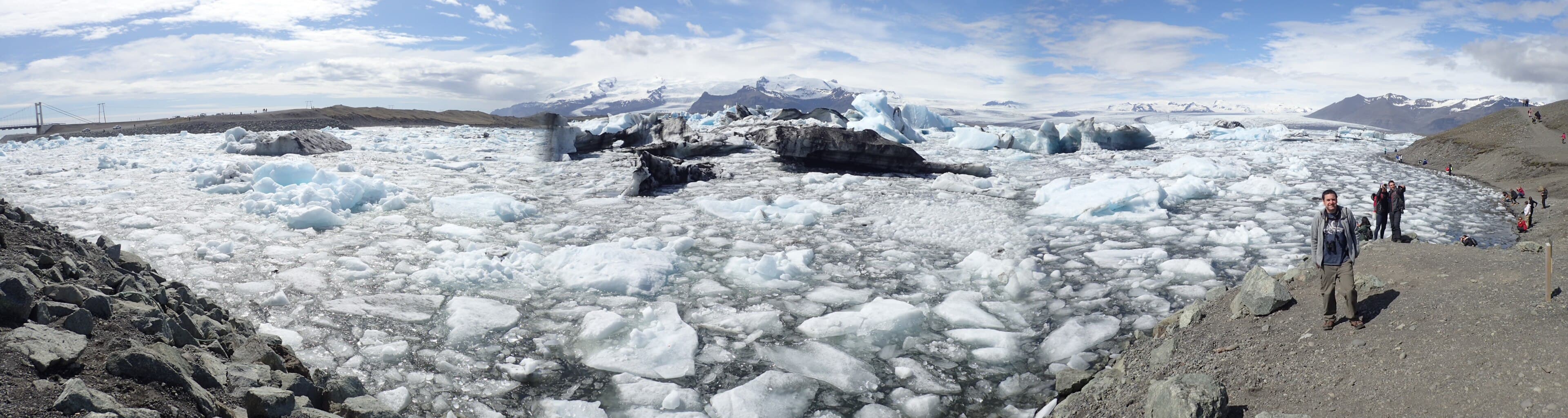
- The South Coast — Seljalandsfoss and Skógafoss waterfalls, Reynisfjara black-sand beach, Jökulsárlón glacial lagoon.
- The East Fjords — Egilsstaðir, Seyðisfjörður and the wildest stretch of the Ring Road, between reindeer and whales.
- The North and Akureyri — Akureyri, Mývatn, Goðafoss waterfall and the whales of Húsavík: the volcanic, lake-strewn north.