Region
North and Akureyri
The other Iceland, 100 km from the Arctic Circle: the country's second city, lunar volcanic zones and the world capital of whale-watching at Húsavík.
The North and Akureyri form one of Iceland's major tourist hubs, often less crowded than the south-west but with at least equivalent scenic and geological richness. The region is organised around the 'capital of the north' Akureyri (19,000 inhabitants, the country's second city), the lakes and volcanic zones of Mývatn (1 h east of Akureyri), the emblematic Goðafoss waterfall and the whaling port of Húsavík (world capital of whale-watching).
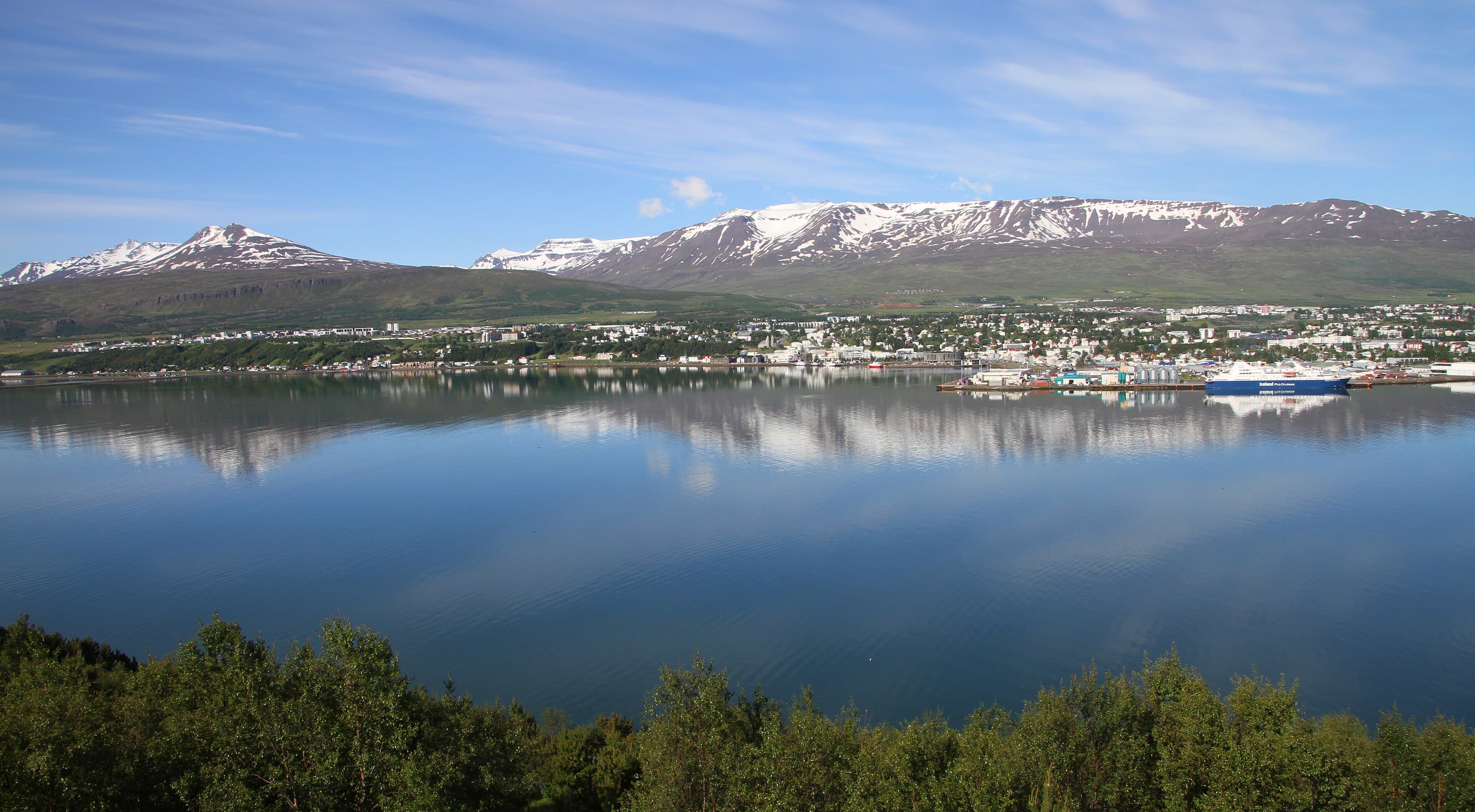
Akureyri, set at the head of Eyjafjörður (60 km long, the longest fjord in Iceland), is one of the country's most pleasant towns: compact pedestrian centre with cafés and designer boutiques, modernist Lutheran church (Akureyrarkirkja, 1940, designed by Guðjón Samúelsson — the architect of Reykjavik's Hallgrímskirkja), the northernmost botanical garden in the world (Lystigarðurinn, founded 1912), Hlíðarfjall ski resort in winter. The town serves as the logistical hub for exploring the North: domestic airport (Reykjavik-Akureyri flight in 45 minutes), supermarkets, car hire agencies, wide choice of hotels and restaurants.
The Mývatn lake (100 km east of Akureyri) is one of Iceland's most active and photogenic volcanic zones. The lake (38 km², the 4th largest in the country) is surrounded by a lunar landscape of pseudo-craters (Skútustaðagígar), blackened lava flows, bubbling mud pools (Hverir/Námafjall), lava tubes (Grjótagjá), steaming fissures and basalt columns (Dimmuborgir, 'the black fortresses'). The Mývatn Nature Baths (developed geothermal lagoon, €50-60/person) are the less-frequented and cheaper alternative to the Blue Lagoon. It is also one of the best zones for observing the Northern Lights in winter (zero light pollution).
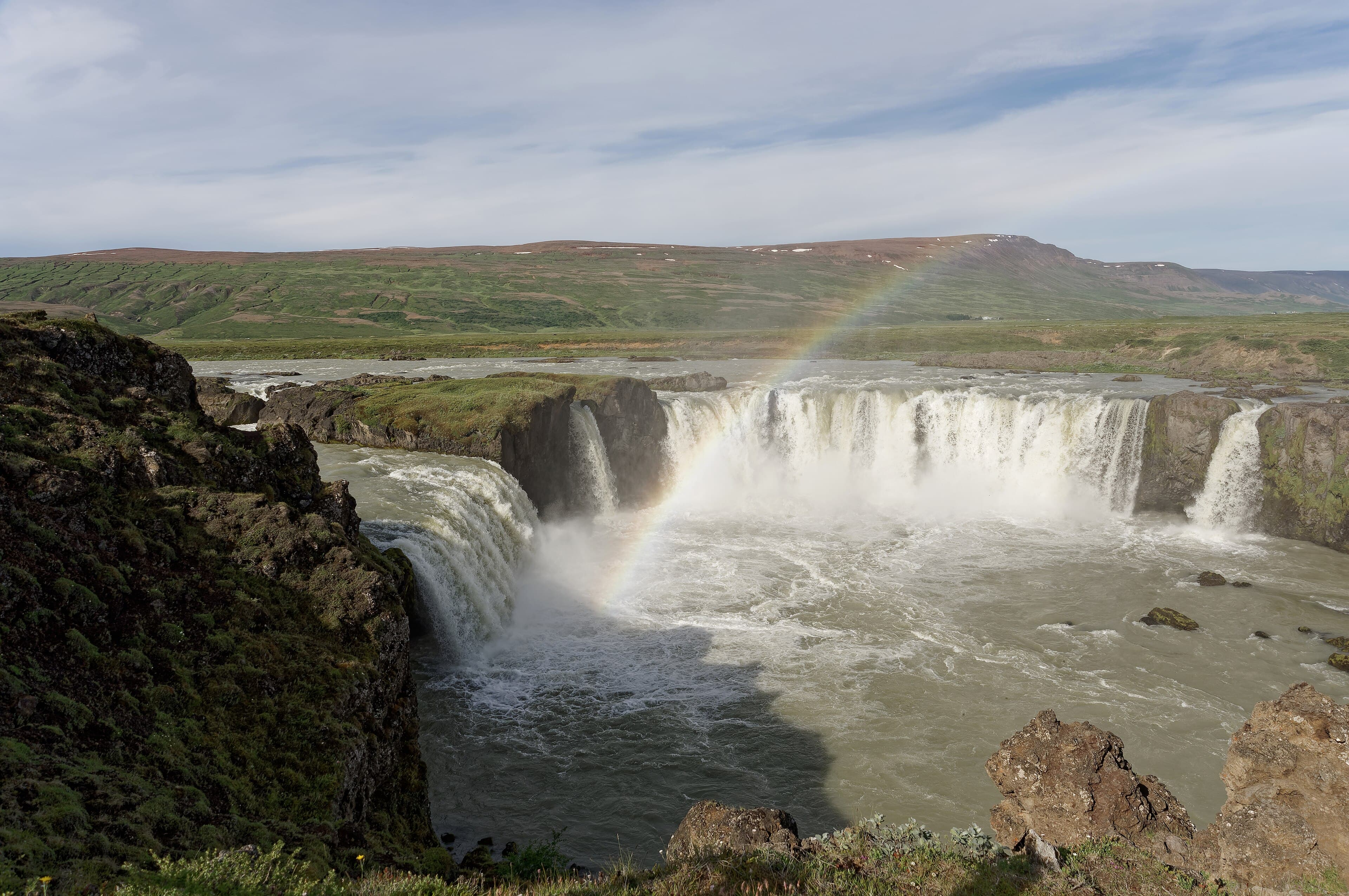
The Goðafoss waterfall ('waterfall of the gods', 30 minutes east of Akureyri), 12 m drop but 30 m wide in a semicircle, takes its name from the legendary episode when Icelandic lawspeaker Þorgeir Ljósvetningagoði allegedly threw the statues of pagan gods after the adoption of Christianity in the year 1000. It is one of the most photographed waterfalls in the country.
Húsavík (port of 2,300 inhabitants 1 h north-east of Akureyri) is the world capital of whale-watching. The deep Skjálfandi fjord is one of the world's best habitats for cetaceans, with 11 species regularly observed (humpback whales, blue whales, minke whales, fin whales, white-beaked dolphins, harbour porpoises, orcas in season). 3-hour tours (€90-120/person, May to October, success rate >99% in high season) embark on traditional wooden schooners from Húsavík's iconic port and its wooden church (Húsavíkurkirkja, 1907, neo-Norwegian style). The Húsavík Whale Museum (€15) is one of the world's best on cetology.
North-east of Mývatn, 1 h by car on track 862 or paved Road 864, the Dettifoss waterfall is one of Europe's most powerful: 45 m drop, 100 m wide, average flow of 193 m³/second (up to 500 m³/s in flood), in a black basalt canyon of rare visual power. It is here that director Ridley Scott filmed the opening scene of Prometheus (2012).
Explore North and Akureyri
Spots in the region
Situation
Où se situe North and Akureyri ?
Ouvrir la carte en grand sur OpenStreetMap →Frequently asked questions
How many days do you need to visit the North and Akureyri?+
Is taking the domestic flight to Akureyri worthwhile?+
Is Húsavík really the world's best whale-watching?+
What are Mývatn's black flies and should you worry?+
How to visit Dettifoss: east or west side?+
Are the Mývatn Nature Baths a good alternative to the Blue Lagoon?+
Can you observe Northern Lights in the North?+
Our verdict
The North and Akureyri are an unmissable stop on any Iceland trip of at least 7 days, or on any whales/Mývatn-focused trip even on a short stay (45-min domestic flight). Plan a minimum of 2-3 days on site: 1 night at Akureyri (Goðafoss, town), 1-2 nights at Mývatn (volcanic zones, Nature Baths, winter aurorae), with a day excursion to Húsavík for whales (May to October). Our tip: don't underestimate Mývatn — it is one of Iceland's most geologically rich regions, justifying at least 1 full day. And book a whale tour at Húsavík with a traditional operator (North Sailing, Gentle Giants, Salka Whale Watching) using wooden schooners rather than zodiacs — the experience is more authentic and more stable at sea.