site naturel
Jökulsárlón
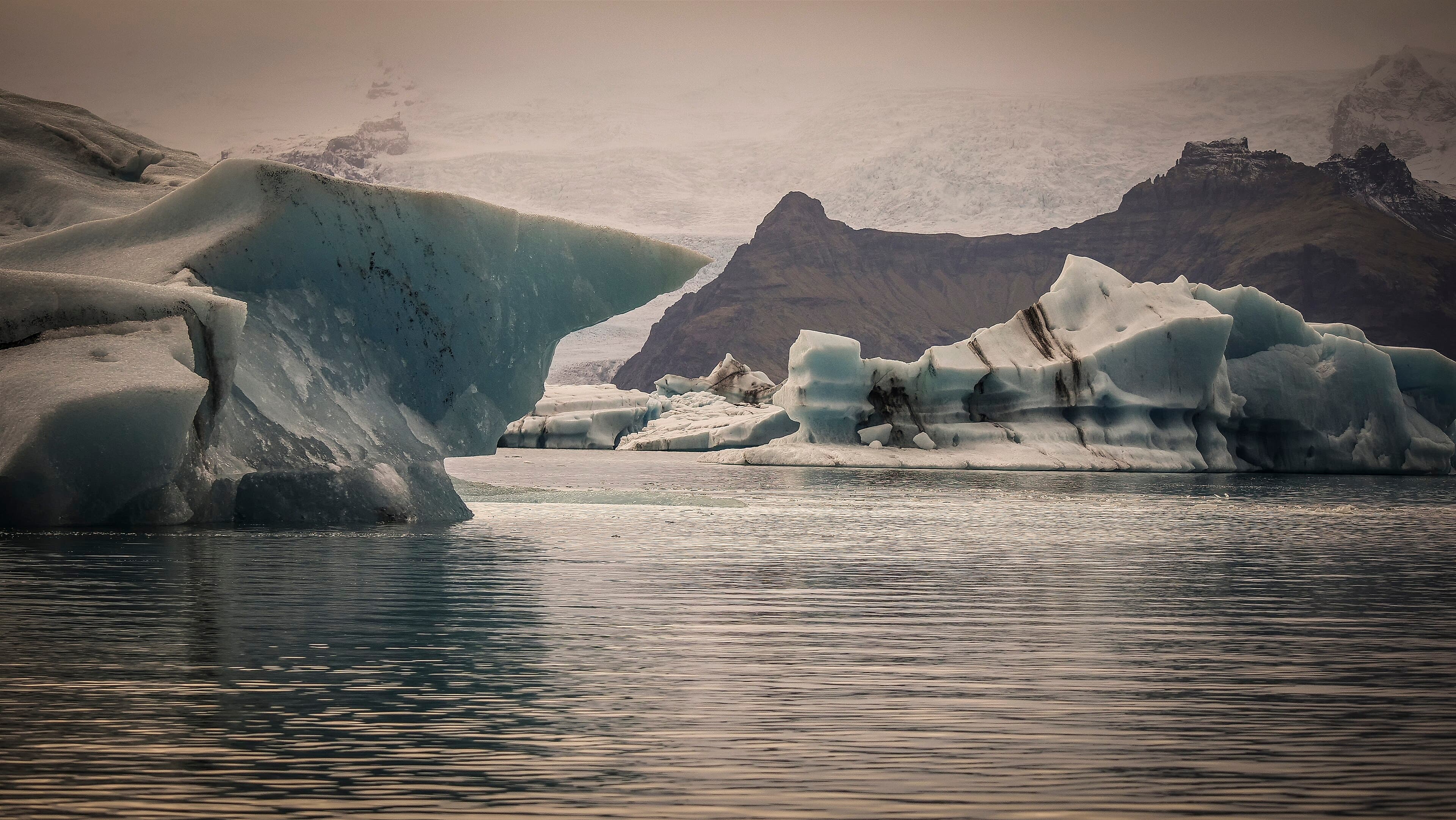
The visual climax of Iceland's south coast: 18 km² of surreal blue lagoon dotted with icebergs detached from Europe's largest glacier, and just opposite, a black-sand beach where ice blocks strand like diamonds in the sun.
Jökulsárlón (literally 'glacial river lagoon') is probably Iceland's most iconic natural site and one of the planet's youngest geological wonders: the lagoon did not exist in 1934 — it formed progressively from the 1940s when the Breiðamerkurjökull glacier (a Vatnajökull tongue, Europe's largest glacier by volume) began to retreat rapidly due to climate warming.
Today, the lagoon measures 18 km² and reaches 248 m deep — deeper than many Alpine lakes. It continues to grow each year as the glacier retreats (about 100-200 m per year). The icebergs that calve from the glacier front drift slowly toward the sea through a 1,500 m long channel under the Route 1 bridge. Many strand on the downstream black beach — the Diamond Beach — where they slowly melt forming crystalline ice sculptures that glitter like diamonds in the sun.
The lagoon water has a surreal glacial blue colour (pale turquoise to deep blue depending on depth and lighting), the result of progressive melting of mineral-sediment-rich icebergs. The icebergs themselves present a stunning colour palette: pure white (ancient ice), translucent blue (compressed ice without air bubbles), streaked with black (volcanic ash trapped in the ice during past eruptions). Some icebergs spectacularly capsize in broad daylight when their centre of gravity changes.
Amphibious zodiac tours (€60-90/person, 45 minutes, May to October) let you navigate among the icebergs up close. The amphibians (former WWII military vehicles converted) descend directly from the bank into the water for a unique experience. Inflatable zodiacs (Zodiac Tour, €110-130/person, 1 h) offer a faster and more flexible approach to the glacier front. During the crossing, you regularly meet common seals resting on ice blocks — the lagoon hosts a permanent colony of about 30-50 individuals.
In winter (November to March), the flagship experience becomes the visit of blue ice caves formed by sub-glacial rivers in the Vatnajökull. These ephemeral caves (they form and dissolve each season) offer interiors with translucent blue walls of unreal beauty. Guided tours (€150-200/person, 3-4 h, mandatory mountain-guide supervision — Local Guide of Vatnajökull, Glacier Adventure, Arctic Adventures) depart from Jökulsárlón in super-jeep, cross lava and moraine, then descend into the caves equipped with helmet and headlamp.
What we love
- ✅Iconic natural site of Iceland: glacial blue lagoon with floating icebergs
- ✅Free access to the lagoon and Diamond Beach (free parking)
- ✅Zodiac tours (€60-130) to navigate among icebergs
- ✅Common seals regularly visible on ice blocks
- ✅In winter: world-unique blue ice caves (€150-200)
What to know
- ❌Significant distance: 380 km from Reykjavik (5 h drive), justifies sleeping nearby
- ❌Heavy crowds in mid-day (10am-4pm) in high season
- ❌Limited lodging in the region (Hof, Hali, Höfn) — book 2-3 months ahead
- ❌Sometimes extreme weather conditions in winter (Route 1 closure possible for several days)
Situation
Où se situe Jökulsárlón ?
Ouvrir la carte en grand sur OpenStreetMap →Frequently asked questions
How long to spend at Jökulsárlón?+
Should you do the zodiac at Jökulsárlón?+
What is Diamond Beach?+
How do blue ice caves work?+
Can you see seals at Jökulsárlón?+
Should you sleep near Jökulsárlón?+
Our verdict
Jökulsárlón is probably Iceland's most iconic natural site, and the ultimate reward of a south coast road trip. Count 2-3 hours minimum on site (lagoon + Diamond Beach + zodiac), ideally as part of a trip with overnight at Hof, Hali or Höfn to photograph the lagoon at dawn and sunset without crowds. Our tip: book your zodiac (€60-90) in advance, sleep nearby to enjoy the golden light early morning, and in winter definitely add a blue ice cave visit (€150-200, November to March only) — it's one of Europe's most unique experiences. In summer, don't miss the chance of seals on ice blocks: observe patiently from the lagoon viewpoint.
Nearby

"Aurores boréales, peu de monde."
Expert on Jökulsárlón · 1 contributions
 Mediterranean Desk — Mowando·Editor