ville
Papeete (Tahiti)
Papeete and Tahiti are the mandatory gateway to French Polynesia: international airport, central market, waterfront food trucks and an island loop to discover the Tahitian soul before heading on to Moorea, Bora Bora or the Tuamotus.
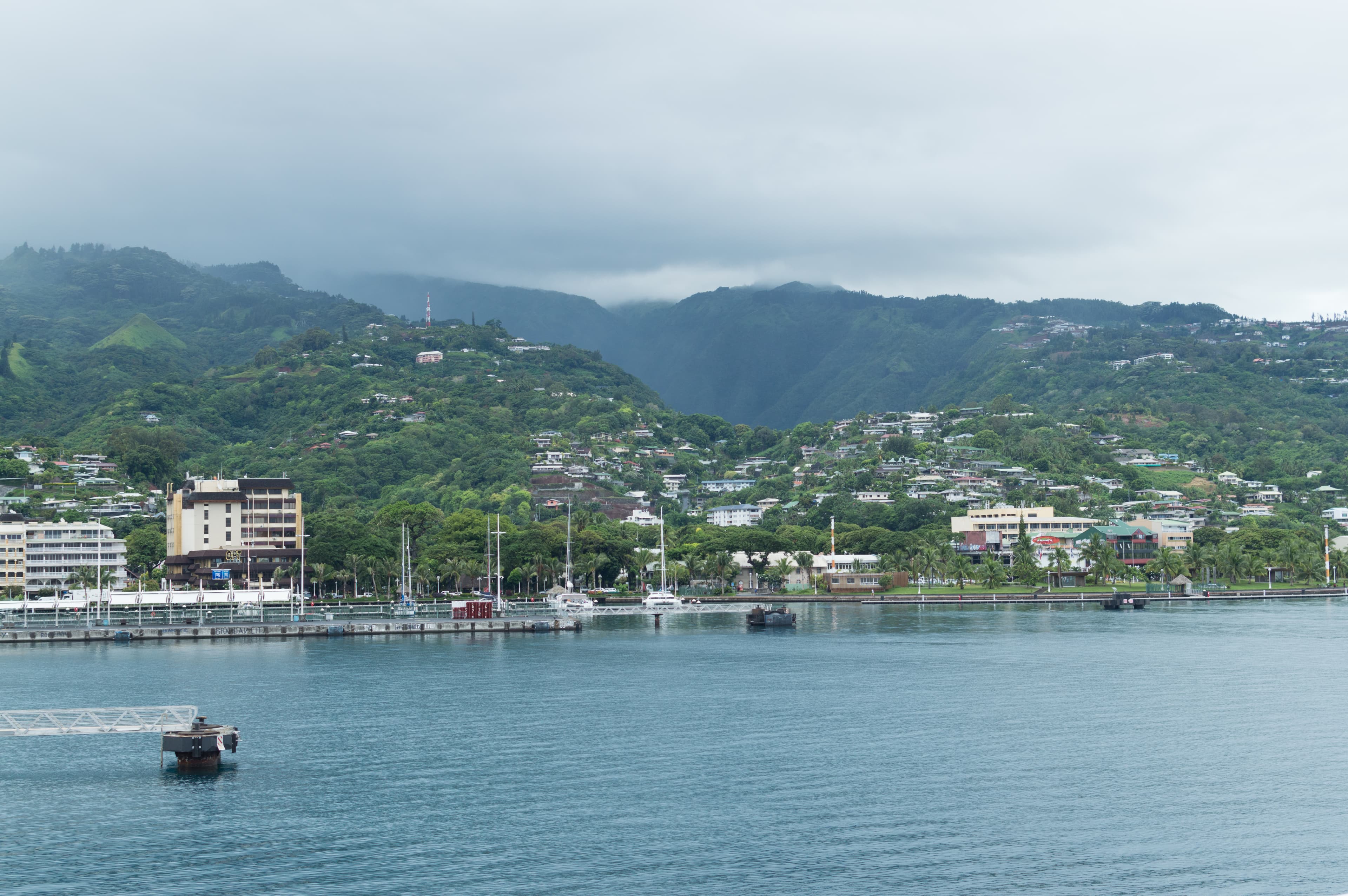
Papeete (meaning 'water from the basket' in Tahitian) is the capital of French Polynesia and the largest city in the French South Pacific. Located on the north-west coast of Tahiti, it has 26,000 inhabitants within the city limits and around 130,000 in the metropolitan area (one third of the Polynesian population). It is the administrative, economic, cultural and logistical centre of all of French Polynesia.
For travellers, Papeete is above all the gateway to the territory: Tahiti-Faa'a International Airport (PPT), 5 km from the city centre, is the only entry point for international flights. Many travellers spend only 1 or 2 nights there before flying on to Moorea, Bora Bora or the Tuamotus, but the city deserves deeper exploration over 2-3 nights to understand French Polynesia in its contemporary complexity.
The Papeete central market (Te Mahana, open every day except Sunday afternoon) is the soul of the city: on two floors, it brings together stalls of tropical fruits, fresh raw fish (red tuna, mahi-mahi), Polynesian crafts (tifaifai quilts, wood sculptures, pareos), black pearls and monoi. One of the most beautiful markets in the South Pacific, best visited early in the morning (5-7 am for maximum animation).
The Papeete waterfront stretches 2 km along the lagoon, from the marina (Yacht Club) to the honour quay (where cruise ships and the Aranui 5 mixed cargo dock). Here lies Place Vai'ete, where every evening from 6 pm around twenty food trucks (roulottes) set up: steak-frites, grilled fish, Chinese dishes, crêpes. One of the most authentic and economical spots in the capital (€10-15/person for a full meal).
Tahiti, the island that hosts Papeete, is the largest island in French Polynesia (1,045 km²). Shaped like a figure-eight, it splits into Tahiti Nui (the larger Tahiti, where Papeete sits) and Tahiti Iti (the smaller Tahiti, the eastern peninsula, wilder and more preserved). The island loop by car (114 km, 4-5 hours) reveals: Pointe Vénus (north, where James Cook first landed on 13 April 1769 during his observation of the transit of Venus), the Three Cascades of Faaurumai, the Vaipahi gardens and the Maraa grottoes, the Museum of Tahiti and the Islands at Punaauia (the reference ethnographic collection on Polynesia), and the Tahiti Iti peninsula with the famous Teahupoo surf spot — the mythical wave of international competitions and the site of the Paris 2024 Olympic surfing events.
What we love
- ✅Mandatory gateway to French Polynesia (PPT International Airport)
- ✅Papeete central market: one of the finest markets in the South Pacific
- ✅Waterfront food trucks: culinary authenticity at affordable prices
- ✅Spectacular island loop with Pointe Vénus, waterfalls, Museum of Tahiti
- ✅Teahupoo: world-class surf wave, Paris 2024 Olympic site
What to know
- ❌More urban and less photogenic than Moorea or Bora Bora
- ❌Traffic jams at rush hour (morning and evening)
- ❌International-standard hotels often far from the city centre
- ❌Black volcanic beaches less iconic than the white-sand motus
Situation
Où se situe Papeete (Tahiti) ?
Ouvrir la carte en grand sur OpenStreetMap →Frequently asked questions
How many days should I plan in Papeete and Tahiti?+
What to see at the Papeete central market?+
What is Pointe Vénus and why is it famous?+
What is Teahupoo and why is it famous?+
Where to stay in Tahiti?+
Our verdict
Papeete and Tahiti are not the signature destination of French Polynesia — that title belongs to Bora Bora or Moorea. But it is the unavoidable gateway and a stay of 2-3 days deserves to be planned to understand the contemporary Tahitian soul: the central market, the waterfront food trucks, the island loop with Pointe Vénus (Cook's first landing in 1769), the Three Cascades and the Museum of Tahiti, not forgetting the Tahiti Iti peninsula with the legendary Teahupoo wave. Prioritise the dry season (May-October) and lodge preferably in Punaauia or Faa'a, calmer and with better beaches than central Papeete.
Nearby

"Été austral chaud-humide."
Expert on Papeete (Tahiti) · 1 contributions
 Africa & Americas Desk — Mowando·Editor