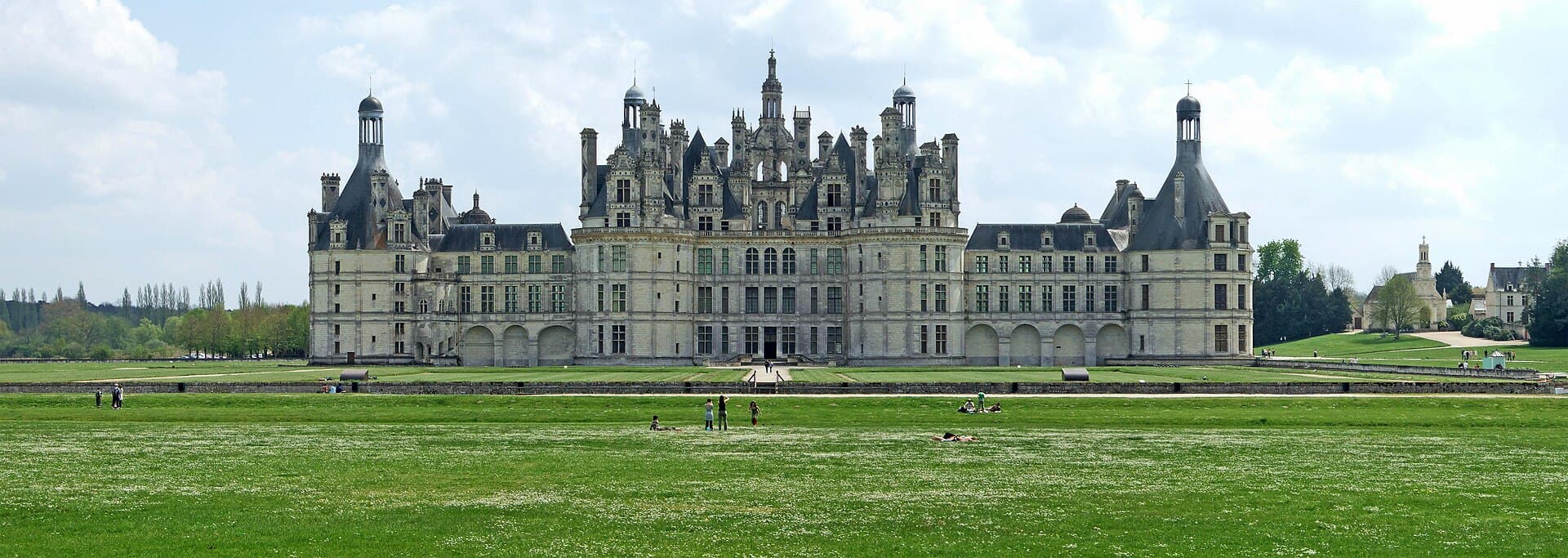
The Loire Valley is one of the most impressive concentrations of châteaux in the world — the French Renaissance in its purest form. The UNESCO section (280 km between Sully-sur-Loire and Chalonnes) houses 42 major châteaux open to the public, including the masterpieces of the early Renaissance: Chambord, Chenonceau, Amboise, Villandry, Azay-le-Rideau. This heritage density, doubled by a wine dimension (12 AOCs) and cycle tourism (La Loire à Vélo, 800 km waymarked), makes the Loire Valley a universal destination that speaks to families, couples, history lovers and wine enthusiasts.
For a weekend (3 days), focus on 4-5 headline châteaux from Tours or Blois: Chambord, Chenonceau, Amboise, Villandry or Azay-le-Rideau. With 5-7 days, add the Clos Lucé (Leonardo da Vinci in Amboise), Chaumont-sur-Loire (Garden Festival), Loches (medieval city), Cheverny (Tintin/Marlinspike), and 2 days of Loire à Vélo on the Blois-Amboise section (60 km, possible in 2 gentle stages). Over 10 days, the programme extends to the vineyards (Sancerre/Pouilly to the east, Chinon/Bourgueil in the centre, Saumur to the west), Angers (château and Apocalypse Tapestry), and Saumur (cavalry school, Fontevraud).
The key to a successful stay: choose 1-2 bases (Tours and/or Blois) and explore in star fashion, don't change hotels every night. Book headline châteaux online with time slots in high season. Mix châteaux and nature: 1 day of Loire à Vélo between 2 château visits is an excellent balance.
Read also
- Chambord, the largest Renaissance château — 426 rooms, double-helix staircase, 5,440-hectare park: François I's royal dream.
- France — Complete country guide: entry rules, regions, budget, gastronomy.
- Île-de-France — Paris, Versailles, Fontainebleau northeast of the Loire Valley.
- Nouvelle-Aquitaine — Bordeaux and the Bordeaux vineyards just south of the Loire Valley.