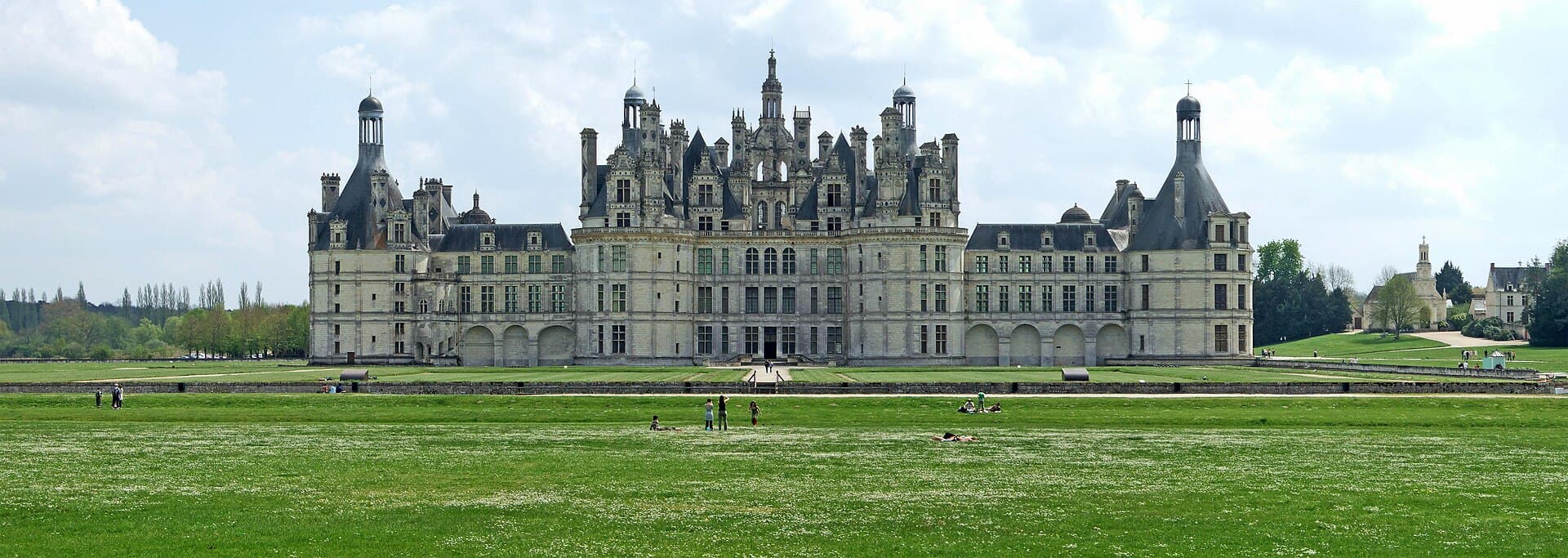
The Renaissance châteaux are the main reason to come. Chambord (the largest, 426 rooms) is unique in the world: double-helix staircase attributed to Leonardo da Vinci (two people can go up and down without crossing), hexagonal-checkerboard north façade, panoramic terrace on the roofs, 5,440-hectare enclosed park (Europe's largest enclosed park). Visit recommended with HistoPad (free tablet reconstructing furnished 16th-century rooms).
Chenonceau (France's 2nd most visited château after Versailles) is probably the most romantic: 5-arch bridge spanning the Cher, two-storey gallery that still inspires honeymooning couples, gardens of Diane de Poitiers and Catherine de Medici. The "Ladies' Château" was loved and managed by six successive women (Diane, Catherine, Louise de Lorraine, etc.). 1h30-2h visit. Splendid floral display in June (50,000 flowers renewed each season).
Amboise and Clos Lucé are inseparable. The Royal Château of Amboise (François I's residence) houses the Saint-Hubert Chapel and Leonardo da Vinci's tomb (he died in Amboise in 1519). 500 m away, the Clos Lucé was Leonardo's last residence. The inventions of the Italian genius (flying machines, tank, mobile bridge) are reproduced full-scale in the park. Essential visit, 2-3h.
Villandry is famous for its French formal gardens — one of Europe's most beautiful ensembles: 6 themed gardens on 9 hectares (Renaissance vegetable garden, garden of love, water garden, labyrinth). The château itself is more modest. Allow 2h for the complete visit. To see absolutely in June-September.
Azay-le-Rideau is a Renaissance gem framed by the Indre. The château seems to float on the water — one of the Loire Valley's most photogenic. Impeccable restoration since 2017, 1h30 visit.
Blois (French royal residence in the 16th century) houses the famous François I staircase and an archaeology museum. Sound and light show at night in summer. 30 min from Chambord and Cheverny.
Cheverny is less visited but remarkable for its preserved interiors (the Hurault family still lives there). It's also the model for the Marlinspike Hall château in Tintin (Hergé drew it inspired by Cheverny). 1h30 visit, add the permanent Tintin exhibition (45 min) if travelling with children.
Chaumont-sur-Loire has hosted the International Garden Festival since 1992 — contemporary installations in the park with a theme renewed each year. From April to November. Essential for garden and contemporary art enthusiasts.
Beyond the châteaux, don't miss: Beauval ZooParc (1h from Tours, one of Europe's most beautiful zoos, pandas, marine hippopotamuses), royal city of Loches (Romanesque keep, royal lodging), Tours (medieval city, Plumereau, gastronomy), Angers (château with Apocalypse Tapestry, the largest medieval tapestry in the world).
The vineyards deserve a detour: Sancerre (the best known, Sauvignon Blanc on flint, tastings on foot in the upper town), Chinon (Cabernet Franc, medieval city and royal château), Vouvray (Chenin, troglodyte caves dug in the tuffeau), Saumur (sparkling wine cellars to visit, cavalry school). Many estates offer visits + free or €5-10 tastings.
Read also
- Chambord, the largest Renaissance château — 426 rooms, double-helix staircase, 5,440-hectare park: François I's royal dream.
- France — Complete country guide: entry rules, regions, budget, gastronomy.
- Île-de-France — Paris, Versailles, Fontainebleau northeast of the Loire Valley.
- Nouvelle-Aquitaine — Bordeaux and the Bordeaux vineyards just south of the Loire Valley.