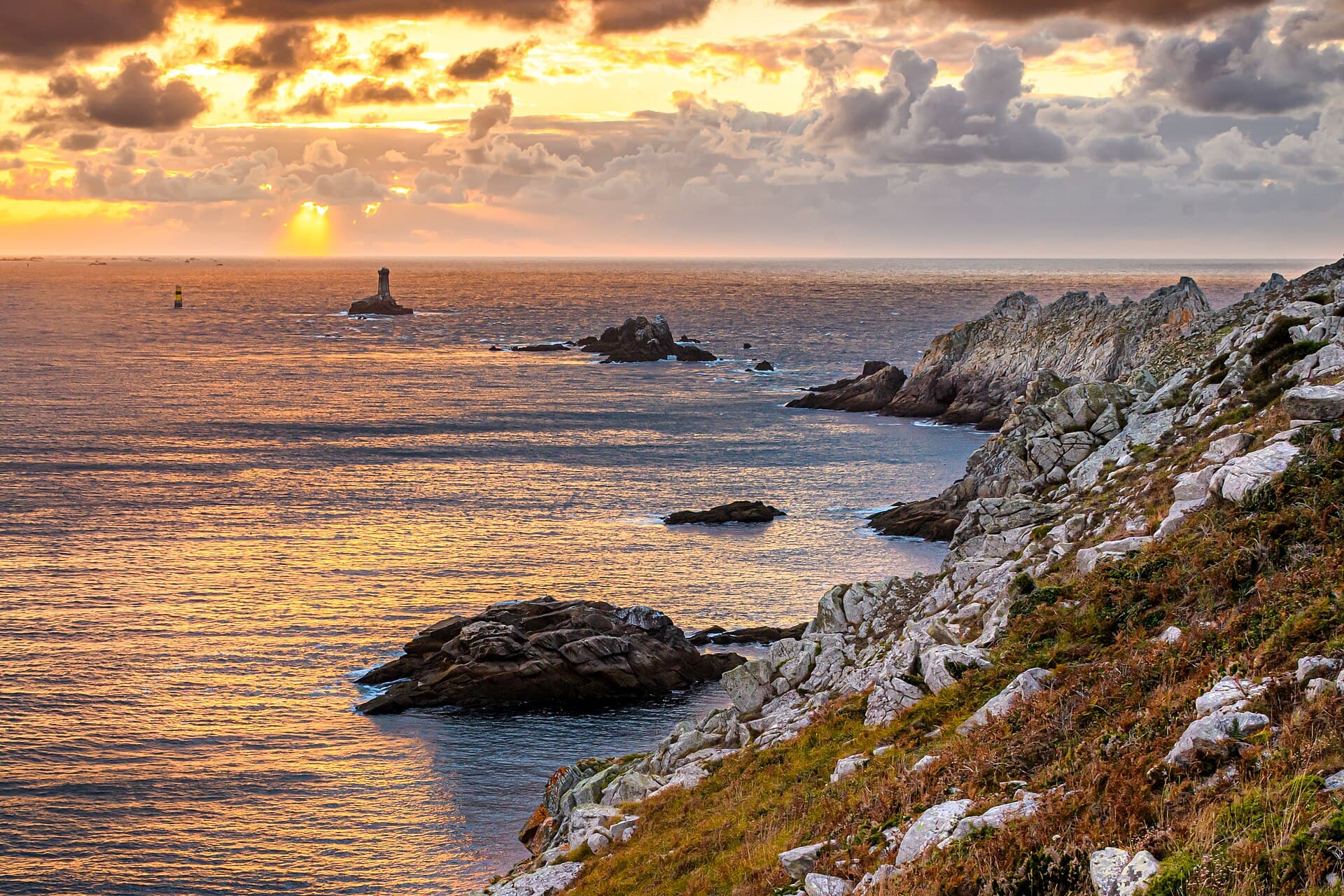
Brittany enjoys a temperate oceanic climate, mild and humid. Average temperatures: 6 °C in January, 19 °C in July. Rainfall: 700-1,200 mm/year depending on zones (the Finistère point is the wettest). A Breton particularity: micro-climates. The south coast (Quiberon, Gulf of Morbihan) is warmer and drier than the north coast (Saint-Malo, Pink Granite Coast).
Spring (April-June) is ideal for nature: heather and gorse in bloom in April-May, hydrangeas from June, exotic gardens (Locronan, île de Batz). Temperatures rising gradually (12-20 °C). June is probably the best month: longest days, sun well present, sites still accessible without excessive crowds. The first festivals stack up (Quartiers d'Été in Quimper, Vieilles Charrues festival in late June).
Summer (July-August) is high season: mild temperatures (18-23 °C), sea at 17-19 °C in the south (swimming possible), long days. It's the period of major festivals: Vieilles Charrues in Carhaix (3rd day of July, 280,000 spectators over 4 days), Festival Interceltique de Lorient (August, 750,000 visitors, worldwide celebration of Celtic cultures), Festival du Bout du Monde in Crozon (late July). Crowds are heavy on the coast: Saint-Malo, Carnac, Gulf of Morbihan are saturated in August, hotels and campsites full from May.
September is the perfect season: still-mild temperatures (15-21 °C), still-warm sea (17-18 °C), crowds plummeting, golden light on the granite coasts. Hydrangeas are at their peak. Festival du Bout du Monde, Lorient festival. Accommodation prices drop 30-40%. It is probably the best month to visit Brittany.
Autumn (October-November) is melancholic but beautiful for storm watchers (north coast, Finistère point). Storm chasers and dramatic landscapes are unique. The climate degrades: 15 °C in October, 11 °C in November, frequent rain (15-20 days/month). Many seasonal accommodations close from late September.
Winter (December-March) is mild but very humid. Temperatures stay positive (6-10 °C during the day), it rarely snows. Storms are spectacular on the Finistère point and the Crozon peninsula — come observe waves crashing on lighthouses (absolute safety: never approach too closely). The majority of beaches are deserted, hinterland cities (Dinan, Vannes, Quimper) keep their shops open. Saint-Malo in winter, under a spring tide and rough sea, is an unforgettable spectacle.
Read also
- Saint-Malo, the corsair city — Walled ramparts, beaches, archipelago and one of France's most beautiful fortified cities.
- France — Complete country guide: entry rules, regions, budget, gastronomy.
- Normandy — Mont-Saint-Michel and D-Day beaches just east of Brittany.
- Loire Valley — Renaissance châteaux to explore further south, accessible by train from Rennes.