Region
Normandy
Mont-Saint-Michel, D-Day landing beaches, Étretat cliffs, Impressionist Honfleur and medieval Bayeux: Normandy is France's richest region in maritime and historical heritage.
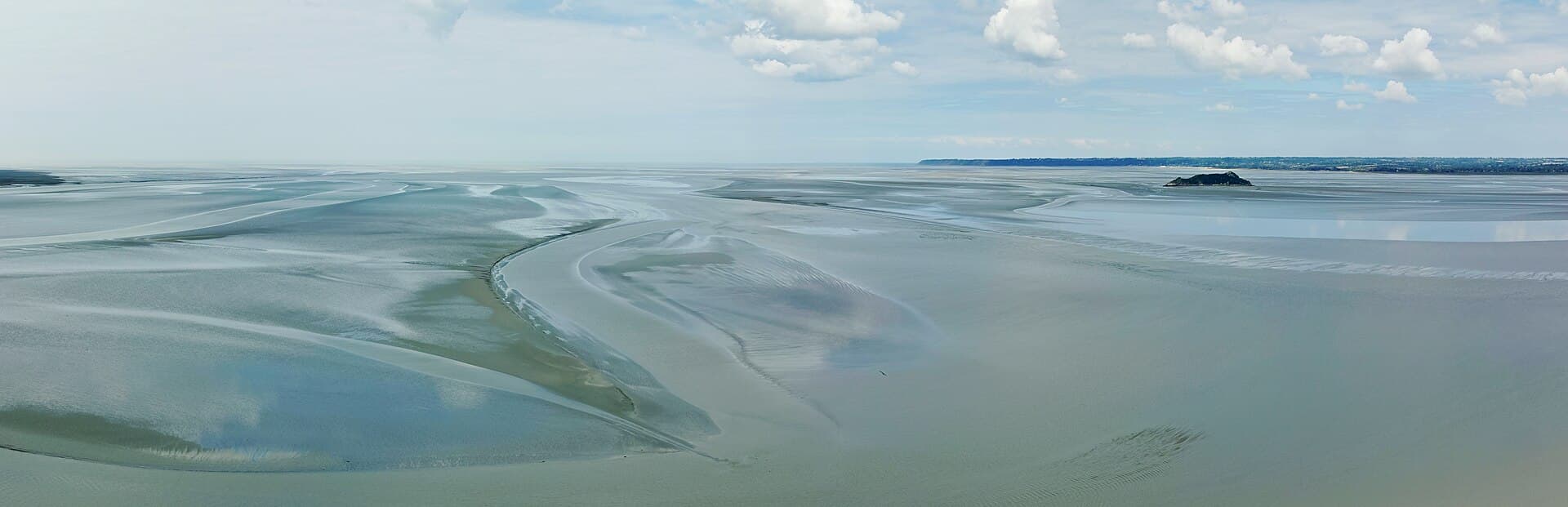
Normandy is one of France's most historically charged and heritage-rich regions. It stretches across 600 km of coastline from Mont-Saint-Michel Bay to the Bay of Somme, taking in the Norman bocage, the Pays d'Auge, the Côte Fleurie and the Alabaster Coast. This landscape diversity is doubled by exceptional historical density: from William the Conqueror's invasion of 1066 (told by the Bayeux Tapestry) to the Allied landings of 1944, via 11th-century Norman abbeys and Belle Époque villas of Deauville, Normandy is an open-air history book.
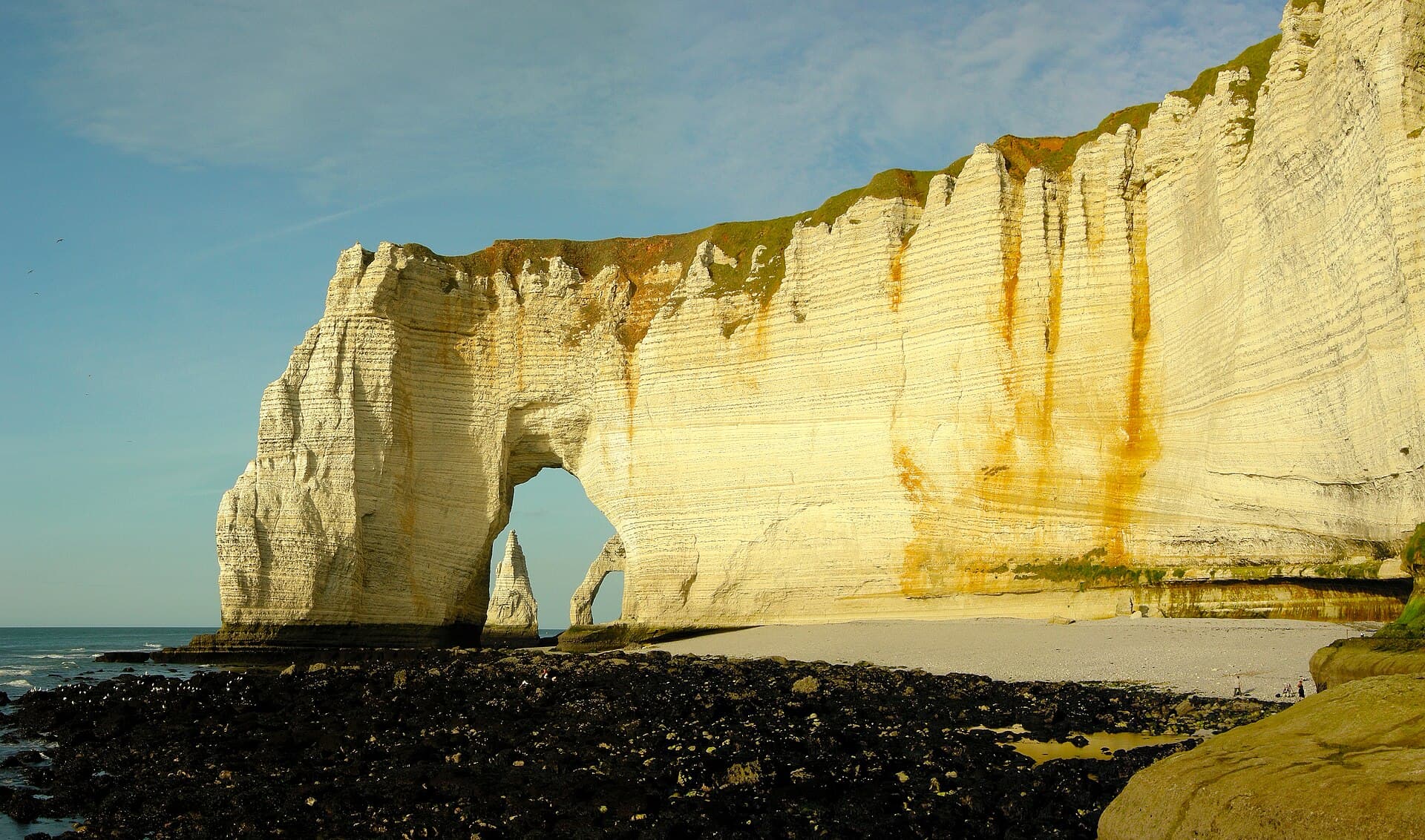
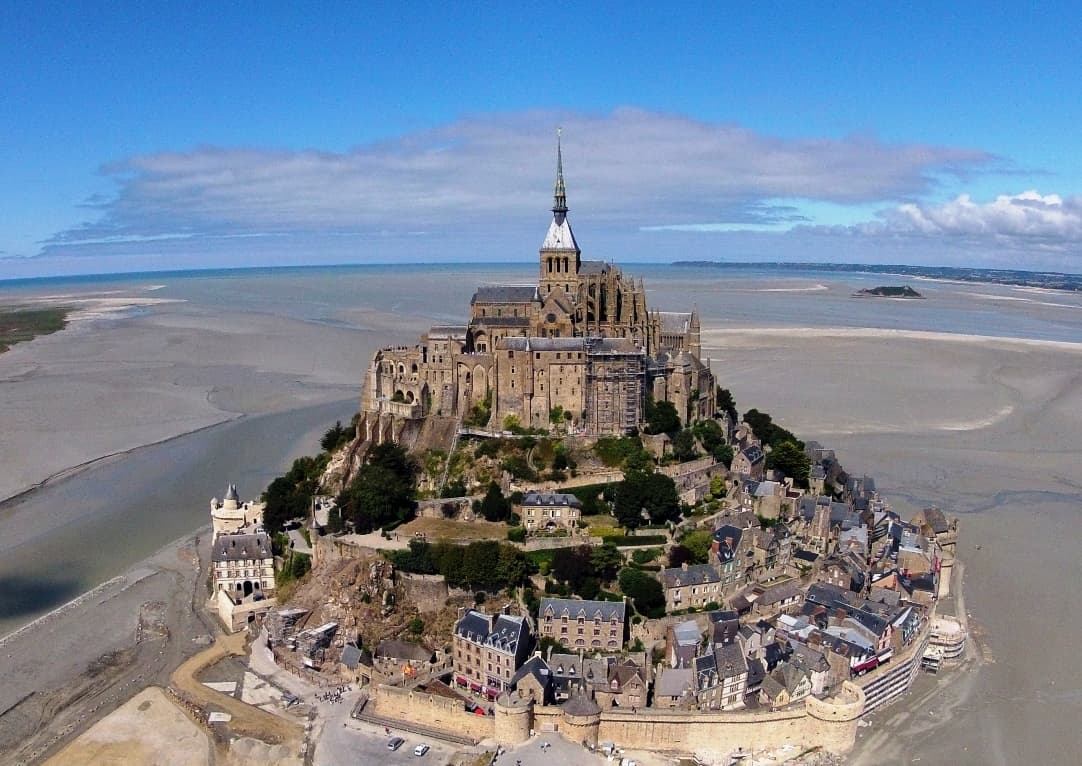
Four major sites embody the region's tourist appeal. Mont-Saint-Michel (UNESCO since 1979) is one of France's most-visited sites, with its Gothic abbey silhouette perched on an islet in a bay with Europe's highest tides. Étretat and its spectacular chalk cliffs (Porte d'Aval, Porte d'Amont, Manneporte) inspired Monet, Boudin and Courbet. The D-Day beaches (Utah, Omaha, Gold, Juno, Sword) form a living memorial to 6 June 1944 — the American cemetery at Colleville-sur-Mer remains one of France's most moving sites. Honfleur, a preserved picturesque port, was the birthplace of Impressionism.
But Normandy also offers a quieter and equally appealing side: the Norman bocage (hedgerows, apple trees, brown-and-white Norman cows), the Pays d'Auge and its Cider Route (Camembert, Calvados, Pont-l'Évêque, Livarot), the characteristic thatched cottages, and a peaceful art-of-living that Marcel Proust celebrated in "In Search of Lost Time" around Cabourg (the literary Balbec). Norman gastronomy is one of France's richest: AOP Camembert de Normandie, apples and cider, Isigny crème fraîche, oysters, scallops, Calvados.
Explore Normandy
Spots in the region
Situation
Où se situe Normandy ?
Ouvrir la carte en grand sur OpenStreetMap →Frequently asked questions
How many days do I need for Normandy?+
How do I get to Mont-Saint-Michel?+
Do I need to plan around the tides at Mont-Saint-Michel?+
When is the best time to visit Normandy?+
How do I visit the D-Day beaches?+
What is there to see at Étretat besides the cliffs?+
Which villages are essential in the Pays d'Auge?+
Our verdict
Normandy is one of the most emblematic French regions for international travellers — Mont-Saint-Michel, D-Day beaches, Étretat, Honfleur are iconic images. The region lends itself to a 5-7 day stay: 2 days around Mont-Saint-Michel and Bayeux (D-Day beaches), 2 days in the Pays d'Auge and Côte Fleurie (Honfleur, Deauville, Camembert), 1-2 days on the Alabaster Coast (Étretat, Fécamp, Dieppe). Visit in May-June or September for the mildest weather and most manageable crowds. Anticipate tides for Mont-Saint-Michel (access to the mount can be limited). A car is highly recommended to enjoy the bocage and villages.