ville
Cairo
A 22-million city where Mamluk minarets, fourth-century Coptic churches and pharaonic treasures from the Egyptian Museum coexist in glorious chaos.
Cairo is one of the largest metropolises in Africa and the Arab world — a sprawling megacity of around 22 million people spreading along both banks of the Nile. It is also one of the oldest and most historically dense cities on earth: founded in 969 by the Fatimids, it has been for more than a thousand years the political, economic and intellectual capital of the Arab-Muslim world. An attentive visitor crosses, in just a few days, four superimposed civilisations — pharaonic, Coptic, medieval Islamic and modern — with an intensity that few cities in the world can match.
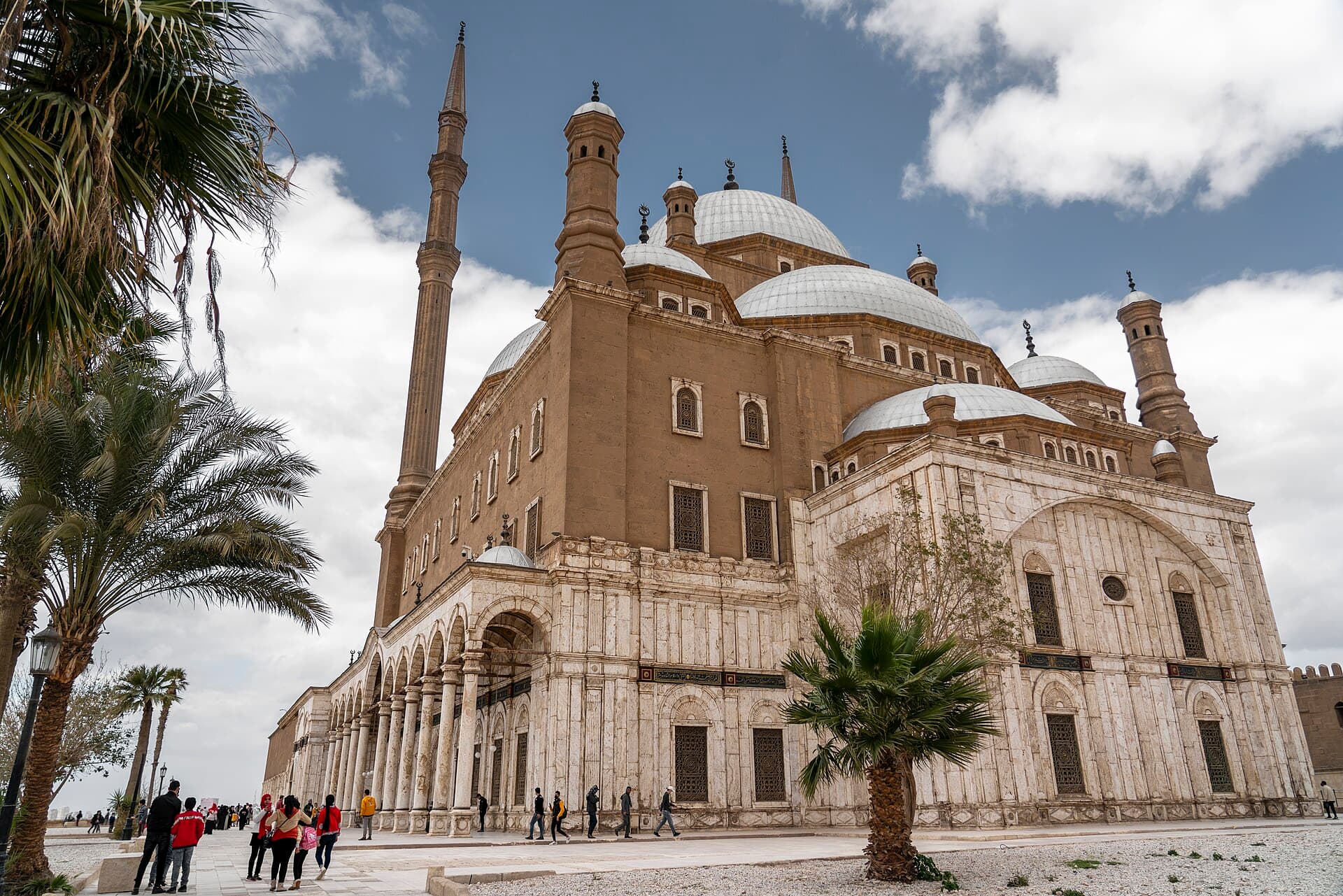
Islamic Cairo, listed as a UNESCO World Heritage Site since 1979, holds one of the finest collections of medieval Islamic architecture on the planet: the Citadel of Saladin (12th century) and its dominant Muhammad Ali Mosque, the Al-Azhar Mosque (970 AD, one of the oldest continuously operating universities in the world), the Khan el-Khalili (a still-living medieval souk), the Mamluk madrasas and the hundreds of minarets that earned Cairo its nickname 'the city of a thousand minarets'. Coptic Cairo, more discreet, hides the Hanging Church (al-Mu'allaqa), the Ben Ezra Synagogue and several sanctuaries linked to the Holy Family's flight into Egypt. Finally, the Egyptian Museum on Tahrir Square preserves over 120,000 pieces, including the Tutankhamun treasure and the royal mummies — a visit that alone would justify the trip. Cairo is not an easy city: chaotic traffic, real pollution, guaranteed urban fatigue. But it is also one of the most stimulating travel experiences the contemporary world can offer.
What we love
- ✅Exceptional heritage density: Islamic Cairo UNESCO, Coptic Cairo, Egyptian Museum
- ✅Rich and inexpensive street food: koshari, ful medames, ta'amiyya, oriental pastries
- ✅Khan el-Khalili, one of the finest still-active medieval souks in the Arab world
- ✅Lively nightlife, Nile terraces, sunset felucca cruises
- ✅Air hub: natural gateway to Luxor, Aswan and the Red Sea
What to know
- ❌Chaotic traffic and very real air pollution
- ❌Crushing heat from May to September (35-42 °C)
- ❌Frequent commercial harassment around tourist sites
- ❌Exhausting city: plan regular breaks and a quiet hotel
Situation
Où se situe Cairo ?
Ouvrir la carte en grand sur OpenStreetMap →Frequently asked questions
How many days should I plan for Cairo?+
Is Cairo a safe destination?+
How do I get around Cairo?+
Which neighbourhood should I stay in?+
Do I need a visa for Egypt?+
What should I eat in Cairo?+
Egyptian Museum or Grand Egyptian Museum?+
Our verdict
Cairo is a full-blown experience, one of the most intense any major city can offer. Between Saladin's Citadel, the labyrinth of the Khan el-Khalili, the pharaonic treasures of the Egyptian Museum and the buzz of Nile terraces, you understand why travellers rarely come back unchanged. The friction is real — chaotic traffic, pollution, summer heat, commercial hassle — but it is part of the journey. Come ideally between October and April, plan at least three full days, sleep in a quieter quarter like Zamalek or Garden City, and accept that Cairo has to be earned. Cairo isn't visited: it's lived.
Nearby

"Saison sèche idéale, 22°C journée."
Expert on Cairo · 1 contributions
 Africa & Americas Desk — Mowando·Editor