village
Viñales
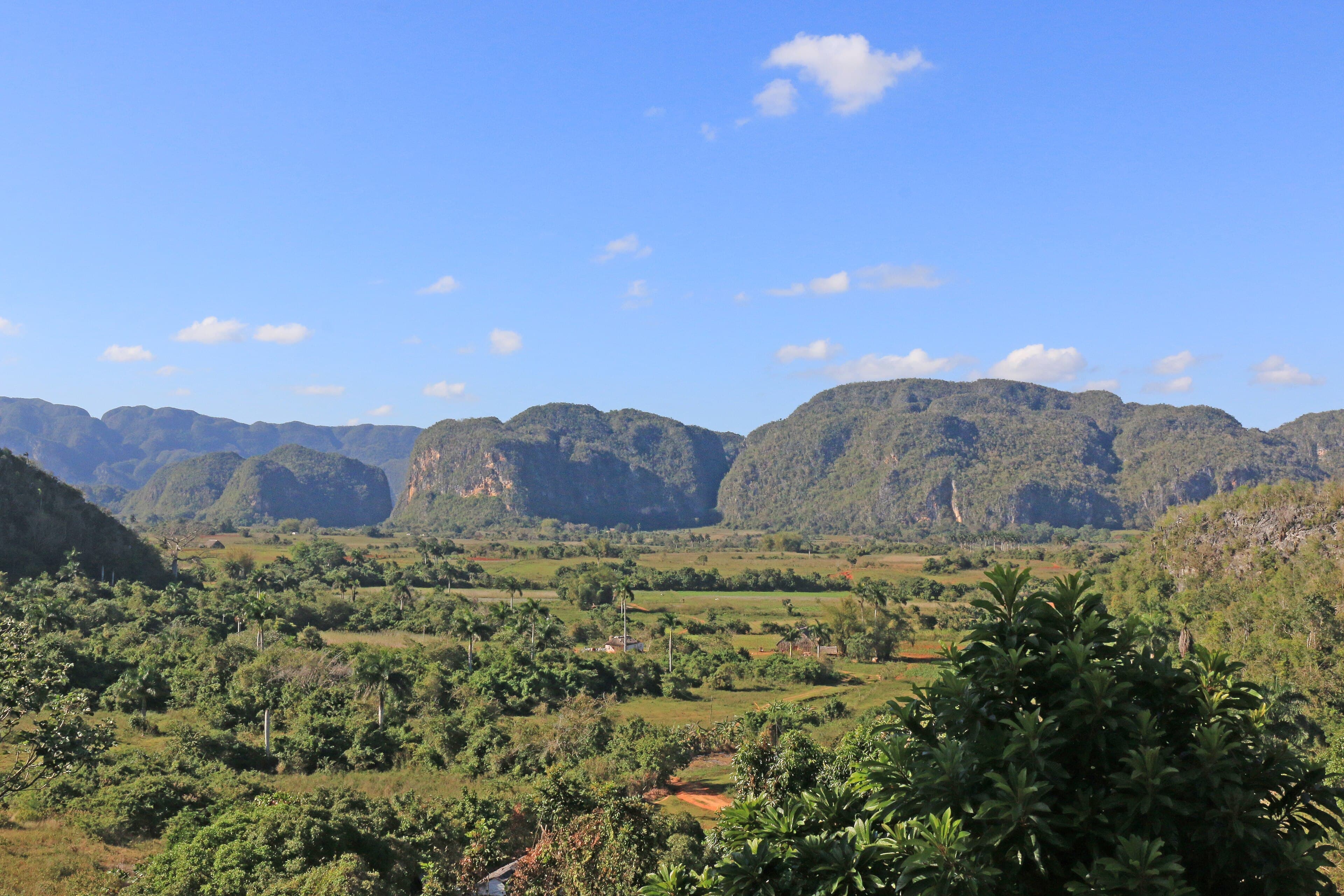
A geologically unique valley — karst limestone towers rising above a green sea of tobacco plantations, ancestral farms and slow-walking horses — only a few hours from frenetic Havana.
Viñales is the other Cuba — the one without colonial opera houses or revolutionary neon signs, but a geological and human beauty so profound that the valley has been UNESCO World Heritage-listed since 1999. Set in the province of Pinar del Río, 180 km west of Havana (around 2h30 by road), the Viñales Valley is dominated by mogotes: vertical-sided karst limestone towers that rise like islands from a sea of tobacco, manioc and coffee plantations. These geological formations, found nowhere else on earth in quite this form, are the remnants of a former Jurassic plateau eroded over millions of years. They shelter caves, bats, endemic plants and a panorama that evokes a terrestrial Halong Bay.
The village of Viñales itself is tiny — a few streets lined with wooden colonial houses with rocking-chair porches, a church, a central park, and dozens of casas particulares that make up almost all of the lodging. Life moves at a peaceful pace, punctuated by passing horses, ox carts and bicycles. It is the perfect antithesis of Havana's intensity and the indispensable counterpoint to any Cuban trip.
The valley is above all the cradle of Cuban tobacco — the leaf behind the world's finest cigars (Cohiba, Romeo y Julieta, Montecristo). The vegueros (tobacco farmers) still work in traditional ways on family fincas: ox-drawn ploughing, manual planting in November, January-March harvest, leaf-curing in the long, distinctive casas del tabaco, fermentation and hand-rolling. Visiting a finca with tasting is one of Viñales's signature experiences — a privileged moment with farming families perpetuating a craft handed down through five generations.
What we love
- ✅UNESCO valley with one-of-a-kind karst mogotes, spectacular landscapes
- ✅Visit tobacco fincas: cigar-rolling demos, tastings and exchanges with the vegueros
- ✅Varied outdoor activities: hiking, horseback riding (€5-8/hour), caving in Cueva del Indio and the Gran Caverna
- ✅High-quality casas particulares with warm, affordable rural hospitality (€20-30/night)
- ✅Peaceful pace of life, the perfect antidote to Havana's intensity
What to know
- ❌Very limited internet even by Cuban standards (central park only)
- ❌Restaurant scene is monotonous, little variety beyond classic paladares
- ❌Some excursions feel staged (fake vegueros for groups) — go independent for authenticity
- ❌Long, draining bus journey from Havana on Viazul if you skip a private car
Situation
Où se situe Viñales ?
Ouvrir la carte en grand sur OpenStreetMap →Frequently asked questions
How many days should you spend in Viñales?+
How do you get from Havana to Viñales?+
What is a mogote and how did they form?+
Can you really visit an authentic tobacco finca?+
Are there outdoor excursions in Viñales?+
Our verdict
Viñales is the essential rural stop on any Cuban trip. The valley is a one-of-a-kind natural spectacle, encounters with vegueros are rare in their humanity, and the rural rhythm provides the perfect counterpoint to Havana's intensity. Plan a minimum of two nights: one day for the valley (on horseback or on foot, finca visit, lunch with the vegueros), another for the caves, the Mirador de los Jazmines and the Mural de la Prehistoria. Stay in a hillside casa particular to enjoy sunrise over the mogotes — one of the great moments of a Cuban journey.
Nearby



"Janvier est le mois magique à Viñales : l'air vif du matin (16 °C), la lumière dorée sur les mogotes, les premières récoltes de tabac dans les fincas. Prévoir une polaire pour les soirées."
Expert on Viñales · 1 contributions
 Africa & Americas Desk — Mowando·Editor