
Region
Central Dalmatia
Croatia's most diverse region, where a 1,700-year-old living ancient city neighbours islands of contrasting personalities: glamorous Hvar, sporty Brač, confidential Vis, cathedral-crowned Trogir.
Central Dalmatia is the nerve centre of the Croatian coast, the balance point between the iconic south (Dubrovnik) and the wildness of Zadar and the Kornati. This is where coastal Croatia was born as a tourist destination — Split, its islands, its white pebble beaches and its exceptionally sunny climate — and this is where the region retains the essential balance between ancient heritage and Mediterranean lifestyle.
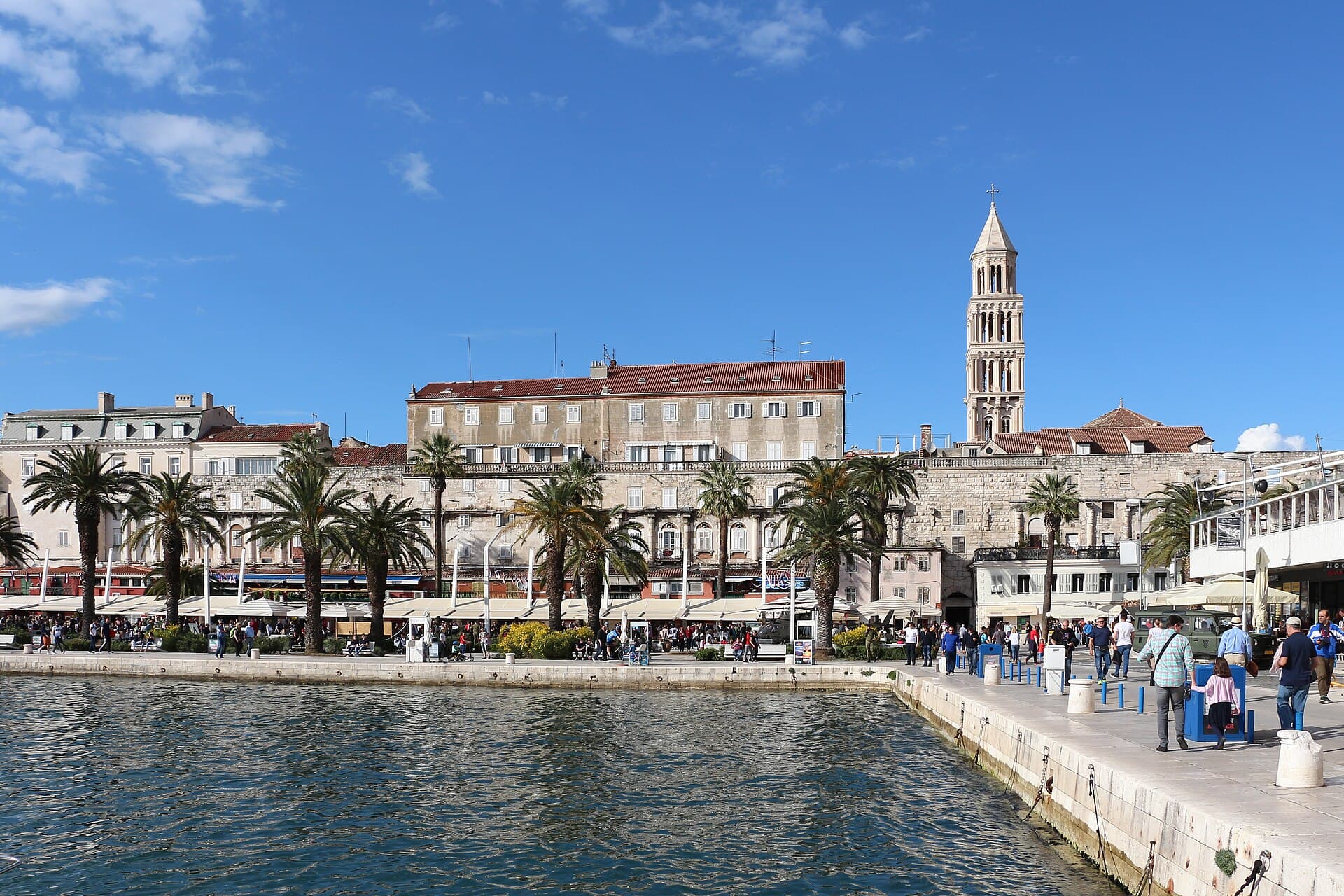
Split, Croatia's second-largest city, is unique in the world: its historic centre is built inside the Diocletian's Palace, the retirement residence the Roman emperor commissioned in the early fourth century. After the fall of the Empire, local populations settled in the ruins and gradually turned them into residential quarters. The result is striking: a living city of 180,000 inhabitants where alleys and squares are literally embedded in Roman walls, columns, the imperial mausoleum turned cathedral of Saint Domnius, the peristyle where you sip coffee at the foot of 3,500-year-old Egyptian sphinxes.
Thirty minutes west of Split, Trogir is a more intimate urban gem, UNESCO-listed for its medieval-Renaissance historic centre. Saint Lawrence Cathedral and its portal sculpted by master Radovan (thirteenth century), the Venetian walls, the Kamerlengo castle and the maze of compact alleys make it an essential cultural stop.
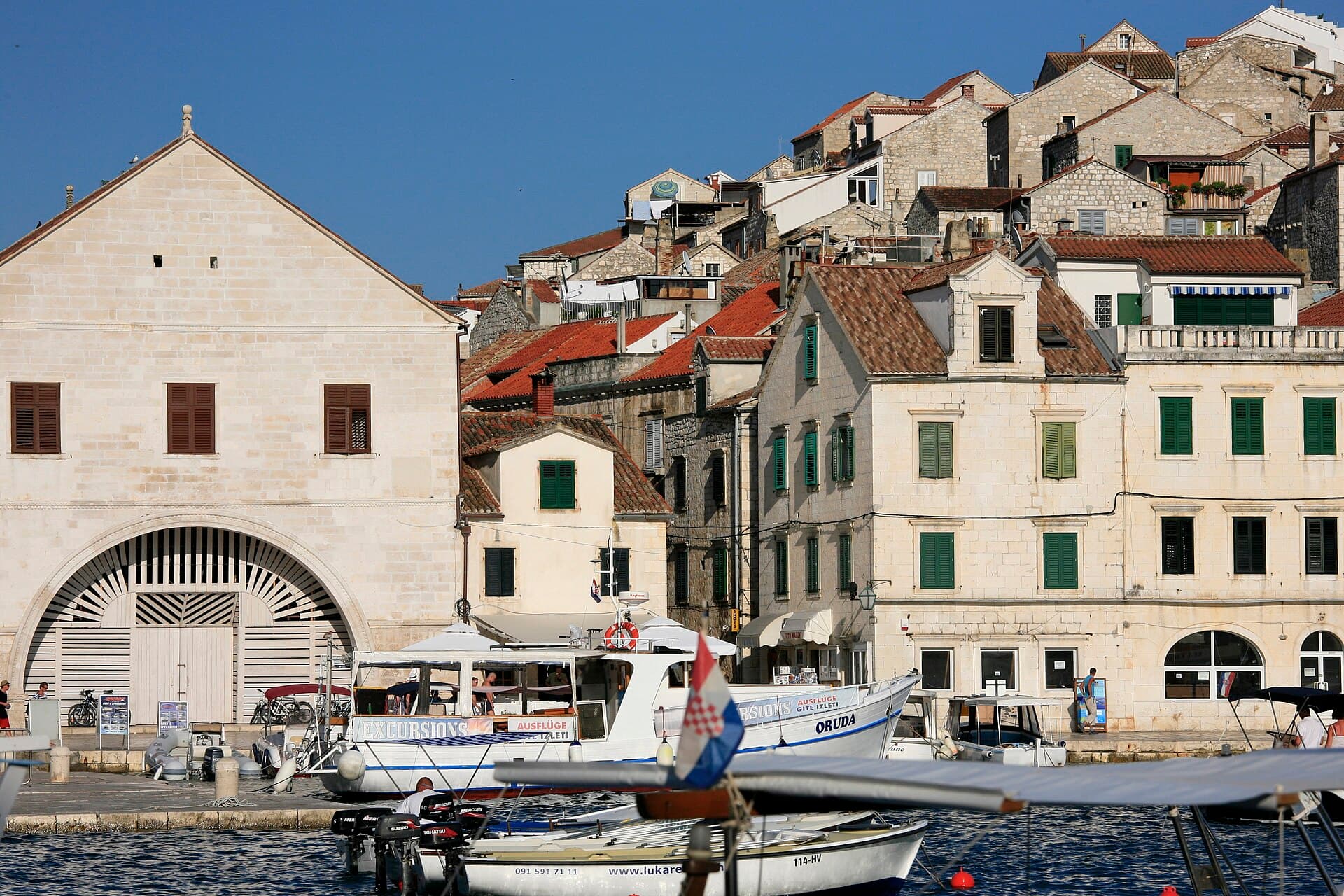
The islands of the region offer a range of experiences hard to match. Brač, the most accessible (1h from Split by ferry), shelters Croatia's most iconic beach: Zlatni Rat (the 'Golden Horn'), a white pebble spit that shifts shape with the winds. Hvar is the island of lavender, vineyards and nightlife — Hvar Town is one of the most glamorous coastal destinations in the Adriatic. Vis, the most distant and the most authentic (off-limits to foreigners until 1989 as a Yugoslav military base), retains a preserved charm and shelters the Blue Cave of Biševo, a marine cavity where light takes on a cobalt blue hue at midday. Šolta, the lesser-known neighbour of Split, completes the picture with its olive groves and peaceful fishing ports.
Explore Central Dalmatia
Spots in the region
Situation
Où se situe Central Dalmatia ?
Ouvrir la carte en grand sur OpenStreetMap →Frequently asked questions
How many days do you need to visit Central Dalmatia?+
How can you visit Diocletian's Palace in Split without the crowds?+
Which island to choose between Hvar, Brač and Vis?+
What is the Blue Cave of Biševo and how do you visit it?+
When does lavender bloom on Hvar?+
How do you reach the islands from Split?+
What to see on a day trip from Split?+
Our verdict
Central Dalmatia is probably the best introduction to Croatia for those wanting to live everything in one trip: a vibrant cultural capital, a UNESCO medieval site, islands of contrasting personalities and a sea among the finest in Europe. Plan for at least seven days: two nights in Split, one night in Trogir, two nights on Hvar and two nights on Brač or Vis. Avoid July-August if you can; May, June and September offer superior experience for often half the price.