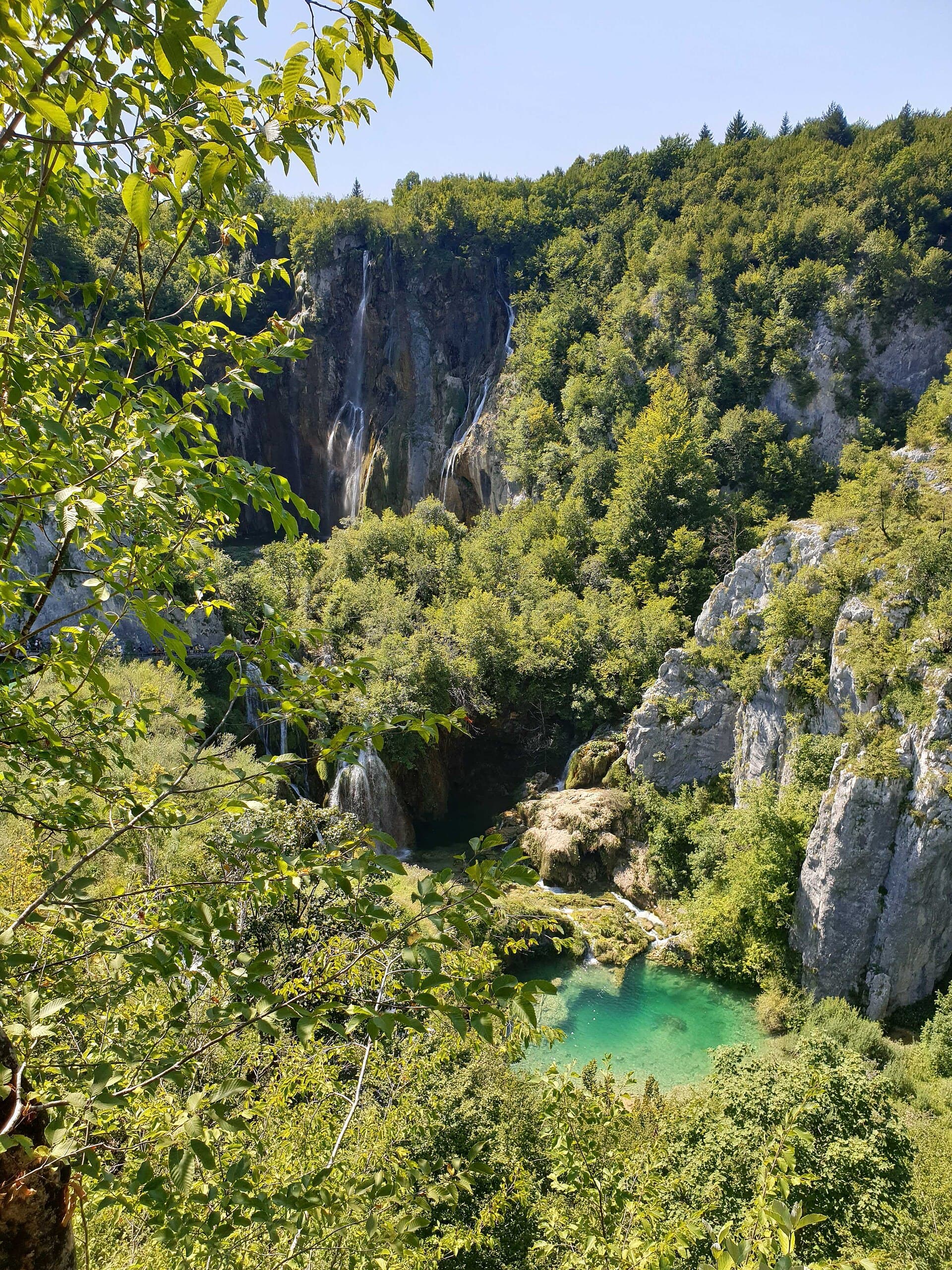
Northern Dalmatia lives by a seasonal rhythm marked by coast/interior duality: the Adriatic coast enjoys a dry and sunny Mediterranean climate, while the interior (Plitvice, Velebit) experiences a more humid continental climate with snowy winters.
May and June are the dream months to combine national parks and coast. At Plitvice, water flow is still abundant after the Velebit snowmelt, the waterfalls are at their peak and the trees in their finest greenery. At Krka, May offers spectacular falls and manageable crowds. On the coast, temperatures in Zadar (20-26 °C) allow combining heritage visits in the middle of the day with swimming in late afternoon (sea at 19-23 °C). It is also the season for wild asparagus, purple artichokes and the first figs — local cuisine is at its best.
July and August are the main beach season. The sea reaches 24-26 °C, perfect for sailing in the Kornati and swimming at Sakarun on Dugi Otok. But Plitvice and Krka are saturated (1-2h queues at the entrance), and the boardwalk paths of Plitvice become almost impassable at peak times. If you go in summer, the trick is to enter at 7am opening and leave before 11am, or to enter at 4pm for the golden light of late afternoon. On the coast, Zadar sees its festivals in full swing and the Pag archipelago host nightly parties on Zrće beach — a very different atmosphere.
September and October correspond to the best period for national parks. Visitor numbers fall sharply after 10 September, temperatures remain pleasant (20-26 °C in September, 16-22 °C in October), the sea is still 22-24 °C in September, and autumn colours arrive at Plitvice in late October — one of the most magnificent spectacles in Europe for nature photography.
Winter (November to March) is a radically different experience. Plitvice under the snow, with its partially frozen waterfalls, is one of the most spectacular images of Croatia — accessible but with limited trails. Zadar and Šibenik remain alive but calm, ideal for cultural visits in a local atmosphere. The bora can be violent on the coast, particularly at the Pag bridge crossing where gusts sometimes exceed 200 km/h and close the road for several hours. Links to the islands are reduced and some island hotels close.
Read also
- Central Dalmatia — Split, UNESCO-listed Trogir, Hvar and Brač: the other historic heart of the Dalmatian coast.
- Istria — Roman Pula, Venetian Rovinj, hilltop villages and white truffles.
- Croatia — Complete country guide: visa, budget, regions to explore and best time to visit.
- Zagreb and Continental Croatia — The Austro-Hungarian capital, Samobor, Risnjak and Slavonia: the country's other face.