Region
Angkor
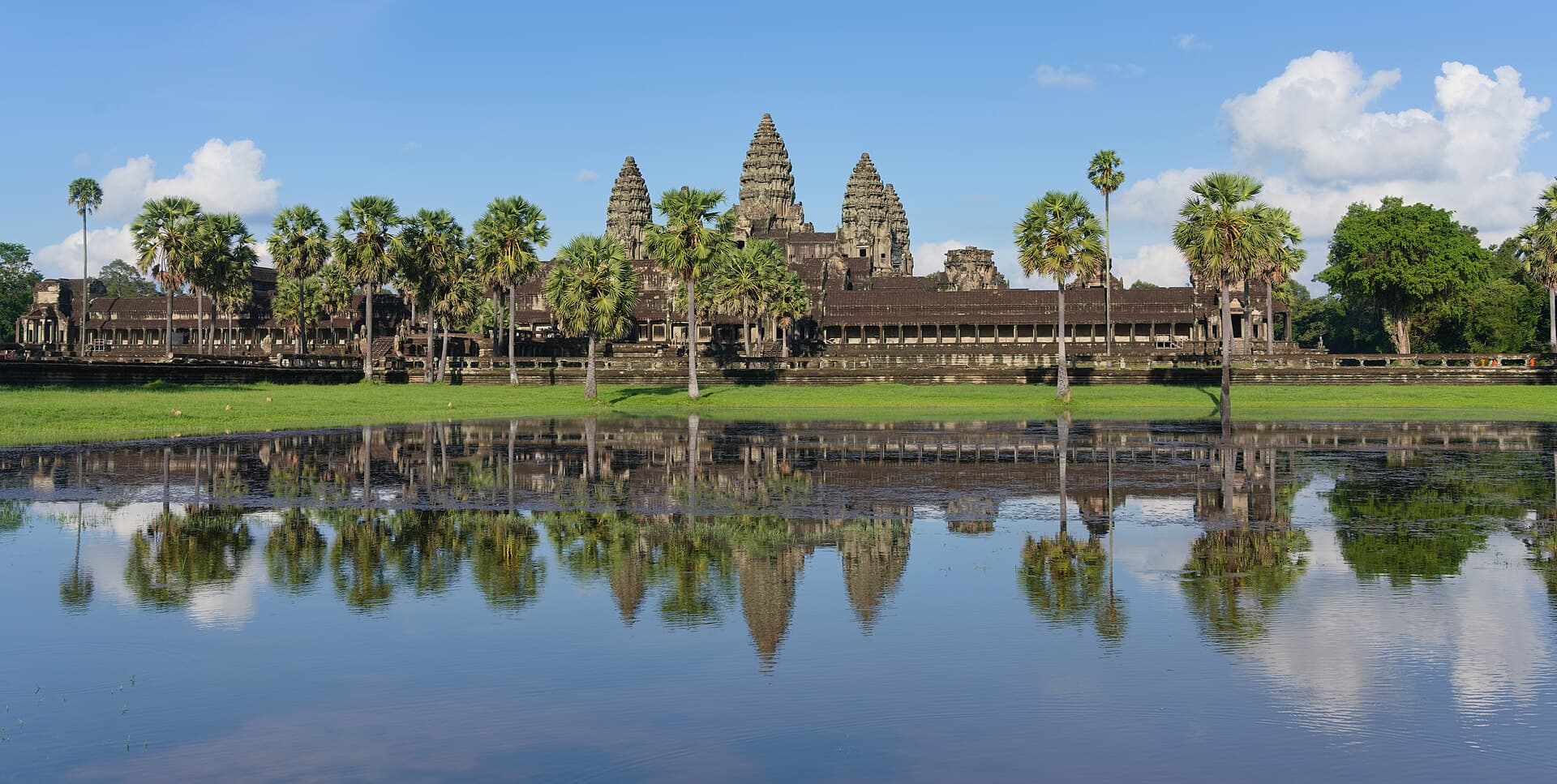
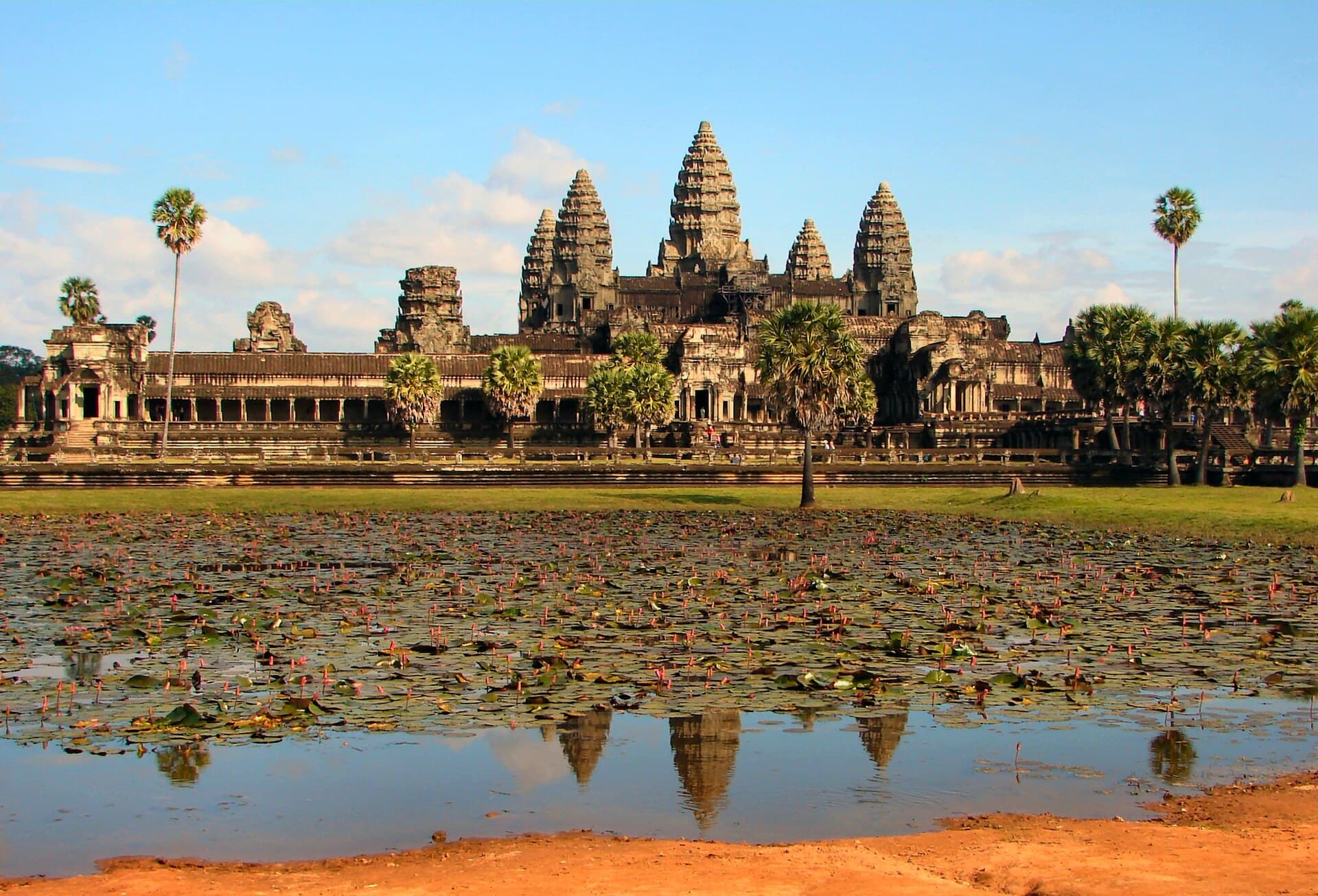
The world's largest religious monument (Angkor Wat) and one of humanity's largest pre-industrial cities (Angkor, 1 million inhabitants in the 12th century) — 3 to 4 days in the shoes of a 19th-century explorer.
The Siem Reap and Angkor region is the touristic, cultural and spiritual epicentre of Cambodia. It is structured around the base-city of Siem Reap (the country's second city, 250,000 inhabitants) and the immense Angkor archaeological site (UNESCO 1992) which spreads over 400 km² north-west of the city. More than 1,000 Khmer temples survive there, heritage of the Khmer Empire which dominated continental Southeast Asia from the 9th to the 15th centuries.
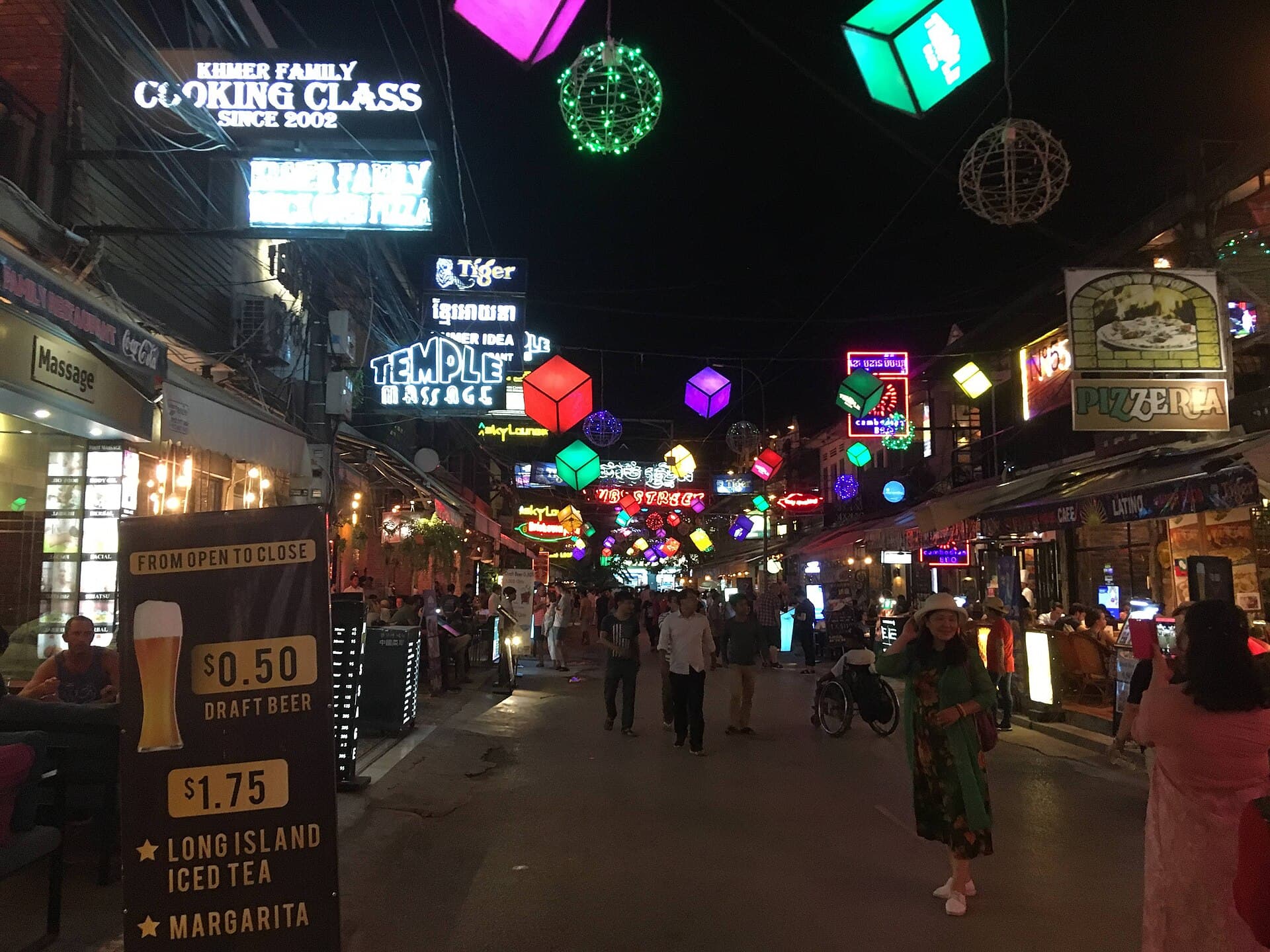
The city of Siem Reap is entirely structured around tourism. It offers complete hotel infrastructure (from USD 8/night backpacker to Raffles Grand Hotel d'Angkor at USD 500-700), quality dining (from street stalls to high Khmer gastronomy at Cuisine Wat Damnak, 1-star Asia's 50 Best), and lively nightlife concentrated around Pub Street and the Old Market (Phsar Chas). It's the perfect base to explore temples over 3 to 4 days, with tuk-tuks available everywhere (USD 15-25 for a day at Angkor).
The Angkor site is discovered via several classic circuits. The Small Circuit (17 km, 1 day) covers the essentials: Angkor Wat (sunrise from the north pond), Angkor Thom and the Bayon (enigmatic stone faces of Avalokiteshvara, attributed to Jayavarman VII end of 12th century), Ta Prohm (overgrown by silk-cotton and strangler fig roots, immortalised by Tomb Raider), Banteay Kdei, Sras Srang. The Grand Circuit (26 km, 1 day) adds Preah Khan, Neak Pean, Ta Som, East Mebon, Pre Rup. A third day is essential for Banteay Srei (Citadel of the Women, lace-like pink sandstone, 32 km north-east of Siem Reap, the finest carved temple) and Beng Mealea (ruined temple overrun by jungle, 67 km).
The Angkor pass costs USD 37 for 1 day, USD 62 for 3 days (usable over 10 days, recommended), USD 72 for 7 days (usable over 1 month). Buy your pass at Angkor Enterprise (Charles-de-Gaulle Avenue, 4 km from Siem Reap centre) from 4:30pm the day before your first visit — your 4:30pm-5:30pm day is free (you can catch sunset at Phnom Bakheng or Pre Rup).
The region also offers a natural dimension with the Tonle Sap — Southeast Asia's largest freshwater lake, which changes surface area by season (2,700 km² in dry season, 16,000 km² in rainy season). The floating villages of Chong Kneas (most touristy, USD 30 excursion), Kompong Phluk (on stilts, mangrove, more authentic, USD 25-30) and Mechrey (protected bird reserve, quietest) are visited by boat. September-October offer optimal conditions (maximum water level, photogenic villages).
Explore Angkor
Spots in the region
Situation
Où se situe Angkor ?
Ouvrir la carte en grand sur OpenStreetMap →Frequently asked questions
Combien de jours pour visiter Angkor ?+
Faut-il prendre un guide pour visiter Angkor ?+
Quel est le meilleur moment pour le lever de soleil à Angkor Wat ?+
Combien coûte un voyage à Siem Reap ?+
Comment se rendre à Siem Reap ?+
Vaut-il le coup de visiter le Tonle Sap ?+
Our verdict
Siem Reap and Angkor is one of the unmissable stops of Southeast Asia — one of the three or four major historical sites on the continent alongside the Forbidden City (Beijing), Borobudur (Indonesia) and the Great Wall. Plan at least 3 full days on site (3-day pass at USD 62 usable over 10 days), with one day for the Small Circuit (Angkor Wat + Angkor Thom + Ta Prohm), one for the Grand Circuit, and one for Banteay Srei and Beng Mealea. Travel from November to February for the climate, rise at 4:30am for Angkor Wat sunrise, and stay in central Siem Reap (Old Market zone) for proximity to Pub Street and tuk-tuks. Always combine with Phnom Penh (2 nights) and ideally with the south coast (3-4 nights) for a complete 10-14 day Cambodian trip.