ville
Rio de Janeiro
One of the world's most beautiful cities, nestled between the Atlantic Ocean, Guanabara Bay and granite hills — Christ the Redeemer, Sugarloaf, mythical Copacabana and Ipanema beaches, samba in Lapa, bossa nova in Ipanema, world-famous Carnival.
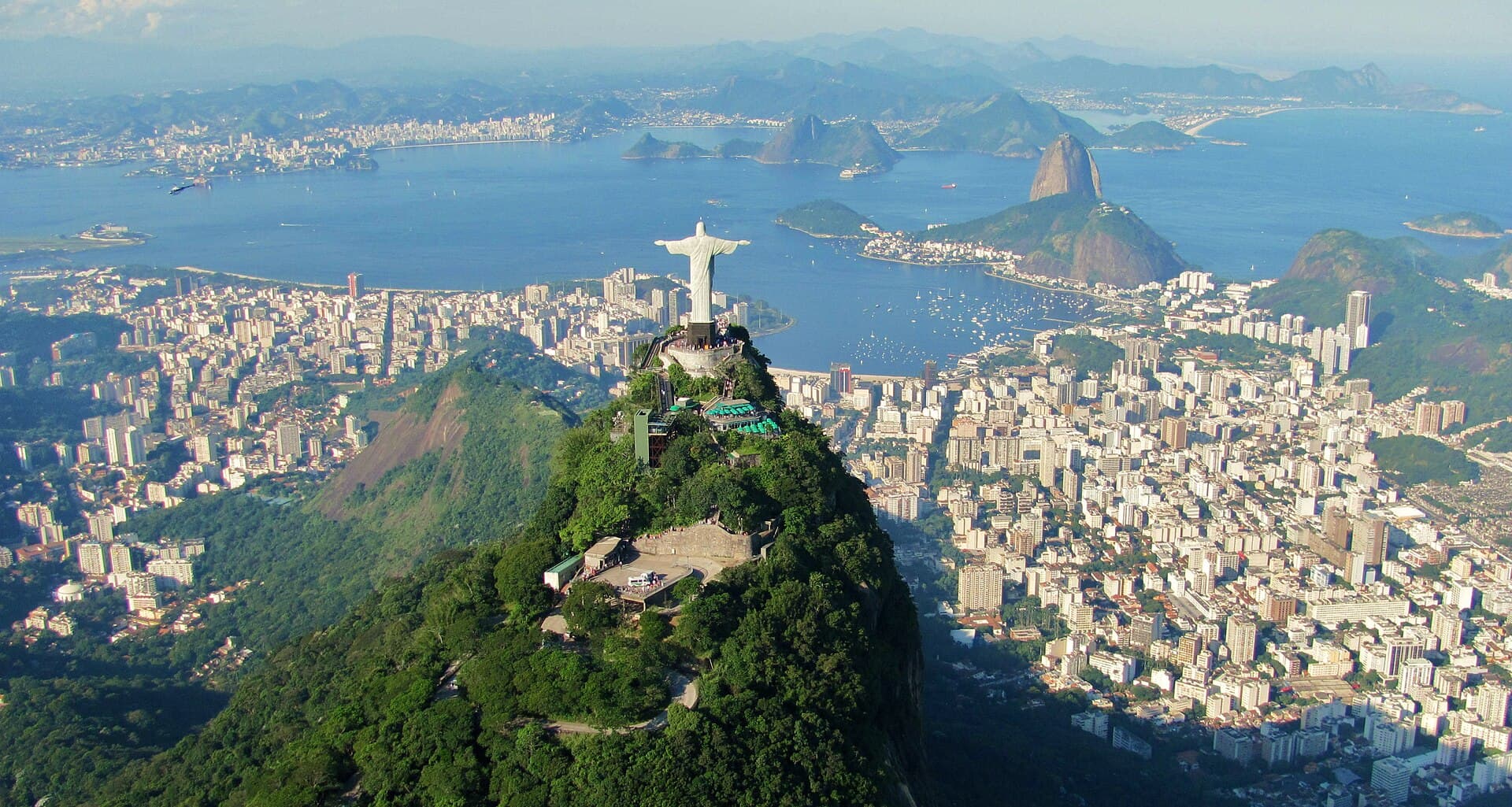
Rio de Janeiro is probably the world's most beautiful urban landscape — a metropolis of 6.7 million inhabitants (12 million in metro area) nestled between the Atlantic Ocean to the south, Guanabara Bay to the north and granite and gneiss hills sculpted by tropical climate. This exceptional site, called "world's most beautiful urban site" by geographer Jean-Paul Brunet, earned the city its UNESCO listing in 2012 ("Rio de Janeiro, carioca landscapes between mountain and sea"). Founded in 1565 by Estácio de Sá as São Sebastião do Rio de Janeiro, it was Brazil's capital from 1763 to 1960 (until transfer to Brasília by Juscelino Kubitschek) and remains the country's cultural, media and tourism capital.
The unique geography organises around four elements. The morros (granite hills) emerge in the middle of the city like sentinels — Sugarloaf (Pão de Açúcar, 396 m, accessible by mythical cable car since 1912), Corcovado (710 m, topped by Christ the Redeemer since 1931), Pedra da Gávea (842 m, 6h hike), Dois Irmãos (Two Brothers, 533 m, Ipanema panorama). Guanabara Bay (412 km², 130 islands) extends to the north — site of Galeão international airport. The Atlantic Ocean bathes the mythical beaches to the south. The Tijuca Forest (world's largest urban forest, 4,000 hectares, national park) covers the city's inner flanks and hosts surprising wildlife (capuchin monkeys, marmosets, sloths, toucans).
Beaches are the backbone of carioca life. Copacabana (4 km of continuous white sand crescent beach between Forte de Copacabana to the south and Forte Duque de Caxias to the north, world-famous tile-mosaic calçadão by Roberto Burle Marx) is the iconic beach. Ipanema (2.5 km, bordered east by Arpoador rock where thousands gather to applaud the daily sunset, immortalised by Tom Jobim and Vinicius de Moraes bossa nova — The Girl from Ipanema is the world's 2nd most recorded song after the Beatles' Yesterday) is more chic. Leblon (1.5 km, Ipanema extension westward) is Rio's chicest beach. Botafogo (on the bay, extraordinary Sugarloaf view) is more family. Praia Vermelha (red beach, departure of Sugarloaf cable car) is small and charming.
Zona Sul (south) neighbourhoods concentrate most tourist interest. Copacabana (maximum density, full hotel range €50-500/night). Ipanema (more chic, gourmet restaurants, designer boutiques). Leblon (Ipanema extension, the chicest). Botafogo (bay view, gastronomy). Urca (at Sugarloaf foot, peaceful residential neighbourhood). Santa Teresa (bohemian hill neighbourhood, unique vibe, artist workshops, colourful Selarón steps, historic bondinho yellow tramway). Lapa (nighttime epicentre, Arcos da Lapa 1750 aqueduct, samba in traditional clubs Rio Scenarium, Carioca da Gema). Centro (historic centre, don't sleep but visit by day: Theatro Municipal 1909, Real Gabinete Português de Leitura 1887, Confeitaria Colombo 1894, Praça XV).
Carioca life revolves around three pillars — the beach (central social space, volleyball, futevôlei, capoeira, coconut juice, beer, endless conversations), samba and bossa nova (Lapa for popular samba in rodas, Ipanema for chic bossa nova at iconic Garota de Ipanema bar where the song was composed), football (Maracanã 78,000 seats, one of the world's most mythical stadiums, Flamengo/Fluminense/Vasco/Botafogo matches €8-30/seat, authentic cultural experience).
What we love
- ✅Unique geographical site: ocean, bay, granite hills, urban forest — world's most spectacular urban landscape
- ✅Christ the Redeemer (Corcovado) and Sugarloaf: breathtaking 360° panoramas, world icons
- ✅Mythical beaches Copacabana and Ipanema: central social space, unique world atmosphere
- ✅Exceptional music culture: samba in Lapa, bossa nova in Ipanema, world-famous Carnival (4 days late Feb-early March)
- ✅Direct Paris-Rio flight in 11h (Air France, Latam) — international accessibility without stopover
What to know
- ❌Urban safety: constant vigilance (beach snatch thefts, favelas not visitable without guide)
- ❌Crushing heat and humidity in austral summer (December-March, 32-35 °C, 80-90% humidity)
- ❌Hotel rates x2 to x4 during Carnival and New Year — book 6-12 months ahead
- ❌Heavy crowds in Brazilian high tourist season (July)
- ❌Difficult urban traffic, important Zona Sul-Centro-Galeão distances
Situation
Où se situe Rio de Janeiro ?
Ouvrir la carte en grand sur OpenStreetMap →Frequently asked questions
How many days for Rio de Janeiro?+
Which neighbourhood to sleep in Rio?+
How to visit Christ the Redeemer?+
Should you visit a favela in Rio?+
What free or cheap activities in Rio?+
Our verdict
Rio de Janeiro is one of the world's most beautiful cities and the unmissable stop of a first Brazil trip — a unique world geographical site (ocean, bay, granite hills, urban forest), global icons (Christ the Redeemer, Sugarloaf, Copacabana, Ipanema), a music and festive culture of overwhelming vitality (samba, bossa nova, Carnival). Our recommendation: plan minimum 3-4 nights to see essentials (Christ the Redeemer, Sugarloaf, Copacabana, Ipanema, Santa Teresa, Arpoador sunset, Lapa evening), ideally 5 nights to add Pedra da Gávea or favela tour with accredited operator. Choose your hotel in Zona Sul — Copacabana for ease (entertainment, restaurants, price range), Ipanema for chic and iconic beach, Leblon for exclusivity, Santa Teresa for bohemian vibe. Travel from April to October for optimal climate (avoid July for Brazilian crowds). For Carnival (4 days late Feb-early March), book 6-12 months ahead. Respect urban safety rules (no jewellery, no phone in street, Uber instead of street taxi, favelas with accredited guide only) — you'll discover one of the world's most beautiful and vibrant cities.
Nearby

"Janvier : pic chaleur (30 °C), orages tropicaux fréquents, post-Réveillon, plages bondées. Tarifs hôteliers x2-x3."
Expert on Rio de Janeiro · 1 contributions
 Africa & Americas Desk — Mowando·Editor