ville
Melbourne
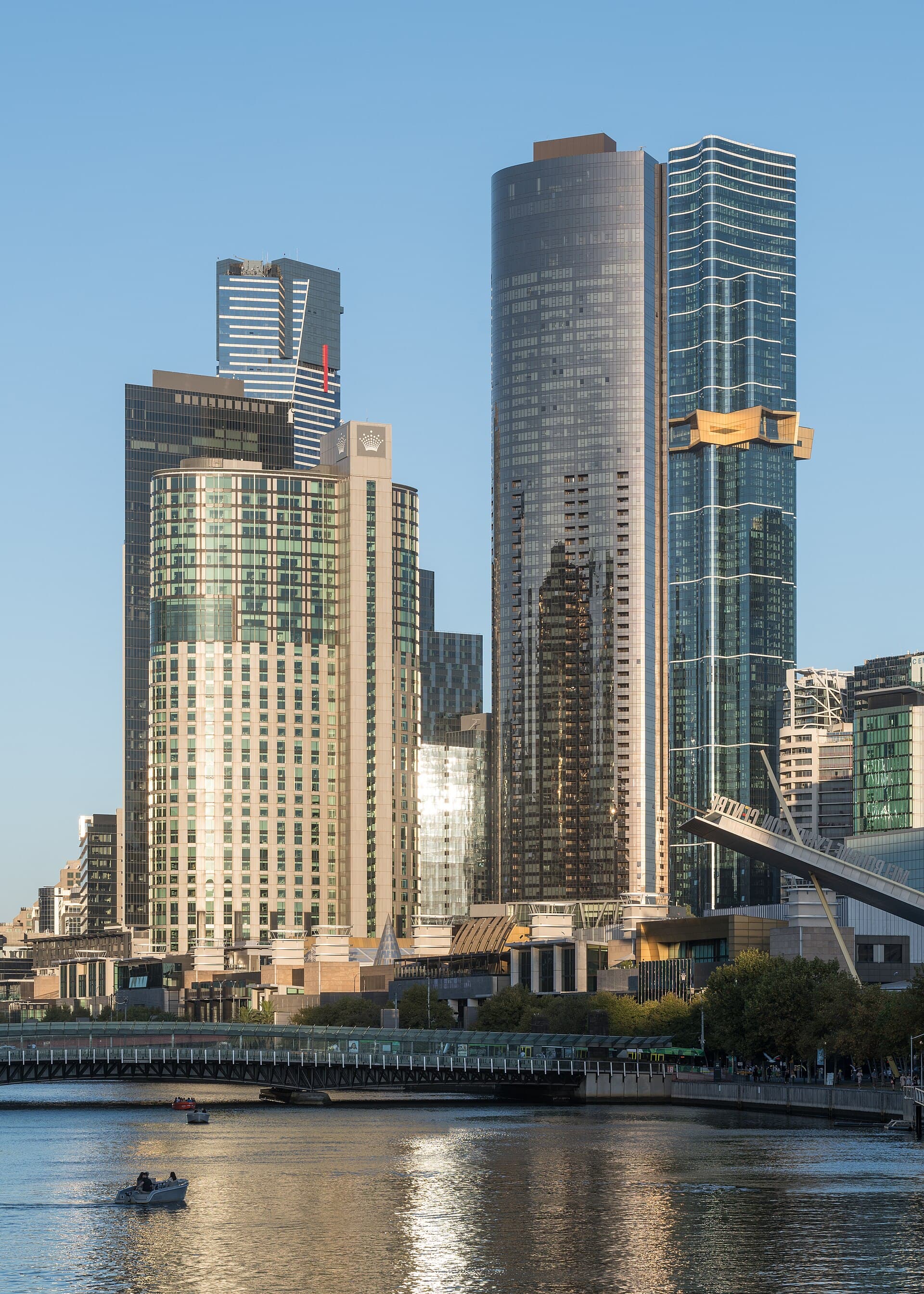
Melbourne is regularly ranked among the world's most liveable cities — Australia's cultural capital, world-class café-brunch-gastronomy scene, street art laneways at Hosier Lane, and gateway to the Great Ocean Road.
Melbourne (5 million inhabitants, Australia's second city) is Australia's cultural capital and one of the world's most liveable cities — regularly ranked #1 worldwide by The Economist between 2011 and 2017. Capital of the State of Victoria, crossed by the Yarra River, temperate (sometimes capricious — 'four seasons in one day') climate, preserved Victorian architecture, intense multiculturalism (Italian, Greek, Vietnamese, Chinese, Lebanese, Indian heritage), vibrant arts and gastronomy scene.
The CBD (Central Business District) is the historic heart, crossed by Flinders Street (with the iconic Victorian Flinders Street Station from 1909) and bordered by Federation Square (modern pedestrian square, city's central point). The centre stands out for its laneways — small alleys adorned with globally-recognised street art: Hosier Lane (the most famous, photogenic, just behind Federation Square), AC/DC Lane (in homage to the band formed in Melbourne in 1973), Centre Place, Croft Alley. The historic Victorian arcades (Block Arcade 1892, Royal Arcade 1869) host boutiques, cafés and traditional ice cream shops.
Melbourne coffee culture is probably the world's most refined — heritage of post-war Italian immigration. Iconic addresses: Patricia Coffee Brewers (Little Bourke St, counter espresso, standing), Seven Seeds (Carlton), Brother Baba Budan (Little Bourke St, ceiling-suspended coffee machine, photogenic), Market Lane Coffee (multiple), Manchester Press (laneway, famous for bagels). Brunch is an institution: Higher Ground (brunch in a converted industrial cathedral), Top Paddock (Richmond), Auction Rooms (North Melbourne), Chez Dré (South Melbourne).
The gastronomic scene rivals Tokyo and New York. Attica (Ben Shewry, Ripponlea, regularly ranked Australia's #1 and top 50 world, AUD 295 tasting menu, 3-month advance booking), Vue de Monde (contemporary French cuisine atop Rialto Tower 55th floor, panoramic view), Cumulus Inc (Andrew McConnell, signature bistro), Flower Drum (high-end Cantonese since 1975), Chin Chin (trendy Southeast Asian, no reservation), Movida (Spanish tapas), Tipo 00 (Italian pasta). Lygon Street in Carlton remains one of the world's most authentic Little Italys (Italians established since 1950 — Brunetti for coffee and pastries).
Signature neighbourhoods beyond the CBD: Fitzroy and Collingwood (bobo and creative neighbourhoods, brunch, alternative street art, independent boutiques — Brunswick Street, Smith Street), St Kilda (urban beach, Luna Park free entry, Acland Street restaurants, sunset fairy penguins on pier, free), Southbank (south bank, museums notably NGV — National Gallery of Victoria major free collection), South Yarra and Toorak (chic, Chapel Street, luxury boutiques).
What we love
- ✅Australia's cultural capital: street art laneways, vibrant arts scene
- ✅Coffee culture probably the world's most refined (Patricia, Seven Seeds, Brother Baba Budan)
- ✅World-class gastronomy: Attica #1 Australia, free NGV, Vue de Monde, Cumulus
- ✅Intense multiculturalism: Lygon Street Little Italy, Chinatown, Vietnamese (Footscray)
- ✅Australian Open tennis (January), Melbourne Cup (November), F1 (March), Comedy Festival (April)
What to know
- ❌Capricious weather: 'four seasons in one day', rapid variations
- ❌Austral winter (June-August) cold and damp (6-14 °C, frequent rain)
- ❌Melbourne less photogenic than Sydney (more classical urbanism)
- ❌Less iconic beaches (urban St Kilda, but Bondi remains the icon)
- ❌Expensive city: 3* hotel €150-250/night
Situation
Où se situe Melbourne ?
Ouvrir la carte en grand sur OpenStreetMap →Frequently asked questions
How many days for Melbourne?+
What is the best café in Melbourne?+
What is the Australian Open and when to go?+
What are Melbourne laneways and where is the best street art?+
Should you go see penguins at St Kilda or Phillip Island?+
Our verdict
Melbourne is the ideal cultural and gastronomic complement to Sydney on an Australian trip. Plan 3-4 nights minimum: 1 day CBD (Hosier Lane street art laneways, Victorian arcades, Italian cafés, Federation Square), 1 day Southbank/St Kilda (NGV, Royal Botanic Gardens, St Kilda beach and penguins), 1 day Fitzroy/Collingwood (bobo neighbourhoods, brunch, boutiques), 1 day transition to Great Ocean Road (additional 2-3 days recommended). Prioritise austral spring (October-November), summer (December-February, watch capricious weather) or autumn (March-April). Do not forget a Patricia coffee standing at the counter, a Higher Ground brunch and ideally an Attica or Vue de Monde dinner — Melbourne is lived as much at the table as in the street.
Nearby

"Open d'Australie tennis."
Expert on Melbourne · 1 contributions
 South-East Asia Desk — Mowando·Editor