Mowando

Region

Cappadocia

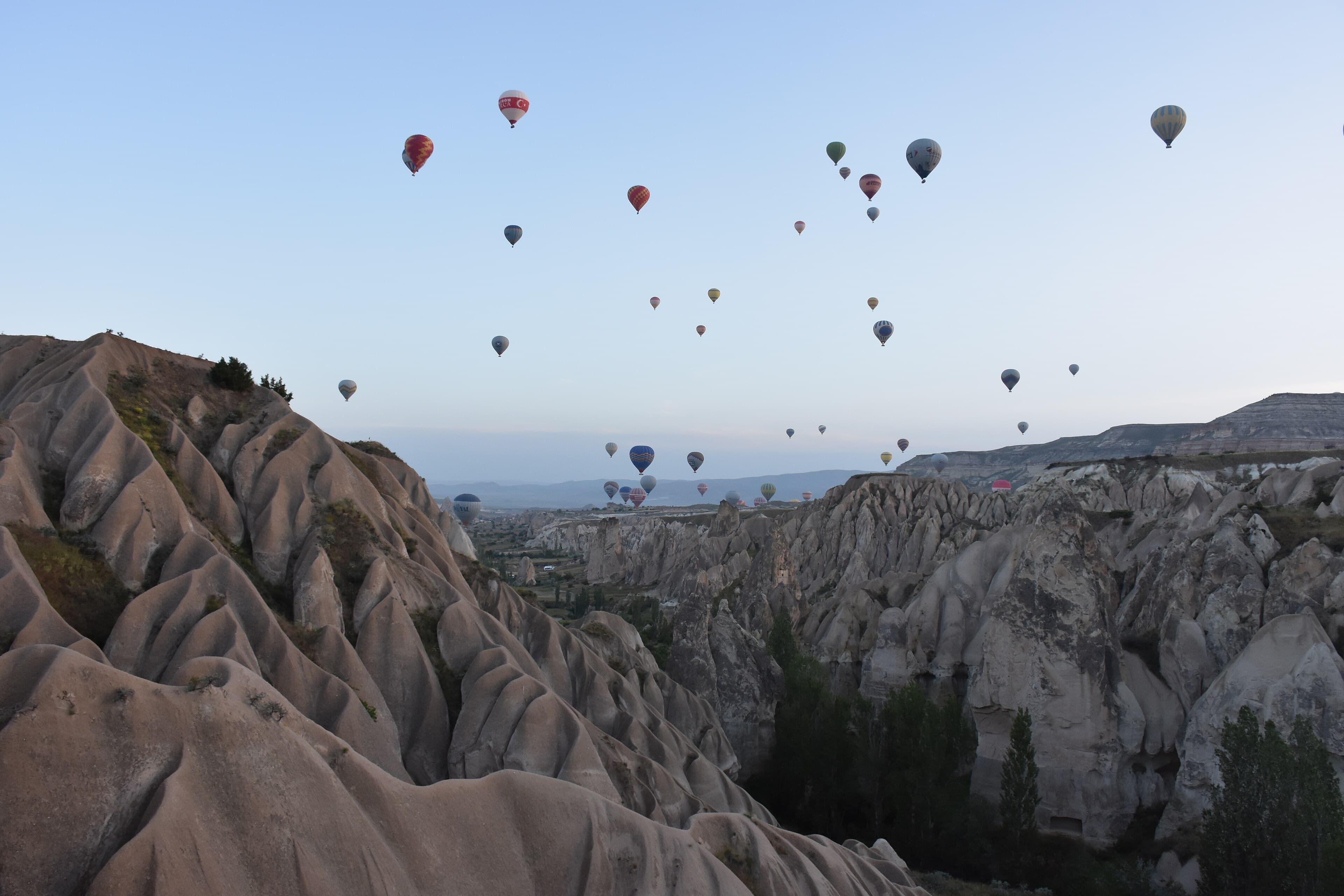
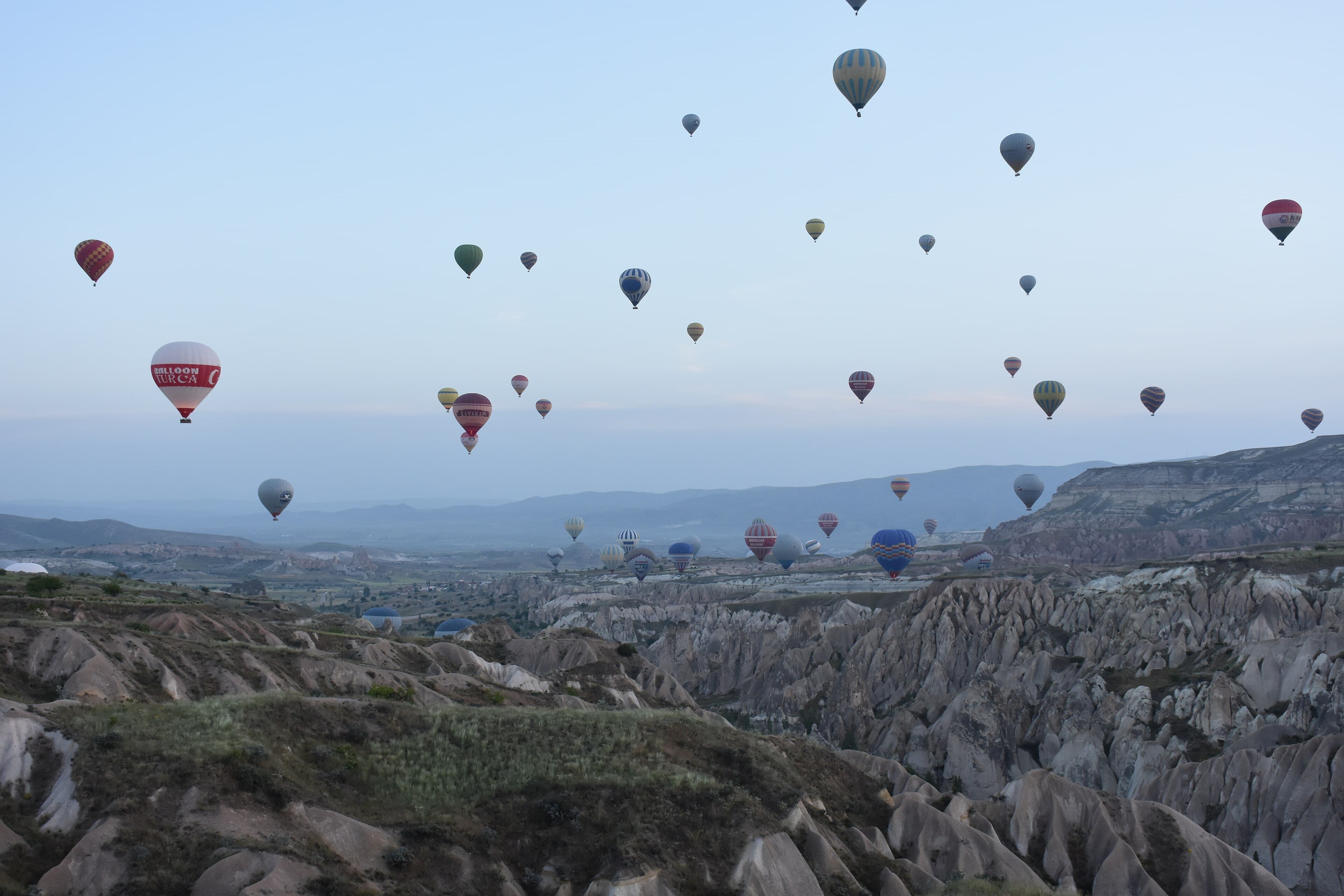
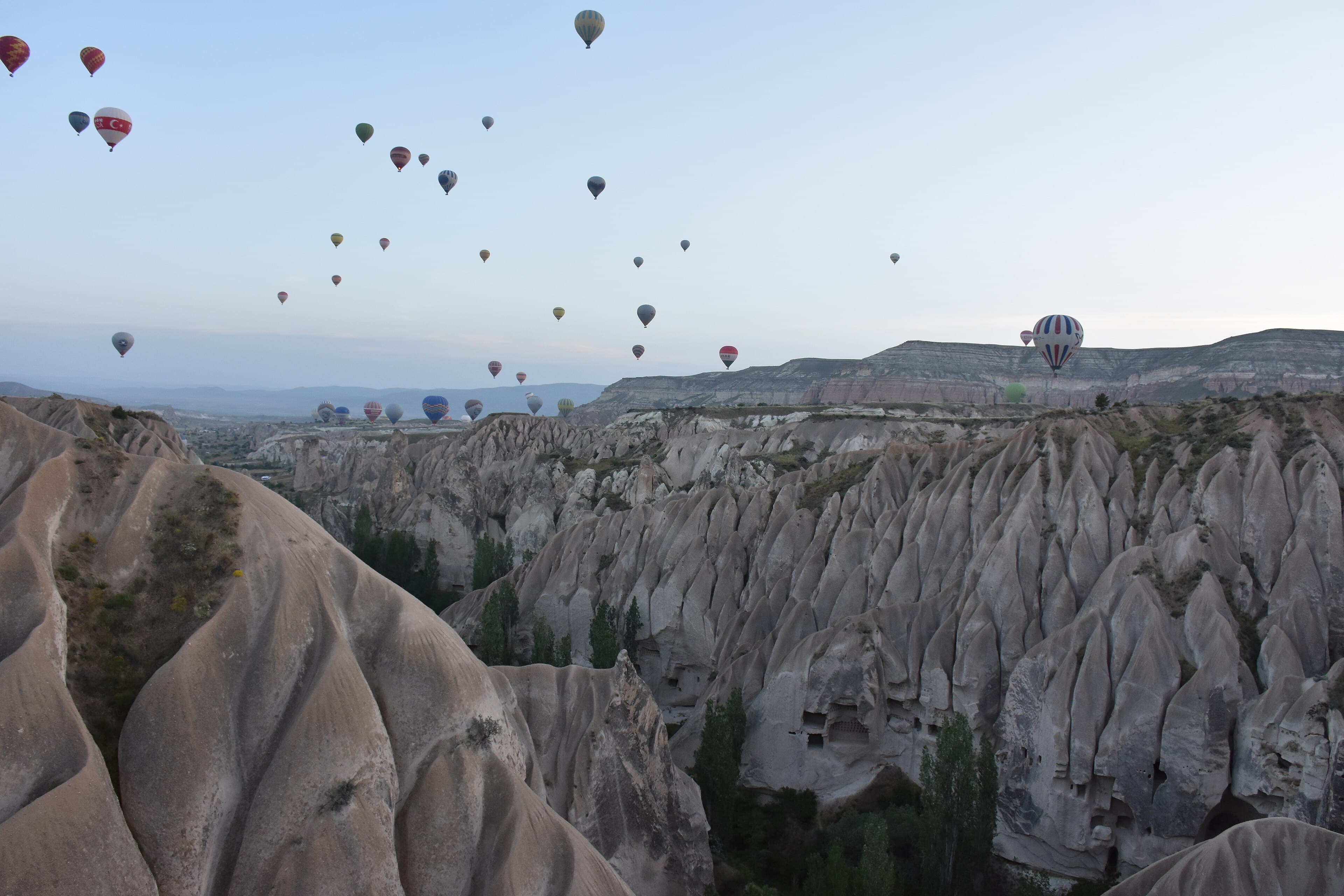
One of the most singular geological landscapes on the planet, daily stage for the ballet of multicoloured hot-air balloons at sunrise — a photographic experience without equal in the world.

4.90

Cappadocia is one of those places that defies description: a volcanic landscape sculpted by 30 million years of erosion, where fairy chimneys 10 to 40 metres high, pink valleys, river-carved canyons and troglodyte villages draw a geography that seems to belong to another planet. Located in the heart of central Anatolia, 700 km southeast of Istanbul, the region covers about 5,000 km² around the towns of Göreme, Üçhisar, Avanos, Ürgüp and Nevşehir, and was inscribed on the UNESCO World Heritage list in 1985.

The geological formation of Cappadocia results from the eruptions of the Hasan Dağı, Erciyes Dağı and Göllü Dağ volcanoes 30 million years ago, which deposited a layer of volcanic tuff (compacted ash) 100 to 300 metres thick. Wind and water erosion then sculpted this tuff into spectacular forms — the famous fairy chimneys (peri bacaları), pyramids capped with a harder basalt 'hat' that protects them from erosion. The main valleys (Göreme, Devrent, Rose, Red, Love, Ihlara) each offer a unique landscape, to explore on foot, on horseback or by quad.

Human occupation of Cappadocia dates back to the Neolithic but it is in the 4th-12th centuries that the region experienced its Christian heyday. Persecuted by the Romans then threatened by Arab invasions, Byzantine Christians carved into the soft tuff rock-cut churches (more than 600 catalogued), monasteries and entire underground cities (Derinkuyu, Kaymakli) capable of sheltering up to 20,000 people on 8 to 18 levels. The Göreme Open Air Museum, UNESCO-listed, brings together about ten rock-cut churches decorated with remarkable Byzantine frescoes (7th-13th centuries). Today, many of these troglodyte dwellings have been converted into cave hotels — luxury or boutique cave hotels — that are integral to the Cappadocian experience.

But the emblematic image of Cappadocia remains that of hot-air balloons at sunrise. Every morning (weather permitting), between 100 and 200 multicoloured balloons take off simultaneously from Göreme and Ürgüp for a flight of about 1 hour over the valleys, at altitudes varying between 30 and 600 metres. The experience, lived from the balloon or from a ground viewpoint (the iconic Sunset Point of Göreme), is one of the most photographed and most memorable of modern travel — to the point that Cappadocia has become a near-mandatory passage for young newlyweds, influencers and photographers.

Explore Cappadocia

Spots in the region
Situation

Où se situe Cappadocia ?

Ouvrir la carte en grand sur OpenStreetMap →

Frequently asked questions

How many days do you need to visit Cappadocia?+
Three days minimum for a balanced discovery: one day sunrise balloon flight + Göreme Open Air Museum, one day valleys (Ihlara, Rose Valley, Love Valley) hiking or organised tour, one day underground city of Derinkuyu or Kaymakli + Avanos (pottery). With 4-5 days, add Ürgüp and Cappadocian vineyards, Mount Erciyes (skiing in winter) and the more remote Soğanlı Valley. One week allows in-depth exploration without tourist rush.
How to book a hot-air balloon flight in Cappadocia?+
Imperatively book your flight __2 months ahead__ in high season (April-October), 2-3 weeks in low season. Reliable certified companies: Royal Balloon, Voyager Balloons, Butterfly Balloons, Kapadokya Balloons (the only ones authorised by Turkish DGCA, check the licence). Standard rate: €150-180/person (1h flight, 18-20 persons/basket, hotel transfers included). Luxury flights (4-8 persons, champagne): €250-350/person. Take-off 5-6am, total duration 3h with transfers and final celebration. Cancellations possible due to strong wind (40-60% in winter, 10-20% in summer).
Where to stay in Cappadocia?+
Three main options depending on your budget and area. __Göreme__: most lively and central village, ideal for first stay, immense choice of cave hotels (€40-300/night) — Sultan Cave Suites, Mithra Cave Hotel, Kelebek Special Cave Hotel are the references. __Üçhisar__: perched village around its citadel, exceptional panoramic view, quieter and chic — Museum Hotel (Relais & Châteaux, €600-900), Argos in Cappadocia (€500-800). __Ürgüp__: more authentic and residential town, vineyards nearby, gastronomic restaurants. Avoid Nevşehir (charmless modern town, 20 min from the sites).
What is the best time to visit Cappadocia?+
April-June and September-October offer the best compromise: pleasant temperatures (18-25°C), balloon flights almost guaranteed, manageable crowds. July-August are scorching (38-42°C) and crowded but very stable weather. March-April: apricot trees in bloom (brilliant pink spectacle). Winter (December-March): snowy Cappadocia is magical but balloon flights cancelled 40-60% of the time (wind and snow). Avoid November (unstable weather, uncertain flights).
How to get around in Cappadocia?+
Three options. __Rental car__: the most flexible, essential for distant sites (Derinkuyu, Ihlara at 1h30). Expect €25-50/day, agencies at Kayseri (ASR) or Nevşehir (NAV) airport. __Organised group tours__: 'Red' tours (Göreme valleys), 'Green' (south, Ihlara, Kaymakli underground city), 'Blue' (north, Mount Erciyes) — €30-60/person/day with English-speaking guide. __Quad and electric bike__: to explore the immediate valleys around Göreme (rental €30-80/day). No useful public transport between sites — Göreme-Üçhisar by taxi €10-15.
Are Cappadocia's underground cities worth the visit?+
Yes, it's one of the most striking experiences in the region. __Derinkuyu__ (the largest, 8 explorable levels, descends to 85 m) and __Kaymakli__ (wider, 4 open levels) are the two accessible underground cities. Built by Byzantine Christians between the 7th and 10th centuries to shelter from Arab invasions, they could shelter up to 20,000 people with stables, kitchens, chapels, wells, ventilation systems. Visit 1h-1h30, claustrophobics abstain (narrow passages). Entry 750 TRY (€23). Avoid midday (crowds, corridor heat).
What to eat in Cappadocia?+
The regional speciality is __testi kebab__: meat stew (lamb or beef) slowly cooked in a sealed clay jar, broken at the table by the waiter — spectacular and tasty. Also try __manti__ (Turkish ravioli with yogurt and melted butter), __pide__ (Turkish pizza) and classic __mezze__. __Cappadocian wines__ (Kavaklıdere, Turasan, Kocabağ) offer excellent value — winery visits possible in Ürgüp (Turasan) and Üçhisar. __Dried apricots__ and __Cappadocian walnuts__ are the emblematic products to bring back. Recommended restaurants: Topdeck Cave Restaurant (Göreme), Seten Restaurant (Göreme), Ziggy Café (Ürgüp).

Our verdict

Cappadocia is one of the summits of world tourism — a unique geological landscape, exceptional Byzantine heritage and an iconic aerial experience. Three days are the bare minimum to absorb the essentials: one day for a sunrise balloon flight + Open Air Museum + Göreme exploration, one day for valleys (Ihlara, Rose Valley, Pigeon Valley) hiking or organised tour, one day for the underground city of Derinkuyu + Avanos village (pottery) + traditional testi kebab dinner. With 4-5 days, add Mount Erciyes (skiing in winter), Ürgüp and its vineyards, and an excursion to the more remote Soğanlı Valley. Imperatively book your cave hotel and balloon flight 2 months ahead in high season.

Mowando Letter

Once a month: the right destinations for the right season + the best booking windows.

No spam. One-click unsubscribe. Your data is never shared.