Region
South Coast
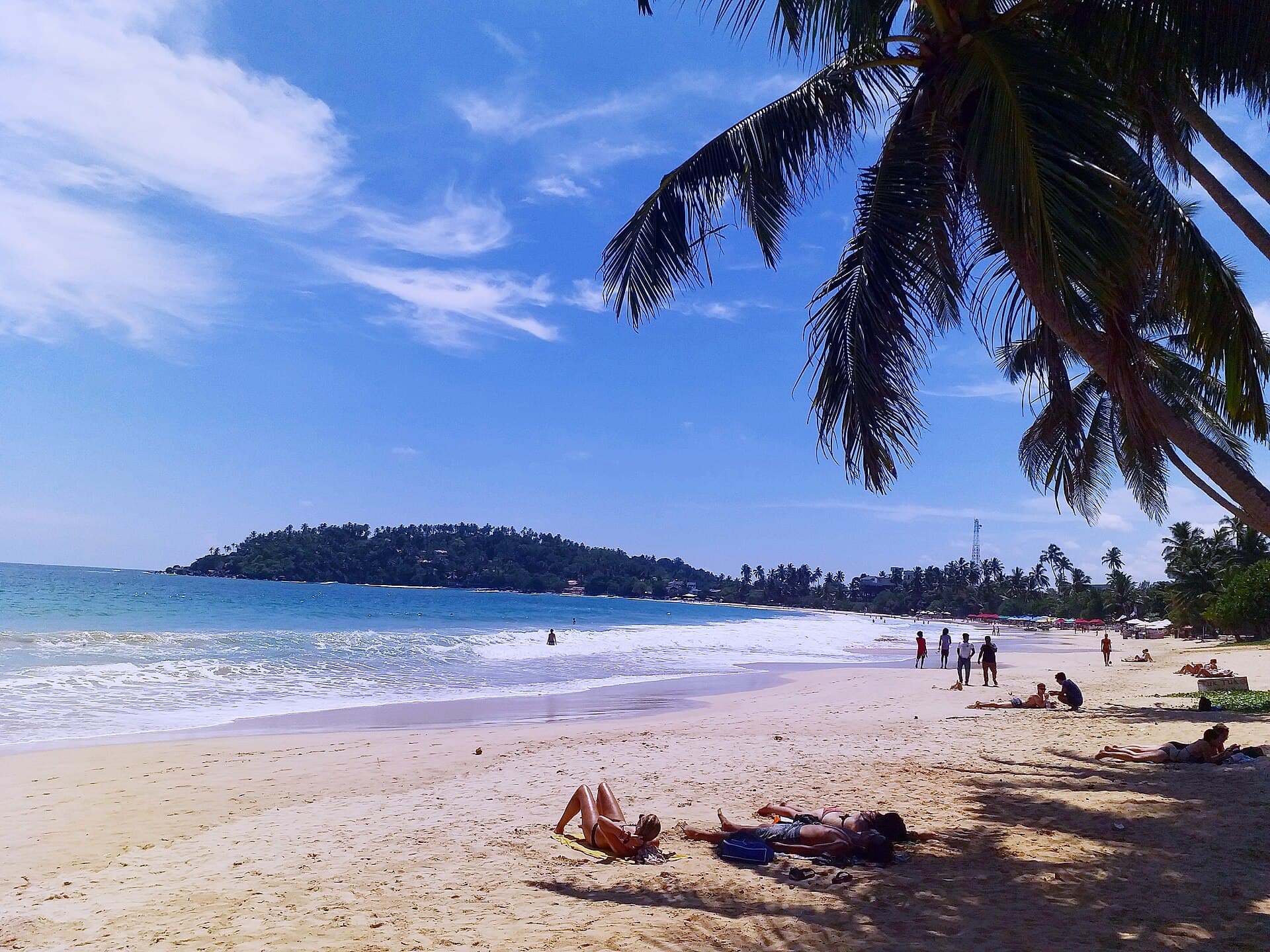
The most seductive tropical coast on the island: 200 km of white sand beaches, coconut groves, stilt-fisher villages, a UNESCO colonial fortress city and the waters where blue whales — the largest animals ever to appear on Earth — swim.
Sri Lanka's South Coast is one of the most seductive coastal strips in tropical Asia, stretched over 200 kilometres between Bentota and Tangalle, lining up white sand coves, plunging coconut groves, stilt-fisher villages and beach resorts with very diverse atmospheres. It is here, on these shores caressed by the Indian Ocean, that the country's essential beach offering is concentrated, from the international surfers of Hikkaduwa to the luxury retreats of Tangalle, via the backpackers of Mirissa and the couples on a getaway in Unawatuna.
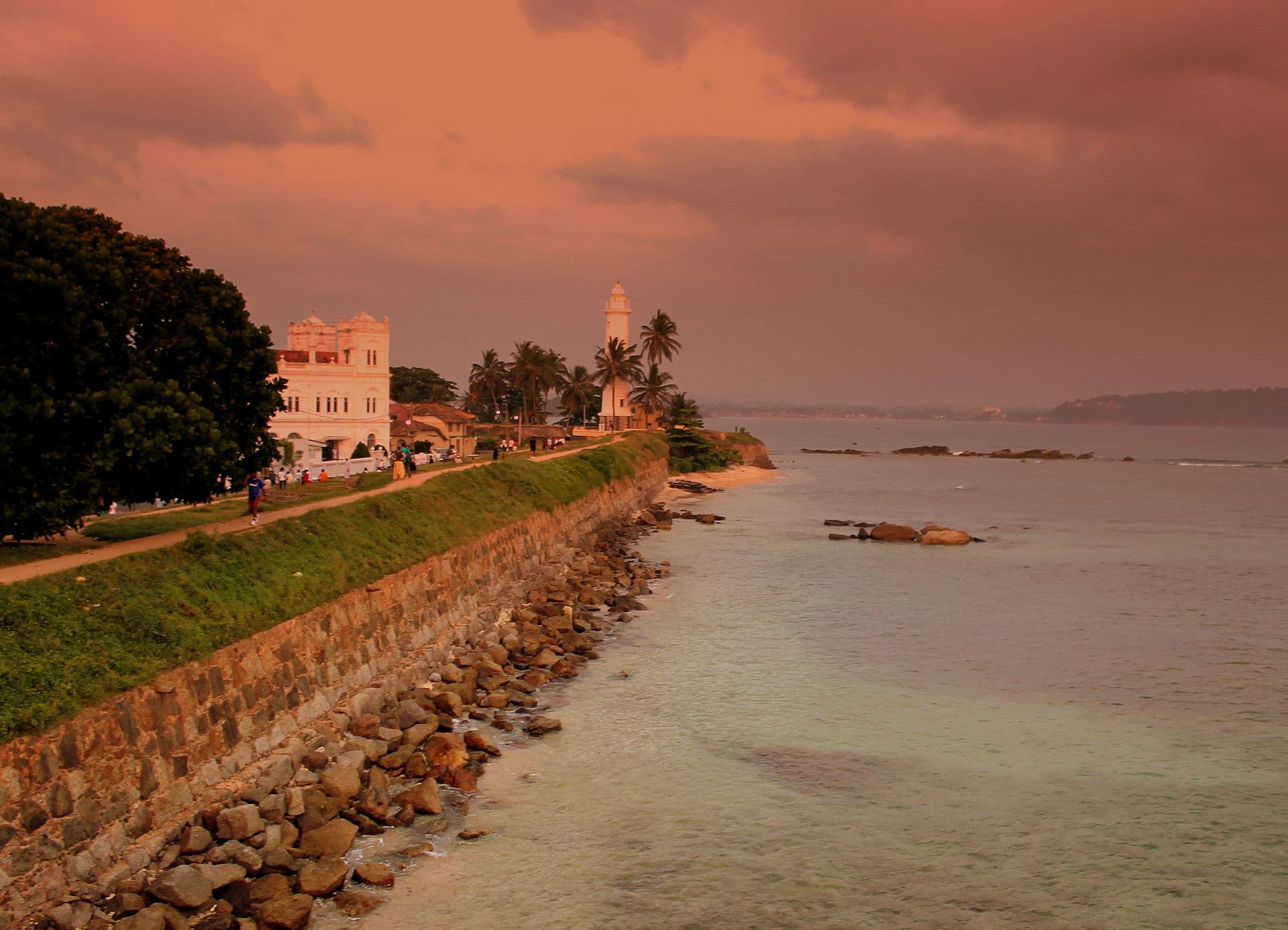
The region is also home to the Galle Fort, one of Asia's colonial masterpieces. Built by the Portuguese in 1588, considerably extended by the Dutch from 1640 and transferred to the British in 1796, this granite and coral fort encloses a perfectly preserved old town — cobbled streets, whitewashed colonial mansions, churches, mosque, Buddhist temple, iconic lighthouse and continuous 3 km ramparts where everyone strolls at sunset. UNESCO World Heritage-listed since 1988, Galle Fort is one of Asia's largest still-inhabited colonial forts, a truly living small town where antique shops, specialty cafés and art galleries sit alongside houses inhabited for generations.
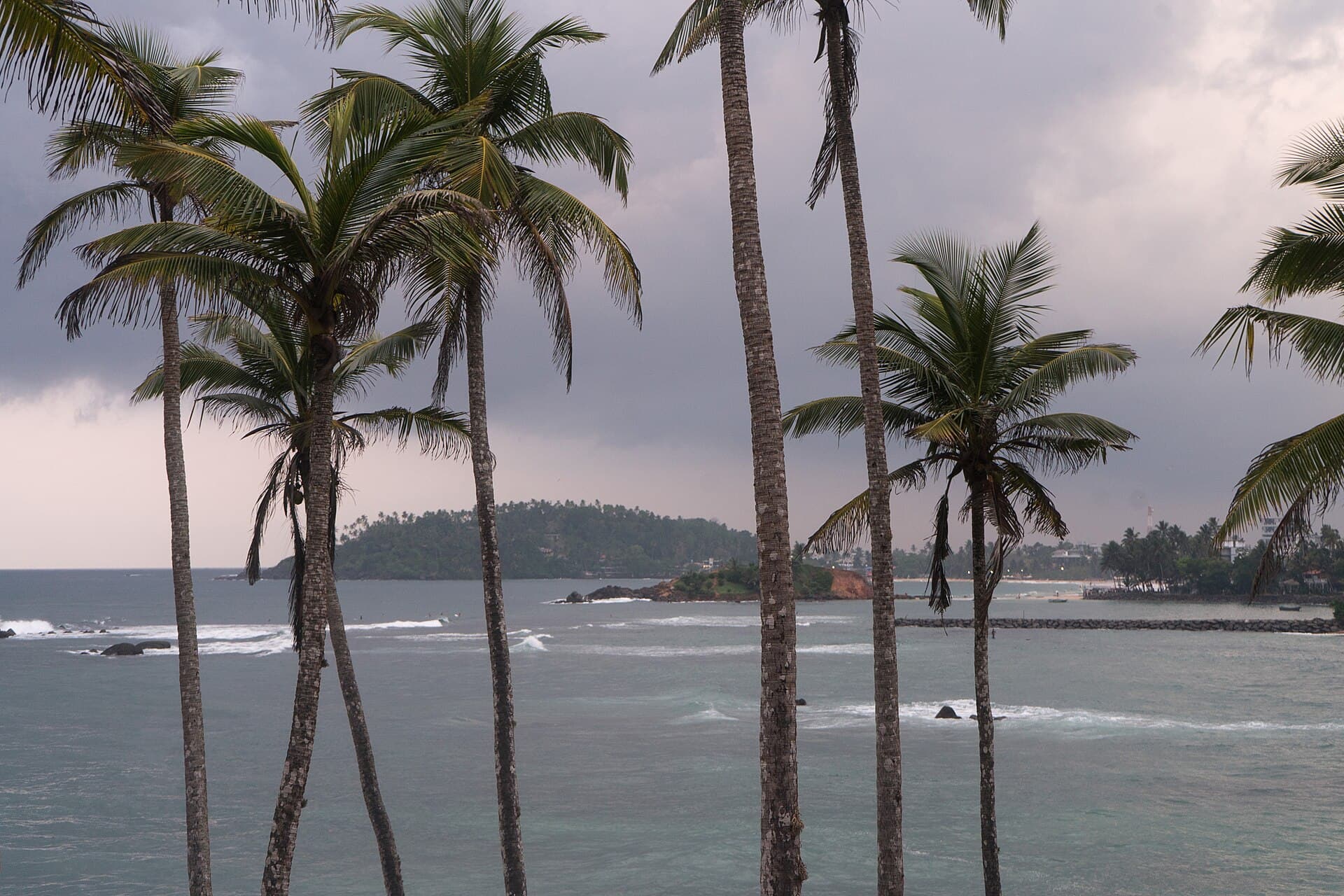
Mirissa, once an anonymous fishing village, has become the world capital of blue whale watching. Between December and April, the deep waters off Cape Dondra (the southernmost point of the island) attract these ocean giants that can reach 30 metres long and 200 tonnes — the largest animals ever to have existed on Earth. Morning trips leave at 6.30 a.m. and last 4 to 5 hours, with a sighting rate above 90 % in peak season. Further east, Tangalle and Goyambokka Beach offer a wilder, more confidential face of the South Coast, with preserved coves and boutique hotels hidden in coconut groves — the contrast with Mirissa's intensity is striking.
Explore South Coast
Spots in the region
Situation
Où se situe South Coast ?
Ouvrir la carte en grand sur OpenStreetMap →Frequently asked questions
When is the best time for blue whale watching at Mirissa?+
How many days do you need to visit the South Coast?+
Galle or Mirissa: where to stay to discover the South Coast?+
Should you visit Yala from the South Coast?+
Which beach to choose for surfing in Sri Lanka?+
How do you get to the South Coast from Colombo or the airport?+
Are the South Coast beaches safe for swimming?+
Our verdict
The South Coast is the ideal epilogue of a classic Sri Lankan circuit (Cultural Triangle + Hill Country + South Coast over 14 days), both for beach rest and for strong experiences — whale watching, exploring Galle Fort, surfing at Hikkaduwa. Dedicate at least 4 to 5 days to the region: 1-2 nights in Galle (immersion in the fort), 2 nights in Mirissa (whales at dawn, Coconut Tree Hill beach, dolphin trips) and 1 night in Tangalle for quiet and preserved coves. Visit absolutely between December and March to avoid the monsoon and benefit from optimal conditions for sea and whales.