The Balearics offer a range of activities that extends well beyond the beach. On Mallorca, the cultural priority is the cathedral La Seu in Palma — a masterpiece of Mediterranean Gothic built between the 13th and 17th centuries, standing on a promontory above the sea, with stained glass by Gaudí (who partially restored the building) and a rose window 12 metres in diameter, the largest in Gothic architecture. Nearby, the Almudaina Palace (an Arab-Gothic former royal residence) and the Llotja (a 15th-century Gothic exchange converted into an exhibition space) complete the heritage trail. The Es Baluard contemporary art museum overlooks the ramparts from a former fortress.
The Serra de Tramuntana can be explored by car, by bike (a world-class cycling route thanks to the manageable gradients of the mountain passes) or on foot along marked trails. The Palma-Sóller journey on the 1912 vintage wooden train, threading through six tunnels and orange grove valleys, is an attraction in itself (45 min, €35 return). Valldemossa, the village where Frédéric Chopin spent the winter of 1838-39 with George Sand, preserves the 17th-century Charterhouse and the most romantic atmosphere on the island. Banyalbufar, on the west coast, presents dry-stone terraces stepped down the cliffsides to the sea — an agricultural landscape unchanged since Arab times. The beach of Es Trenc, in the south-east, is Mallorca's longest natural beach (4 km) and one of the best-preserved.
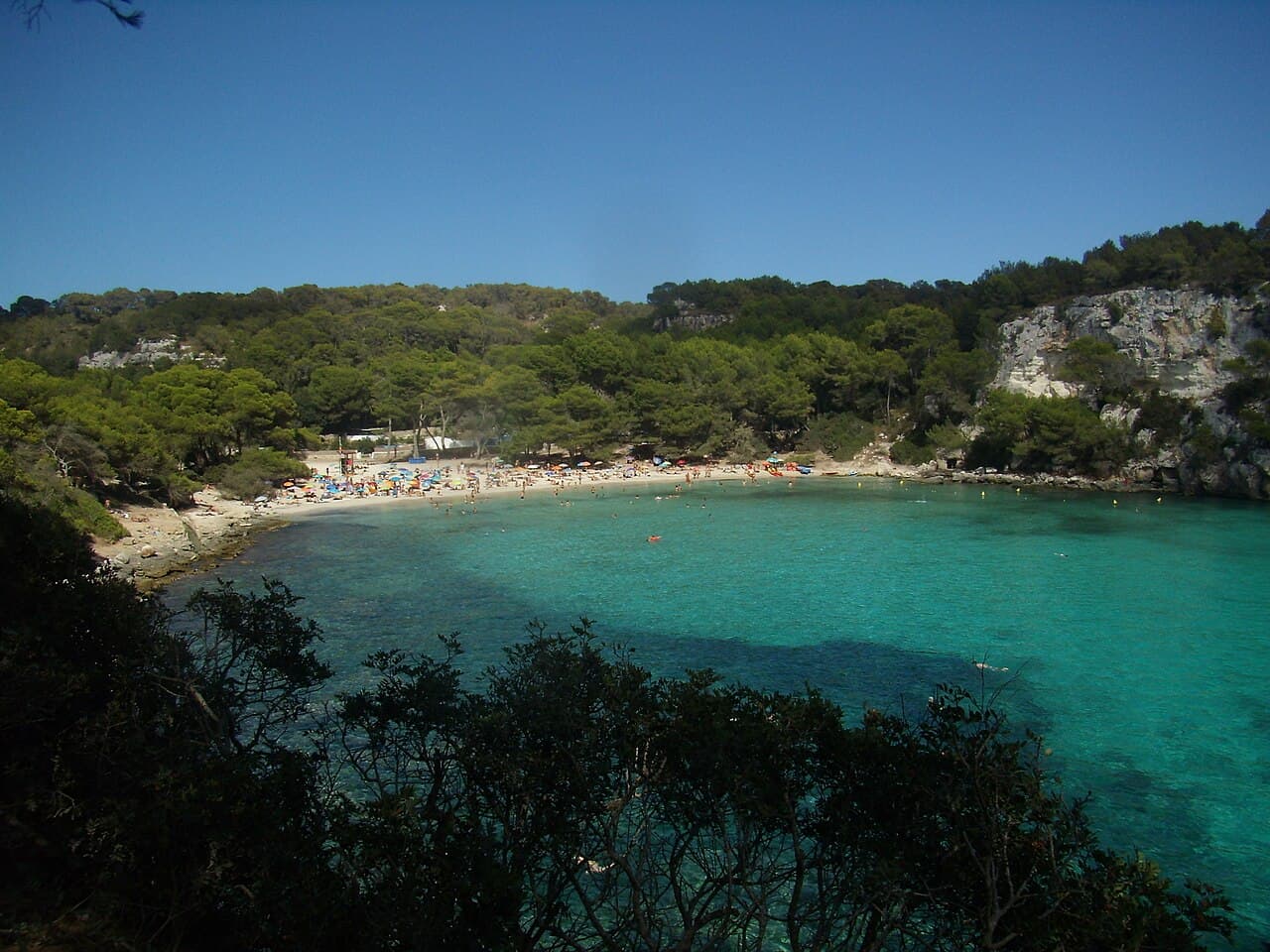
On Menorca, the circuit of southern calas (Macarella, Turqueta, Trebalúger, Pregonda) is the absolute priority — but the finest beaches require a 20 to 45-minute walk from the controlled car parks in summer. The prehistoric site of Trepucó (taula and talayot from the Bronze Age, 1500 BC) illustrates the island's 4,000-year history. Ciutadella, at the western tip, is the island's most beautiful city with its Gothic cathedral and medieval lanes.
On Ibiza, the sunset facing Es Vedrà from Cap des Falcó or the restaurant Es Boldado is one of the most intense visual experiences in the Mediterranean. The Dalt Vila old town, UNESCO-listed, holds the island's entire historical heritage. The hippy market of Las Dalias (Sant Carles, Saturdays year-round) is one of the archipelago's most authentic craft markets.
Read also
- Palma de Mallorca, capital of the Balearics — La Seu cathedral, Almudaina Palace, the old town and island gastronomy.
- Spain — Complete guide: visa, budget, regions to explore and best time to visit.
- Catalonia — Barcelona, the Costa Brava and the Pyrenees — the neighbouring mainland region.
- Andalusia — Seville, Granada, Córdoba and the beaches of the Costa del Sol.