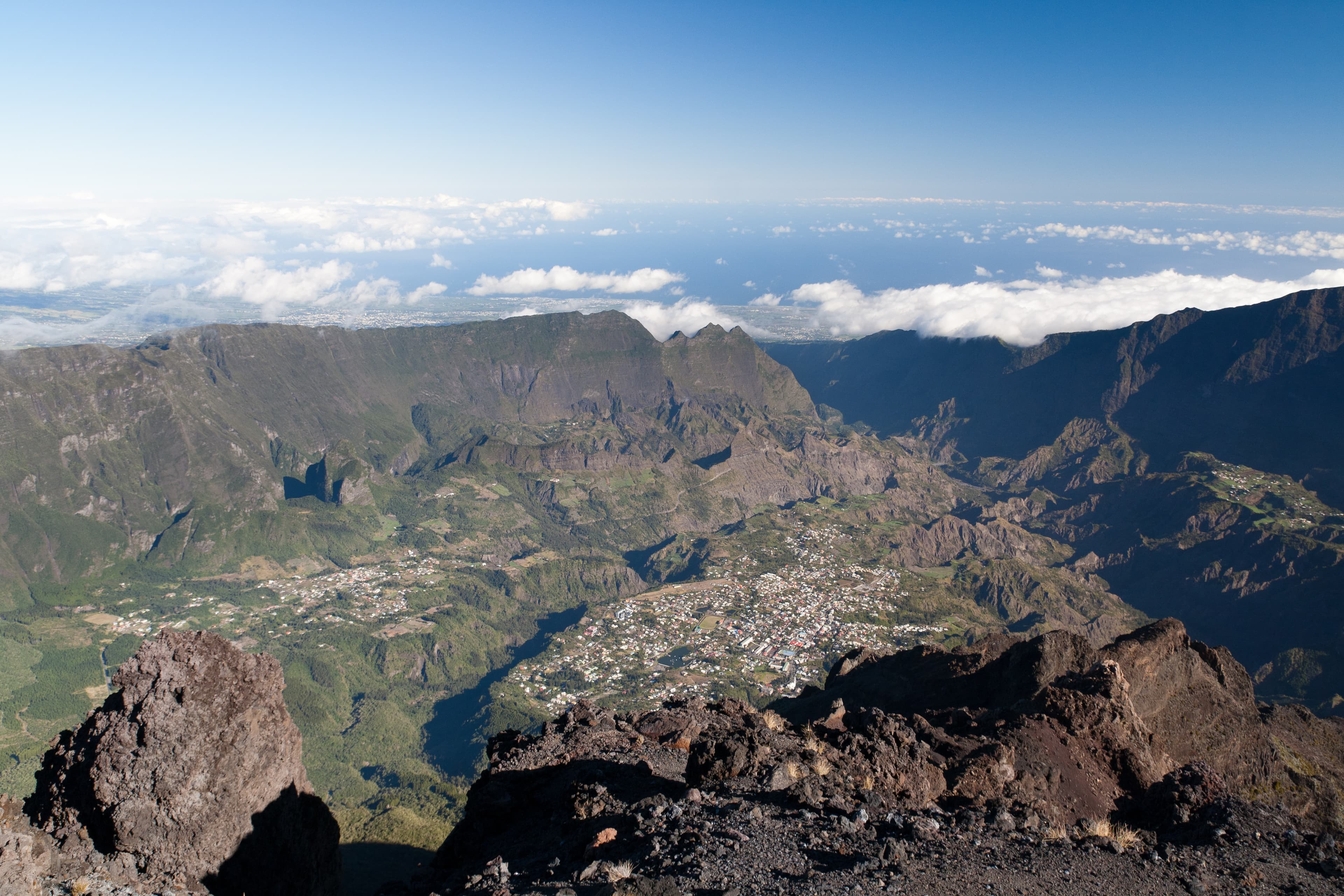
Réunion's Cirques require more rigorous weather planning than the coast. Their geography of basins enclosed in ramparts of more than 1,000 metres generates a very particular microclimate: the morning is generally clear and luminous, but fog invites itself almost every day around 10-11 am and can persist until sunset, transforming spectacular hikes into walks in cotton.
The austral winter (May to November) is the only truly recommended period. Dry trails, clear morning sky, optimal visibility on ramparts and îlets between 6am and 10am. Temperatures at altitude are cool: 15-22°C during the day at Cilaos or Hell-Bourg, 5-12°C at night and down to -5°C at the Caverne Dufour refuge before dawn. Plan several layers (fleece, windbreaker, hat and gloves for Piton des Neiges).
July and August are the driest and most stable months — but also the busiest (mainland school holidays). Mafate gîtes are fully booked several months in advance, and Cilaos hotels double their rates. May-June and September-November offer a better compromise: still very favourable weather and reasonable attendance.
The austral summer (December to April) is frankly not recommended for the cirques. Almost permanent fog in the afternoon, muddy and slippery trails (risk of falling on technical passages), real cyclone risk from January to March with possible closure of accesses.
Read also
- Mafate, the cirque without roads — 700 inhabitants in ten îlets accessible only on foot or by helicopter. The GR R2 and the soul of Réunion.
- Cilaos, the 400-bend road — Cirque accessible by car: thermal baths, AOP wine, lentils, Roche Merveilleuse and ascent of Piton des Neiges.
- Piton Maïdo — Belvedere at 2,205 m altitude over the cirque of Mafate, accessible by car for sunrise.
- Piton de la Fournaise — The other volcanic giant of Réunion — one of the most active volcanoes in the world.