ville
Cusco
The former imperial capital of Tahuantinsuyu Inca empire at 3,400 m, UNESCO-listed 1983, layering cyclopean Inca walls (Coricancha, Sacsayhuamán, Hatunrumiyoc wall) and Spanish colonial baroque architecture.
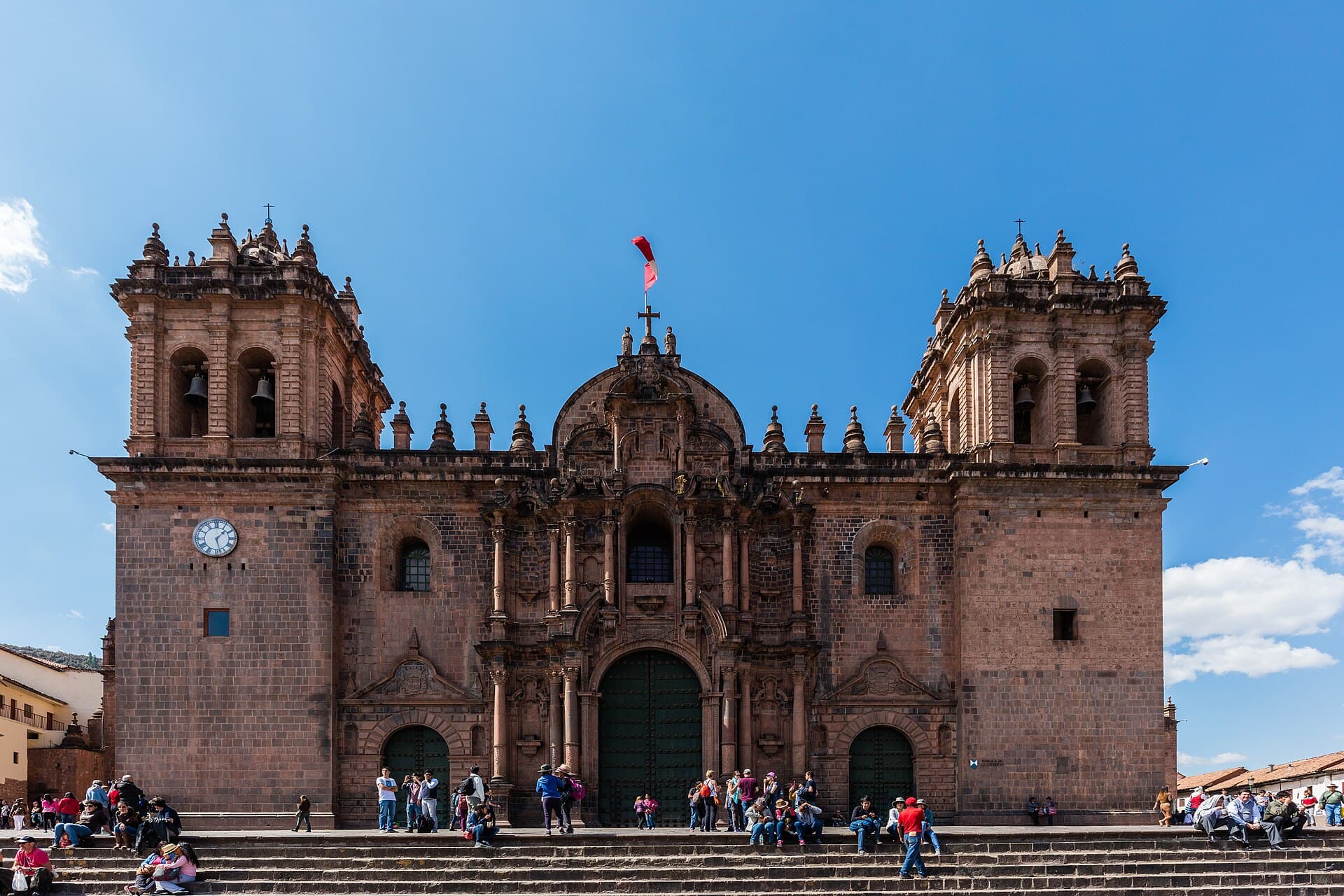
Cusco (from Quechua Qosqo, 'the navel of the world', altitude 3,400 m, 450,000 inhabitants) is the former capital of the Inca empire (Tahuantinsuyu, 1438-1533) and one of South America's most beautiful cities. Imperial capital founded according to Inca legend by Manco Cápac around 1100, becoming the political, religious and cultural centre of the largest pre-Columbian empire in the Americas under Pachacutec (1438-1471), conquered by Francisco Pizarro in 1533 then transformed into the baroque colonial capital of the Viceroyalty of Peru until 1542 (before the capital was transferred to Lima for security). The historic centre is UNESCO-listed since 1983.
The city offers a unique architectural layering in the world — the Spanish systematically built their churches and palaces on the cyclopean Inca foundations, creating a layering of millennial stones under baroque facades. This particularity is observed everywhere: the Santo Domingo monastery is built on the walls and enclosure of the Coricancha (sun temple, the most sacred of the Inca empire), the cathedral (1559-1654) rests on Inca Wiracocha's palace on the Plaza de Armas, the Hatunrumiyoc wall (with its famous perfectly fitted 12-angle stone) still lines a pedestrian street in the centre. This layering makes Cusco an open-air museum.
What we love
- ✅Former Inca imperial capital UNESCO 1983 — one of South America's most powerful historic centres
- ✅Unique architectural layering: cyclopean Inca walls + Spanish colonial baroque
- ✅Sacsayhuamán: cyclopean fortress and venue for Inti Raymi (24 June)
- ✅Ideal logistical base for Sacred Valley and Machu Picchu (domestic flights from Lima)
- ✅Quality gastronomy scene and lively Andean nightlife
What to know
- ❌Altitude sickness at 3,400 m: 1-2 days acclimatization mandatory before any effort
- ❌Cold nights (0-5 °C in dry season, sometimes difficult sleep first 2 nights)
- ❌Very high attendance in high season (June-August) — saturated Plaza de Armas
- ❌Pickpocketing vigilance in some areas (stations, crowded markets, dark streets at night)
Situation
Où se situe Cusco ?
Ouvrir la carte en grand sur OpenStreetMap →Frequently asked questions
How many days to visit Cusco?+
How to manage altitude sickness at Cusco?+
What's the boleto turístico?+
Inti Raymi on 24 June, how to attend?+
Where to sleep in Cusco?+
Our verdict
Cusco is the historical heart of the Peruvian trip and one of South America's most beautiful cities. Our recommendation: plan minimum 2-3 nights for mandatory altitude acclimatization before any effort (Machu Picchu, treks), the visit of Inca sites (Coricancha, Sacsayhuamán, Q'enqo) and baroque sites (cathedral, Compañía, monasteries), the bohemian San Blas quarter and the San Pedro market. Avoid sleeping directly at 3,400 m the first night if you arrive from Lima by flight — prefer Arequipa then Sacred Valley for progressive acclimatization if possible. Travel from May to September for optimal conditions (blue sky) or April/October for best price/crowd ratio. If you target Inti Raymi (24 June, one of South America's largest cultural festivals), book 6 months ahead.
Nearby

"Janvier : pleine saison humide, pluies quotidiennes, mais tarifs au plancher."
Expert on Cusco · 1 contributions
 Africa & Americas Desk — Mowando·Editor