Mowando

site naturel

Lake Titicaca

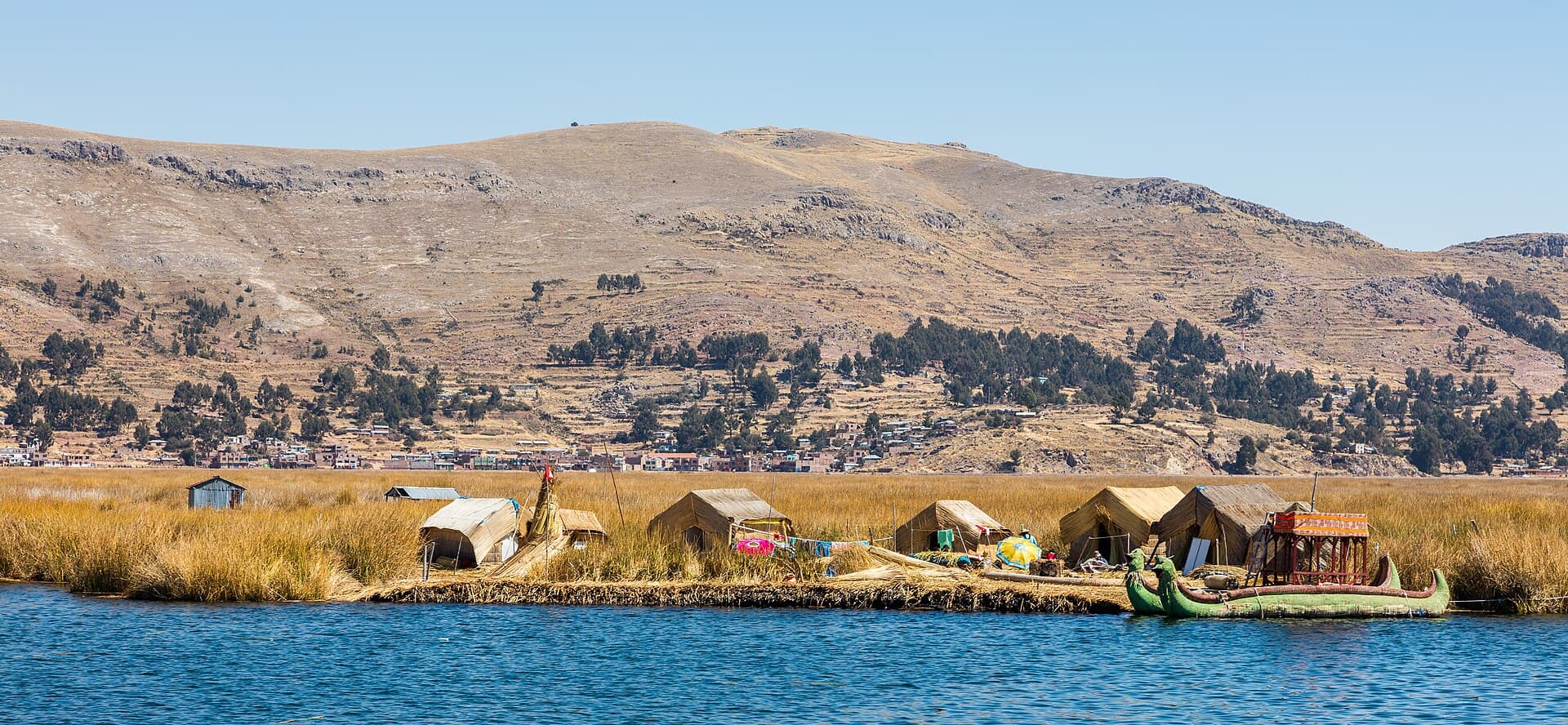
The world's highest navigable lake at 3,812 m, sacred to the Incas (mythology: Manco Cápac and Mama Ocllo emerge from waters), mythical totora reed floating Uros Islands and Taquile Island with UNESCO 2008-listed textile.

4.50Arequipa et le Titicaca

Lake Titicaca (3,812 m altitude, 8,372 km² surface i.e. 1.3 times Corsica, 281 m maximum depth, 190 km long, 80 km wide) is the world's highest navigable lake and one of South America's most powerful natural and cultural sites. Shared between Peru (60%) and Bolivia (40%), it was the cradle of Andean civilization according to Inca mythology — Manco Cápac and Mama Ocllo, founders of the empire, emerged from the lake's waters sent by the god Inti to found Cusco. This sacred dimension explains the importance of pre-Inca civilizations that developed here (Pukara, Tiwanaku, Colla) and the ceremonial role of the lake in all Andean cosmovision.

The Peruvian gateway is Puno (130,000 inhabitants, 3,827 m altitude), a base city without great architectural charm but the essential departure point for lake excursions. Puno port (5 min from centre) offers daily speedboat departures to the islands.

Main islands on the Peruvian side. Floating Uros Islands (5 km from Puno, 30 min boat) are the iconic Titicaca attraction — about fifty islands built and maintained by the Uros community since pre-Inca times. Islands are entirely in totora (aquatic reeds growing in the lake), 2-3 m thick, regularly renewed. Half-day excursion €30-50/person.

Taquile Island (45 km from Puno, 3h speedboat, 5.5 km² altitude 3,850-4,050 m, 2,200 Quechua inhabitants) is a preserved traditional island — globally recognized for its textile art inscribed UNESCO intangible heritage in 2008. Full day Uros + Taquile from Puno €50-80/person. Amantani Island (40 km from Puno, 3h speedboat, 9 km², 4,000 Quechua inhabitants, two sacred peaks Pachatata 4,200 m and Pachamama 4,130 m) is the choice for homestay and deep community immersion. Classic 2-day/1-night Uros + Amantani + Taquile formula (€90-130/person) is the most immersive.

What we love

  • World's highest navigable lake at 3,812 m — iconic Andean landscape, exceptional sky
  • Floating Uros Islands in totora reeds — unique experience in the world, preserved pre-Inca community
  • Taquile Island: UNESCO 2008-listed textile, traditional Quechua community, homestay possible
  • 2-day/1-night immersive Uros + Amantani + Taquile formula (homestay with Quechua family)
  • Spectacular view of snowy Bolivian Royal Cordillera in clear weather (Illimani 6,438 m)

What to know

  • Altitude sickness at 3,812 m: imperative preparation, mandatory prior acclimatization
  • Glacial nights (-5 to 5 °C in dry season), no heating at Amantani homestay
  • Puno city without great architectural charm, only logistical stop
  • Uros excursions sometimes criticized (commercialization, paid photos, touristy atmosphere)
  • Long distances: 30 min to Uros, 3h to Taquile and Amantani

Situation

Où se situe Lake Titicaca ?

Ouvrir la carte en grand sur OpenStreetMap →

Frequently asked questions

Which excursion to choose on Lake Titicaca?+
Three main formulas from Puno. Half-day Uros (7am or 2pm departure, €30-50/person, 30 min by boat to floating islands, construction demonstration, hut visit, traditional balsa navigation, return 12pm or 6pm) — the most accessible but experience sometimes judged commercialized. Full day Uros + Taquile (€50-80/person, 7am-5pm, Uros in the morning, Taquile in the afternoon with lunch on the island, UNESCO 2008 weaving demonstrations, walk in traditional village) — best compromise for 1-day visit. 2-day/1-night Uros + Amantani + Taquile (€90-130/person, most immersive formula, homestay at Amantani with Quechua family, traditional costumed evening, sunrise on the island, Taquile day 2) — the deepest experience, recommended for travellers open to basic homestay.
How to get to Lake Titicaca?+
From Arequipa: long-distance Cruz del Sur or Oltursa bus 6h (€30-50), spectacular altiplano crossing (Andean lagoons, wild vicuñas). Prefer daytime departures for landscapes. Alternative: Arequipa-Juliaca flight 30 min (€60-130, 60 km from Puno), little useful given road quality. From Cusco: Cruz del Sur bus 6-8h (€40-60), spectacular Andean road via La Raya 4,313 m (pass, photo stop). Alternative: Belmond Andean Explorer train (luxury rail cruise with sleeper cabins, €600-1,000/person, 2x/week) or PeruRail Titicaca (Pullman €250-350). From Lima: direct Lima-Juliaca flight 1h45 (LATAM, Sky, €80-180 return), then 30-40 min Juliaca-Puno taxi. Lima-Puno bus (22-24h) too long. From La Paz (Bolivia): Yunguyo-Puno bus 3-4h (€15-25), 30-60 min border formalities.
Should you do the Amantani homestay?+
Yes, strongly recommended for travellers open to cultural experience. Amantani homestay (island 40 km from Puno, 3h speedboat) is Titicaca's most immersive experience — you're hosted by a Quechua family, share meals (simple cuisine: quinoa soup, potatoes, local cheese, mate de coca), participate in traditional costumed evening (the family lends you Andean costume to dance to the sound of charango and quena in the community house). Conditions: simple room (1-2 beds, sometimes cemented floor), no heating (nights -5 °C in June-August, blankets provided but bring down jacket), basic toilets (sometimes dry, little intimacy), no 24/7 electricity (evening generator, single bulb), cold showers. The experience is unforgettable and deeply human. Included in 2-day/1-night formula €90-130/person (including transport + meals + homestay + guide).
Lake Titicaca, what altitude sickness?+
Puno-Titicaca is at 3,812 m — one of the world's highest major tourist destinations. Altitude sickness (soroche) affects 30-50% of travellers coming directly from Lima or Arequipa without prior acclimatization. Symptoms: headaches, nausea, insomnia, breathlessness on effort, dizziness. Essential precautions: mandatory prior acclimatization (ideal: Lima → Arequipa 2,335 m 2 nights → Colca 3,800 m 2 nights → Puno 3,812 m 2 nights → Cusco 3,400 m), abundant hydration (3 L water/day, air is very dry), ubiquitous and effective mate de coca (4-5 cups/day), avoid alcohol and tobacco first days, avoid physical efforts (climbing Pachatata 4,200 m sacred peaks testing), eat light. For sensitive travellers, consult your doctor before departure — Diamox (acetazolamide) can be prescribed preventively (start 24h before altitude arrival). Warm clothes essential (-5 °C nights).
What events not to miss at Lake Titicaca?+
Two major traditional festivals. Fiesta de la Virgen de la Candelaria at Puno (2-18 February, UNESCO intangible heritage 2014) — it's one of South America's largest religious festivals, mixing Catholicism and Aymara/Quechua traditions. 150,000+ participants in traditional costumes (up to 80 different dance ensembles), 200+ orchestras, processions, dances (the 'Diablada' with its devil masks is emblematic), masses, banquets, for 18 days. Book your hotel 4-6 months ahead, saturated but unforgettable atmosphere. Coincides with Andean wet season. Local Inti Raymi at Puno (5 November, modern recreation of Manco Cápac and Mama Ocllo's emergence from Lake Titicaca to found Cusco according to Inca mythology — ceremony on the shore, traditional dances, more local and accessible atmosphere than Cusco's Inti Raymi). Puno Carnival (February, water and flour, festive atmosphere). Puno anniversary (4 November).

Our verdict

Lake Titicaca is one of Peru's most powerful experiences — iconic Andean landscape, world's highest navigable lake at 3,812 m, unique pre-Inca cultural dimension (Uros, Taquile UNESCO, Amantani). Our recommendation: plan 2 nights in Puno with 1-day Uros + Taquile excursion (€50-80) or ideally 2-day/1-night Uros + Amantani + Taquile formula with homestay with Quechua family (€90-130) — it's the most immersive experience. Mandatory prior altitude acclimatization at Arequipa (2,335 m) then Colca (3,800 m) before arriving at 3,812 m. Travel from May to September for optimal conditions (blue sky, calm waters, Bolivian cordillera visibility) — imperatively bring warm clothes (nights -5 °C in July) and SPF 50 sun cream (very intense UV at this altitude).

Nearby
The Editors
The Editorsauteur principal✓ Verified

"Janvier : pleine saison humide, pluies fréquentes, eaux hautes."

Expert on Lake Titicaca · 1 contributions

Mowando Letter

Once a month: the right destinations for the right season + the best booking windows.

No spam. One-click unsubscribe. Your data is never shared.