île
Kunié (island)
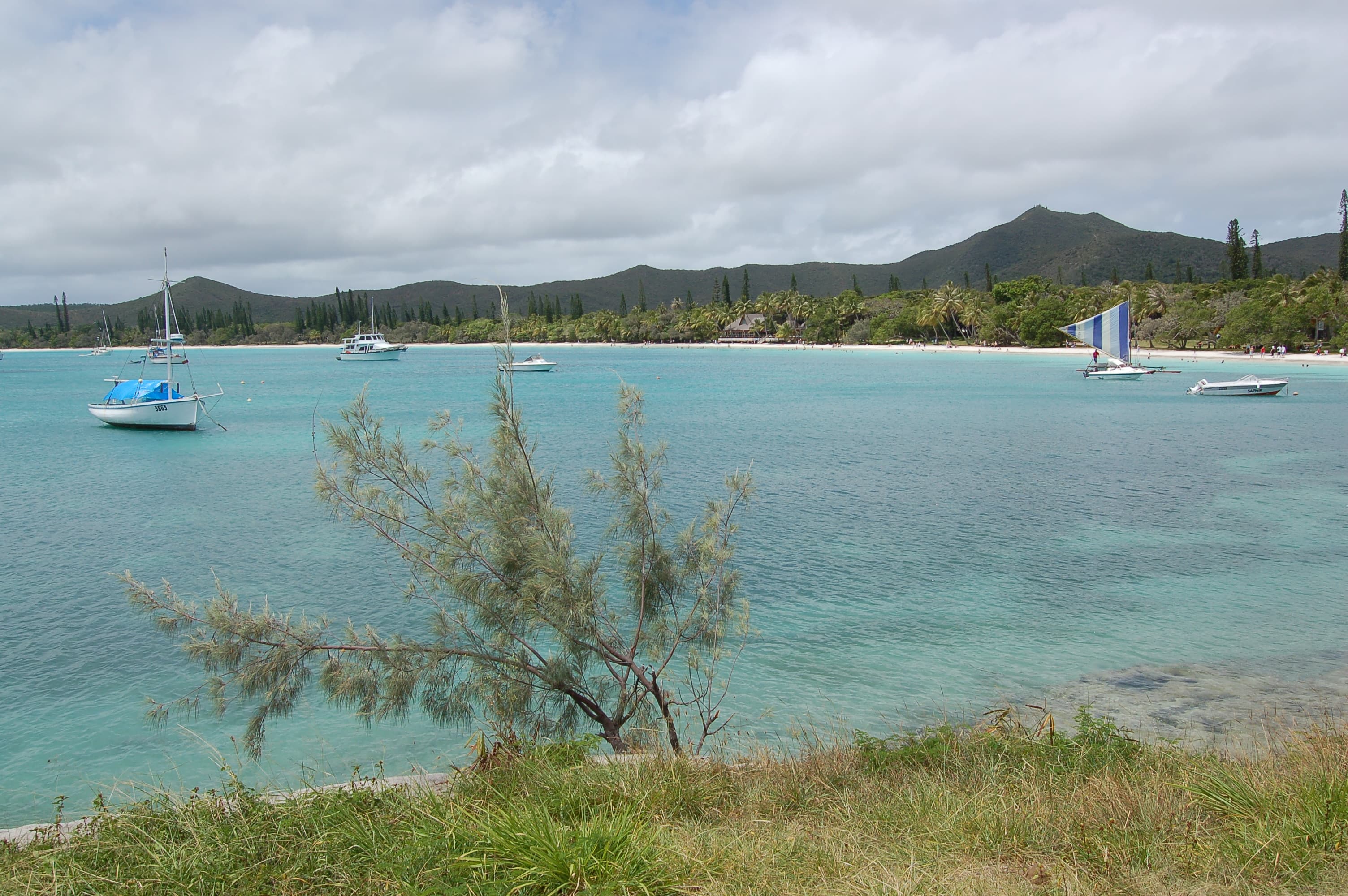
The Isle of Pines is the absolute icon of New Caledonia: 152 km² of almost surreal landscapes where the endemic columnar pines (Araucaria columnaris) raise their vertical silhouettes above white-sand beaches and a UNESCO-listed turquoise lagoon.
The Isle of Pines (in French) or Kunié (in local Kanak language) is the most beautiful island in New Caledonia and probably one of the most singular landscapes in the South Pacific. Located 100 km south-east of Nouméa, at the southern tip of the UNESCO lagoon, this 152 km² island (18 km × 14 km) is home to around 2,000 inhabitants, almost exclusively Kanak from the Kunié tribe. This is where James Cook arrived on 17 September 1774 during his second Pacific voyage — he named it 'Isle of Pines' because of the forest of endemic columnar pines (Araucaria columnaris) raising their vertical silhouettes up to 60 m high above the beaches and hills.
Four signature sites structure the island experience:
The Oro Natural Pool — the unavoidable site of New Caledonia. Located in Oro Bay on the east of the island, it is a natural pool 350 m long and 80 m wide, formed by a coral arm isolating a translucent turquoise water basin (26-28 °C) from the open lagoon. Access after 30 min of walking from Oro Bay through the columnar pine forest. Extraordinary snorkelling. Come before 10 am.
Upi Bay — to be visited by traditional Kanak sailing pirogue. Departure from Saint-Joseph Bay. The Kanak boatman takes you through a shallow bay with translucent turquoise waters, studded with emerging limestone rocks — a landscape comparable to Halong or Phang Nga.
The Kuto beach — 1 km crescent beach of almost flour-like white sand. Most hotels are concentrated here.
The Kanuméra beach — twin beach of Kuto with its central sacred islet (Kanuméra rock — climbing strictly forbidden, sacred Kanak place).
Other sites: Queen Hortense caves and Oumagne caves (karst caves), Saint-Joseph Bay (pirogue departure point), Vao (administrative centre), Communards Memorial at Ouro (France deported communards 1871-1879 — over 3,000 political prisoners), Pic N'Ga (262 m, highest point of the island).
What we love
- ✅The signature site of New Caledonia — the most iconic island of the territory
- ✅Oro Natural Pool: one of the most beautiful sites in the South Pacific
- ✅Upi Bay by traditional sailing pirogue — powerful cultural experience
- ✅Kuto and Kanuméra beaches: white sand of exceptional fineness
- ✅Le Méridien Île des Pins at half the price of Bora Bora overwater bungalows
What to know
- ❌Increasing crowds at Oro pool (come early in the morning)
- ❌High hotel rates (Méridien €350-700/night in season)
- ❌Limited nightlife and entertainment (very quiet island)
- ❌Bookings 2-3 months in advance essential in high season
- ❌Air Calédonie flights from Nouméa sometimes cancelled in cyclone season
Situation
Où se situe Kunié (island) ?
Ouvrir la carte en grand sur OpenStreetMap →Frequently asked questions
Comment se rendre à l'Île des Pins ?+
Combien de jours faut-il prévoir à l'Île des Pins ?+
Comment se déplacer sur l'Île des Pins ?+
Quels sont les meilleurs hôtels de l'Île des Pins ?+
L'Île des Pins est-elle un site sacré pour les Kanak ?+
Our verdict
The Isle of Pines is the absolute signature stop on a trip to New Caledonia — equivalent to Bora Bora for French Polynesia, at half the budget. Plan a minimum of 3-4 nights on site: 1 day Oro Natural Pool (unavoidable), 1 day Upi Bay sailing pirogue excursion (signature cultural experience), 1 day Kuto and Kanuméra beaches + Queen Hortense caves, 1 day island tour by scooter (penal heritage, Saint-Joseph Bay, Pic N'Ga). Prioritise September-November for optimal weather. Book your hotel 2-3 months in advance — Le Méridien Île des Pins (€350-700/night) is the signature accommodation. Oure Tera Beach Resort (€250-450/night) is an excellent alternative at Kanuméra. Avoid the cyclone season (December-April).
Nearby

"Été austral chaud, risque cyclonique."
Expert on Kunié (island) · 1 contributions
 South-East Asia Desk — Mowando·Editor