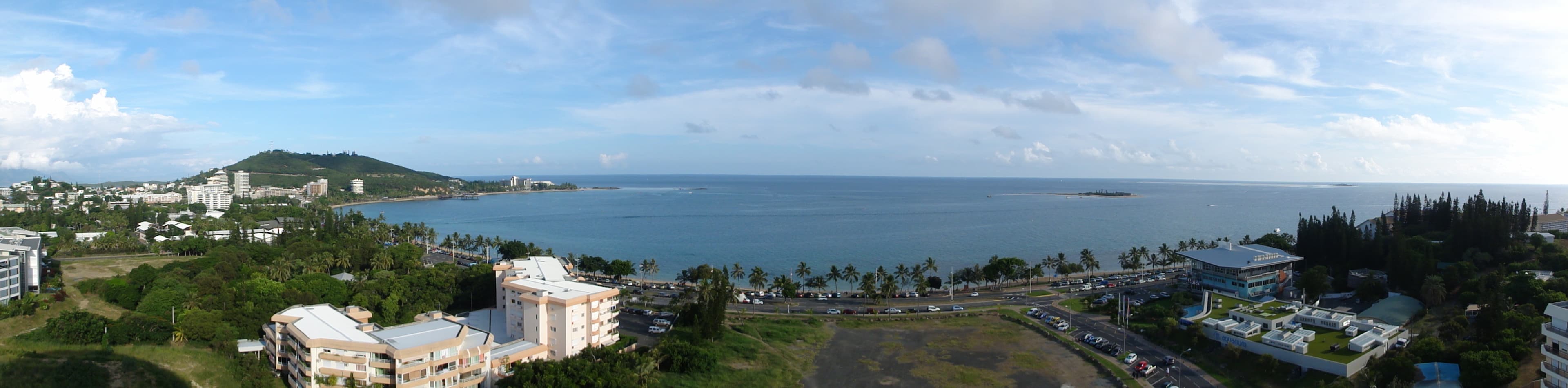
New Caledonia is culturally one of the most complex and fascinating territories of the French Pacific. Its ethnic diversity makes it a true Oceanian melting pot, structured around several communities.
The Kanak — indigenous Melanesian people — represent around 40% of the population. They arrived on the archipelago nearly 3,000 years ago (Lapita vestiges 1,100 BC) and developed a clan-based culture founded on custom: complex kinship system, ceremonial exchange of yams and Kanak currencies (rolls of shells), respect for traditional cases (cone-shaped thatched homes, topped with a sculpted gable arrow representing the ancestors). 28 Kanak languages are still spoken on the territory.
The Caldoches are the descendants of European colonists settled since French colonisation (1853) — transported convicts (New Caledonia was a penal colony between 1864 and 1924), soldiers, civil servants, miners. They represent around 27% of the population.
Other communities enrich this métissage: Wallisians and Futunians (8%), Polynesians (Tahitians, 2%), Javanese Indonesians (1.5%, descendants of sugar workers from the early 20th century), Vietnamese (descendants of the chân-dang, indentured workers in nickel mines).
Kanak custom is a living reality in the tribes of the Loyalty Islands and Grande Terre. The customary gesture (symbolic offering: cloth, manou, banknote) is required when entering a tribe and for any significant request — a mark of respect, not a payment. The Tjibaou Cultural Centre in Nouméa, designed by Renzo Piano (1998), is the key institution to understand contemporary Kanak culture: large wooden cases, permanent exhibitions, cultural events.
New Caledonia has experienced a turbulent recent political history: Kanak insurrection of the 1980s, Matignon-Oudinot Accords (1988) then Nouméa Accord (1998) establishing a process of gradual transfer of powers and three self-determination referendums (2018, 2020, 2021 — all won by maintaining the territory in the Republic). The May 2024 riots in Nouméa caused significant damage and 14 deaths — the situation is now stabilised but the territory remains in institutional transition.
Read also
- Grande Terre and Nouméa — The main island and the capital: Anse Vata, Bay of Citrons, GR NC1 and preserved nature.
- Isle of Pines (Kunié) — The island closest to paradise: Oro natural pool, Upi Bay by pirogue, Kuto beach.
- Loyalty Islands (Lifou, Maré, Ouvéa) — The authentic archipelago: Kanak tribes, Jokin cliffs, 25 km beach on Ouvéa.
- French Polynesia — Compare with French Polynesia: Bora Bora, Tuamotus, premium honeymoon.