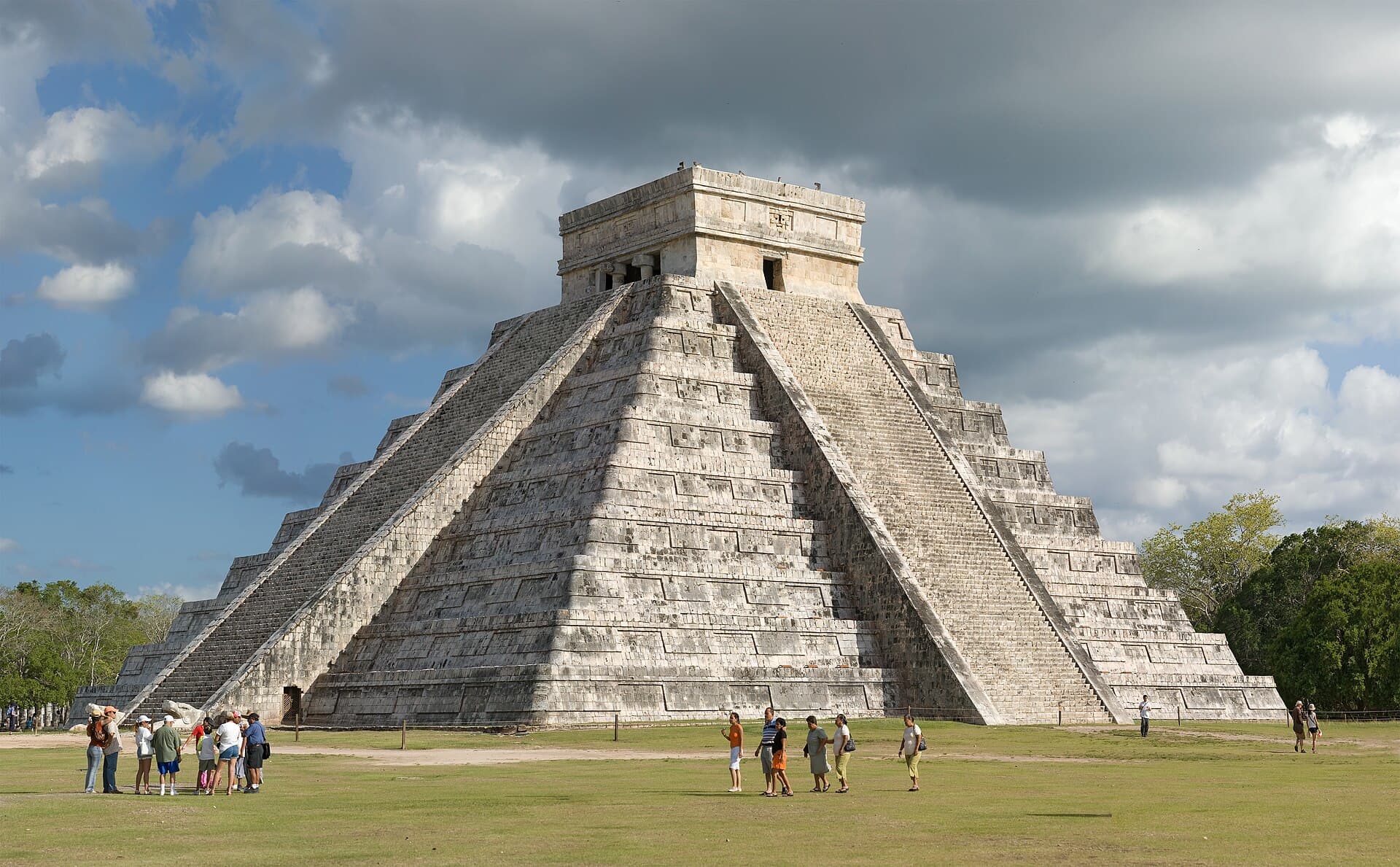
Mexican culture is the product of a millennial synthesis between pre-Columbian civilizations — Maya, Aztec, Mixtec, Zapotec and roughly fifty other Indigenous peoples — and three centuries of Spanish colonization (1519–1821). That violent, fertile encounter produced the mestiza culture that anchors Mexican national identity: a distinctly Mexican civilization, irreducible to either of its sources, expressed in Spanish but nourished by values, traditions and a spirituality deeply rooted in the pre-Hispanic world.
The Mexican calendar is studded with festivals that crystallize this synthesis. Día de los Muertos (November 1–2), inscribed on UNESCO's Intangible Heritage list, is the most emblematic popular celebration: families build altars (ofrendas) layered with marigolds (cempasúchil), photographs of the dead, food and candles in a blend of sorrow, humor and celebration that always startles outside visitors. The Semana Santa processions reflect the deep Catholic heritage of the Spanish colonial period, mixed with pre-Hispanic elements in Indigenous communities.
Mexico is also the country of two of the 20th century's most influential artists: Diego Rivera and Frida Kahlo, whose monumental murals and tortured self-portraits put Mexican art on the global map. Rivera's murals at the Palacio Nacional in Mexico City — a 1,200-square-meter visual epic of Mexican history — are among the most ambitious painted works of the 20th century. The craft tradition runs just as deep: Oaxacan pottery, Maya textiles from Chiapas, silverwork from Taxco, papier-mâché from Michoacán — each region carries ancestral techniques passed down through generations.
Indigenous languages remain very much alive across Mexico. The country officially recognizes 68 national languages, including Nahuatl (the language of the Aztecs, still spoken by 1.7 million people), Yucatec Maya, Zapotec and Mixtec. In the states of Oaxaca, Chiapas and the Yucatán, Indigenous culture is woven into daily life — traditional dress, markets, patron-saint festivals — and constitutes one of the most powerful experiences for travelers who give it time. Spending an afternoon in a Zapotec weaving cooperative in Teotitlán del Valle, or attending a Maya nighttime ceremony in a Yucatán village, gives a glimpse of a Mexico that long predates the Spanish — and shows no signs of receding.
Read also
- The Yucatán, land of the Maya — Maya cities, turquoise cenotes, Caribbean beaches and the colonial elegance of Mérida.
- Central Mexico — Mexico City the megacity and Oaxaca the cultural capital — the jewels of the central altiplano.
- Tulum, the Maya city by the sea — Cliffside Maya ruins, world-class cenotes and Caribbean beaches in a single spot.